
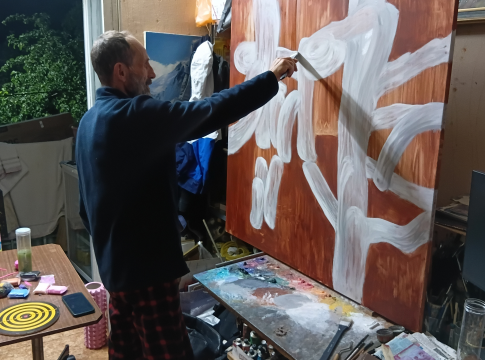
In a flat, a corner of a modest, traditional two-floor Soviet house nestled in the hills of Almaty, stands a man deep in thought over a painting yet to take shape.
The tiny living room resembles the average attic in a British suburban home, every nook and cranny filled, not with re-boxed discarded toasters, but with easels, canvases, half- or perhaps completely finished paintings. Pigments, brushes, and palettes take up the remaining floor space, mostly well used and stored alongside the occasional bottle of solvent, for when needed, and a few toys, for when the grandchildren visit.
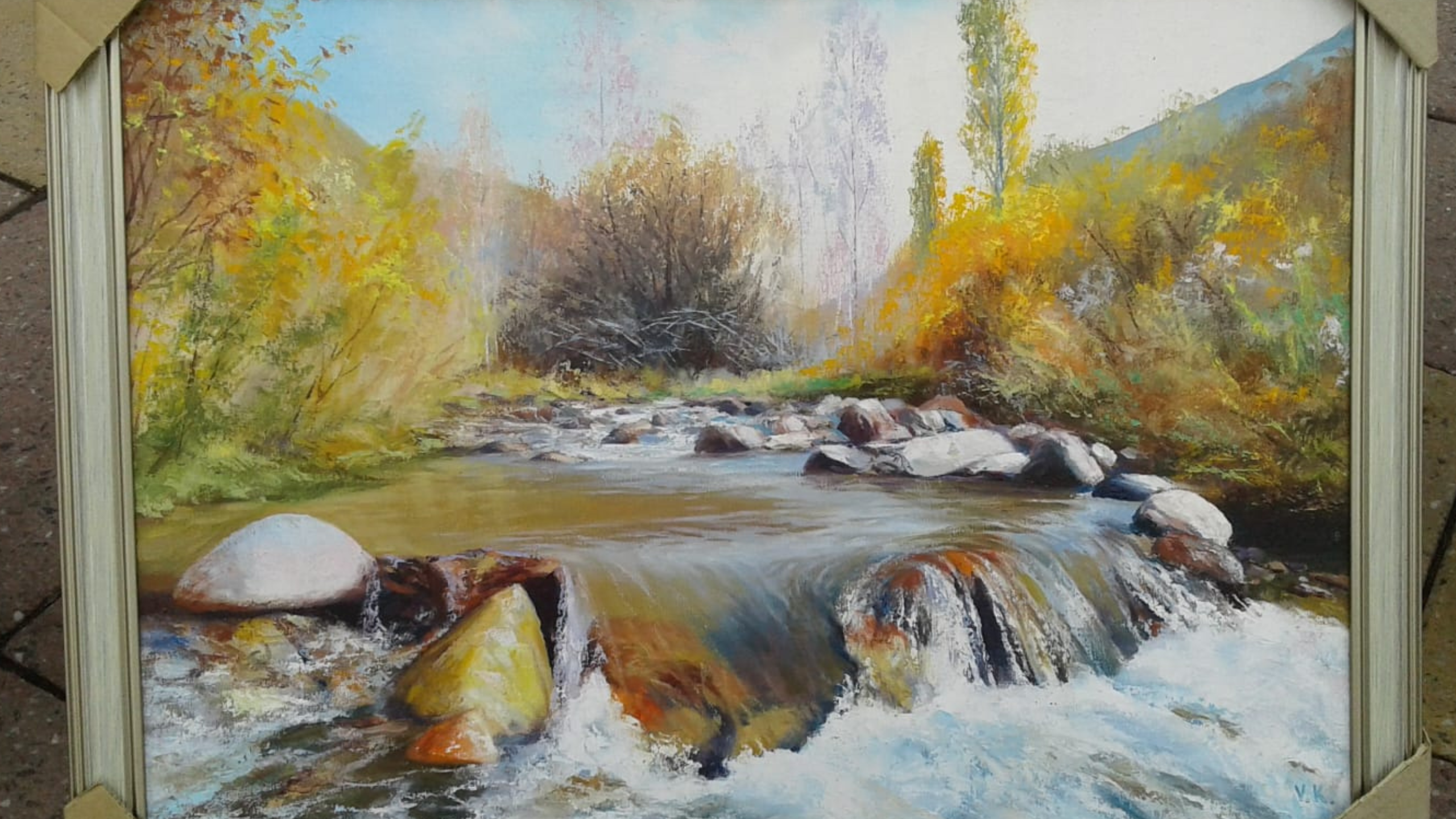
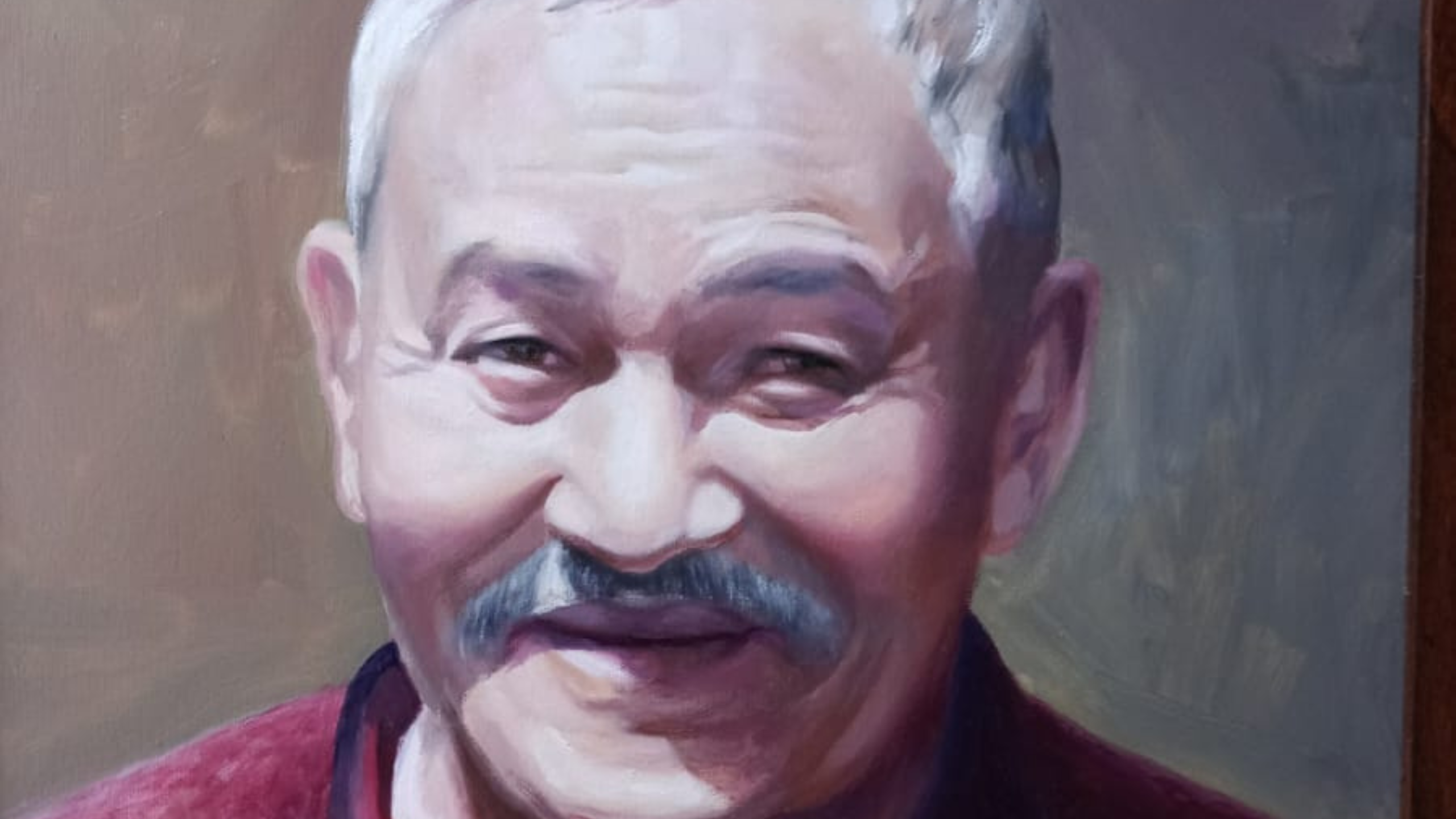
The walls are covered in paintings, their quality ranging from a quickly thrown-together (yet still remarkable) landscape dashed off while on a family picnic, highly-realistic copies of famous masterpieces, to the kind of photographic-quality portrait that would put many a reputed professional to shame.
Meanwhile, an abstract has just been started, this very afternoon, one of his regular orders from customers. It is a piece of art whose dimensions dwarf some of the others on display, while its theme is not yet clear. Perhaps the mark of a great artist, the mystery endures until the final brush stroke.
Karen Vardanyan: Arrival in Almaty
Karen Vardanyan is an Armenian painter who, along with his wife, Susanna, has called Almaty his home for 36 years. He arrived in Kazakhstan by chance as much as anything, and, something many foreign guests can relate to, quickly decided to make the move more permanent.
“I arrived with a family member a few years after the big changes of 1991, and one thing led to another. Work was available. It went well until the currency changed, and that led to a great transition. In the end, my relative returned to Armenia, but we stayed in Kazakhstan.”
He has three children, all of whom were born and raised locally and bilingually, both Armenian and Russian. By now, their three grandchildren make up the family, regular visitors to his studio, when he takes time away from his work to help raise possible future artists.
Saqtimes.kz was invited to the unimposing but beautiful village where he lives to learn his fascinating story and find out more about his work.
His Background
Karen (pronounced karENNE) has been an artist since his childhood, since back in the days when he couldn’t get enough paper to draw everything he wanted. All of his exercise books and even his desks were covered in drawings. It was a passion from the start. At the end of every term, he had to stay behind at school and clean his desk, sandpaper and all.
“If I didn’t get it clean, the teachers wouldn’t let me out for the holidays,” he recounts, perhaps with a hint of guilty satisfaction. “I also took lessons at an art school next to my regular school during my time as a pupil.”
He later left the furniture alone, but inevitably not the creativity, taking it to the next stage when he graduated from the Yerevan Pedagogical Institute, specifically from the Art and Drawing Faculty, with the original intention of becoming an art teacher, a job he does in fact also do here in Almaty.
“As soon as I graduated, because my grades were so good, I was immediately offered a job by the Ministry of Education. And I had to work until my minimum age limit ended, so they wouldn’t draft me into the army. Or, suppose I had refused to work, I would have been obliged to do military service. I preferred to work, so I became a teacher.
“I don’t paint every day, but I would say I do some kind of drawing that often. If I have some kind of break, I find it a good way to relax, but I have other passions, too. A walk in the mountains is a favourite a lot of the time, or just being in nature, even if I don’t set up an easel.”
His Work
Any artist will tell you that detoxing even from the work they love has its value, so Karen doesn’t always draw when he goes into some of his favourite places, such as Alma Arasan, Kok Zhailau, even some of the beauty spots right near his house, even though they are a great source of inspiration.
You might conclude that mountains, even from afar, are a source of such inspiration when you learn that Karen often paints landscapes and natural scenes without heading out to become immersed in them.
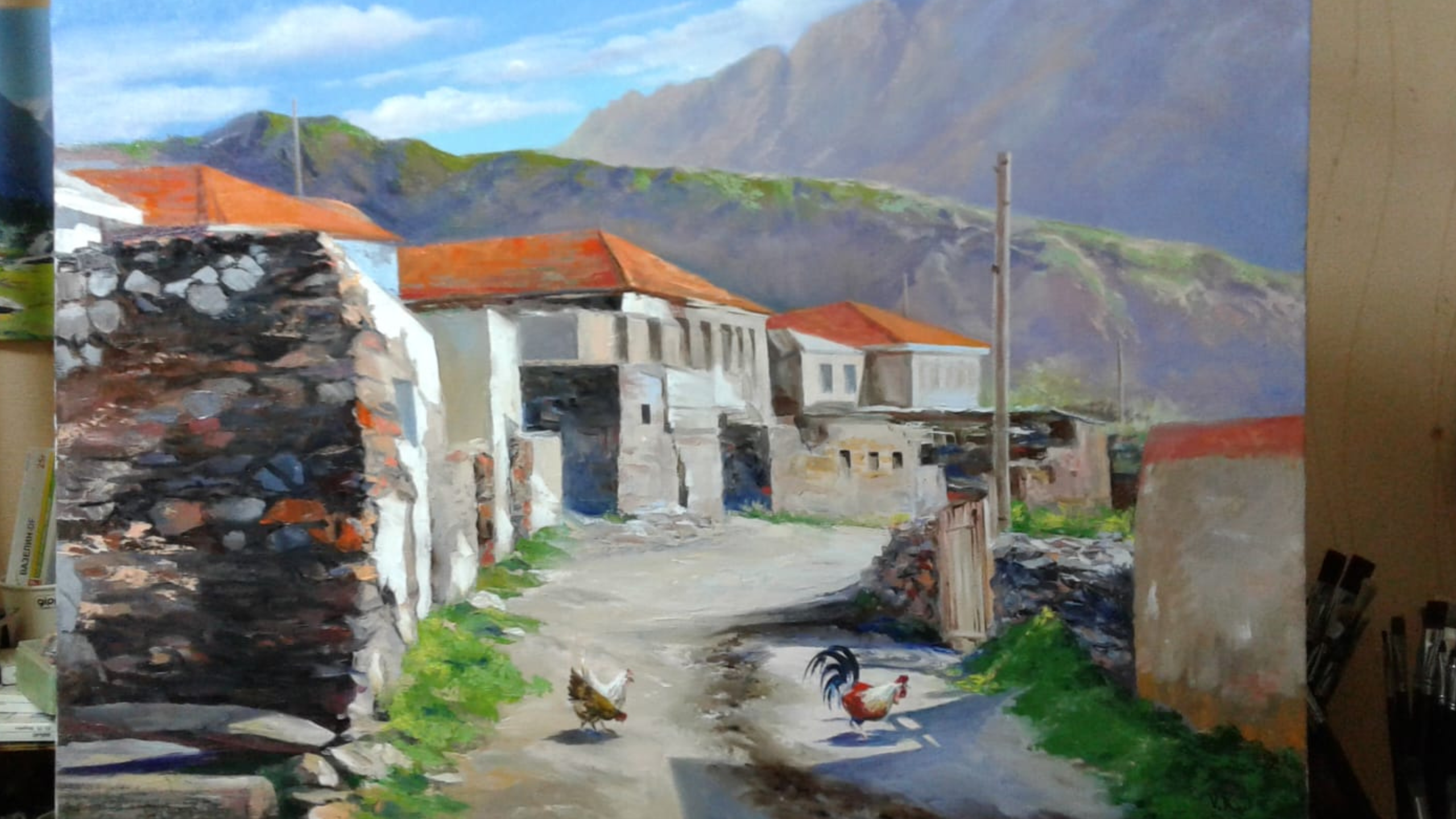
“Now the Internet and digital photography technology help, so we don’t have to work outside any more. Take a photo, bring it home, open it on the monitor, zoom in, and there’s your subject.”
Stepping away from scripted questions for a moment, I enquired about portraits and if he also worked in this way when painting people.
“Yes, I can do that too. So, if someone wants a portrait, they don’t sit here. They can send a photo, and I work from that. It’s been some time since somebody posed for me.”
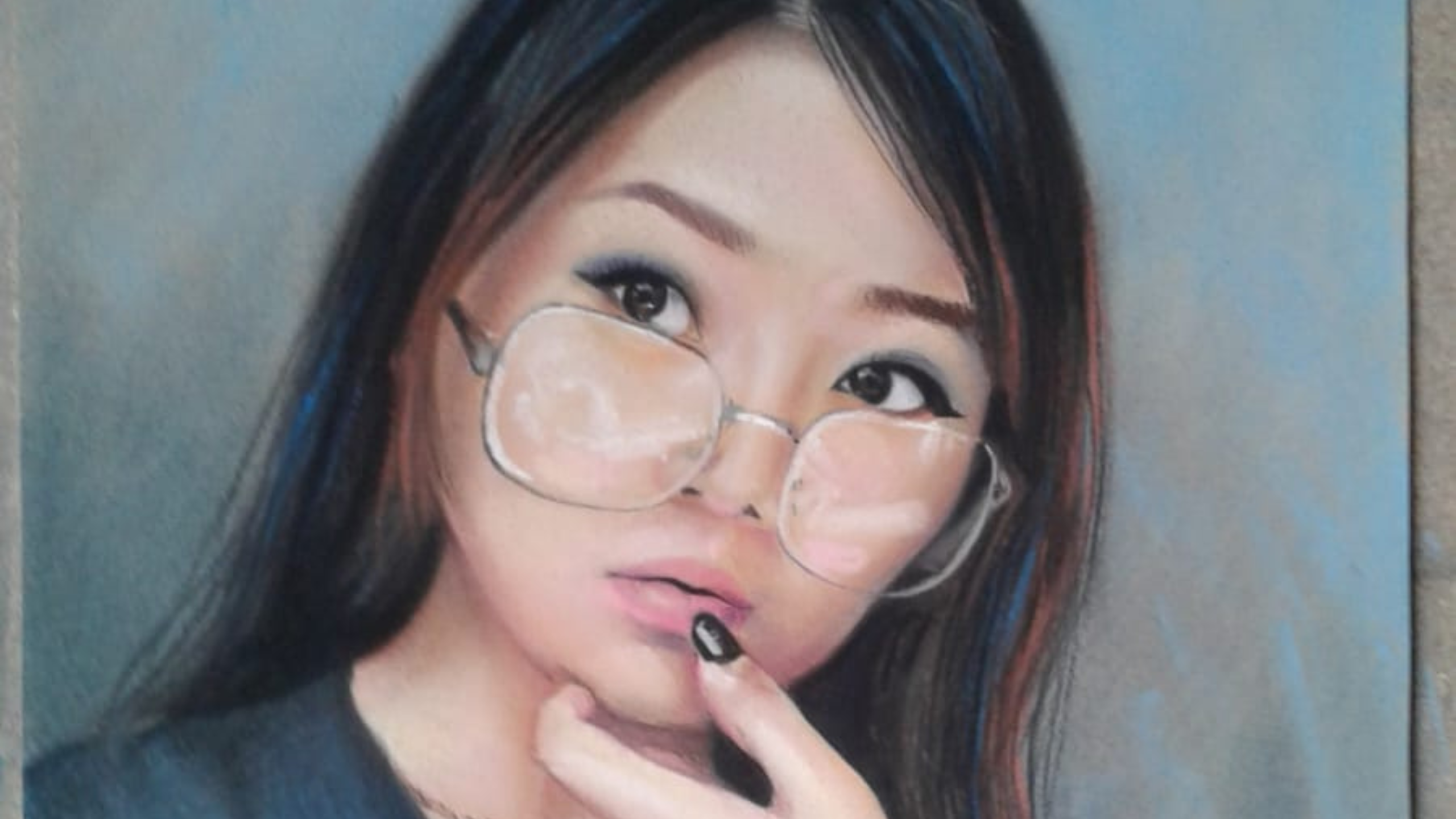
Opening WhatsApp to show me a recent order from a woman, perhaps in her mid-20s, I literally couldn’t tell the photo from the portrait, at least until he whacked the zoom on to the max. You might think I would have applied a little logic and understood that the photo came first, and was therefore higher up in the chat but, er… moving on.
Not moving on very far, though. This portrait, plus others he showed me, was as ‘high resolution’ as I’ve seen in this kind of art.
How many megapixels do your brushes have? I asked, feeling lucky that he appreciated the very British irony in the question and the compliment inherent.
“A portrait is the most difficult; it requires special skills. But in nature and on Earth, you have more artistic licence. Yes, maybe, if it doesn’t look like this tree, it’s not a problem. I’ll draw a branch in the wrong place, I’ll draw it here, it will still be a branch, and it will still be a tree. There are no boundaries when you paint landscapes. But you can’t draw a person’s eyes in the wrong place. The eyes have to be spot on, not only the location, but you have to capture the soul, too; the character has to be similar.
“There are so many paintings I’m proud of because I spent a lot of energy figuring out how to do them. And I am satisfied when I succeed. But there isn’t any single one.”
Almaty is a haven for many people, and Karen Vardanyan believes that it can be a good source of inspiration for many artists, too, part of the reason he has remained here for so long. It is also not unusual to see other artists in the local area, for example, a former university professor who we will call Arsen, who, despite not having a car, has visited Karen’s village to paint and produced art that has been featured at exhibitions.
He showed me the brochure featuring Arsen’s work.
“Anyway, that’s the kind of artist he is. He paints everything. Here’s a still life. Here are some more objects. He’s a very good Kazakh artist.”
Karen himself is not keen on exhibitions, while understanding their value to many people.
“Firstly, for an exhibition, you need to make all the works you paint available for sale. If someone wants to buy, even if you haven’t put them up for sale, a guest comes, another customer comes, he’s added this to take this, and he says, ‘Wow, I want to buy this.’ But if I were to hold an exhibition, it would not always be about sales, and for an exhibition, I would need, let’s say, 50 paintings, which is doable, but not practical. That’s why I’m not interested in exhibitions, I don’t like them anymore. And I haven’t yet done a solo one, anyway.”
Karen Vardanyan does sell his work, though, and with regularity. His wife maintains an area on the Arbat pedestrian zone in Almaty where she sells something most days, and he often receives orders. Yet his remit is not solely to sell. Much of what he produces is kept at home and firmly not on the market, priceless masterpieces that he wants to be there for his family in years to come.
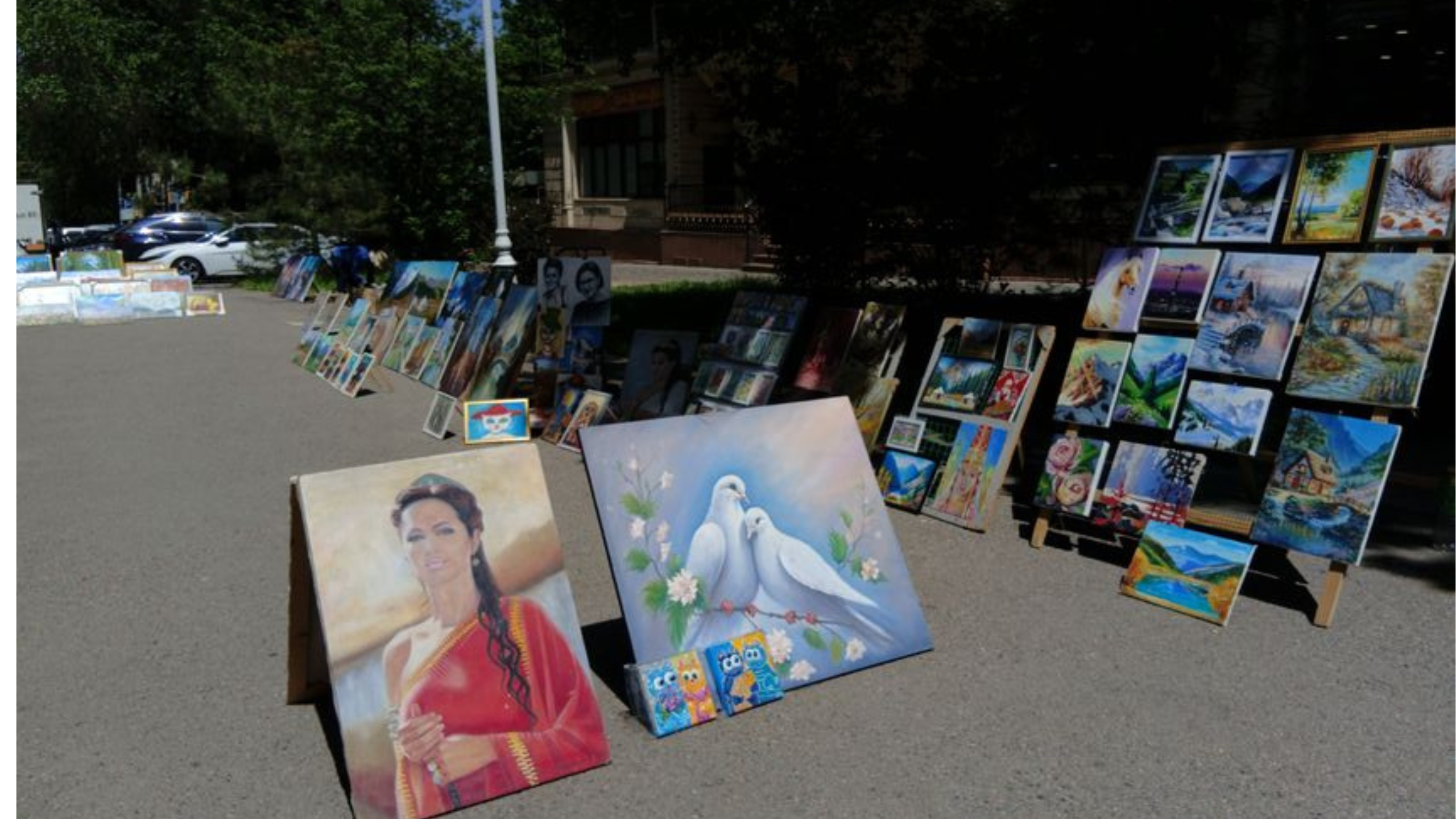
He told me the story of a portrait still on his wall, not for sale as such, but one which was painted to order before the sponsor went out of business and couldn’t pay for the work. While this is a shame, in some ways, the gallery of his home studio is all the richer for it, and for visiting customers, very likely to sell his talent more than adequately.
“I am not as inspired by the most famous artists as I am by some of our Armenian painters. Then, I really like the work of Valentin Serov and Isaac Levitan, as well as Léonide Bourges, for sure.
What are your plans for the future?
“To live more, to relax. To be more in nature. To spend more time among trees, near water, with the wind, the insects, and the birds. To be more of a citizen of the planet.”