Although by no means the only country in the world to value its past alongside its future, Kazakhstan is proudly traditional in many ways, massively forward-thinking in others.
Flying the flag for the former is its time-honoured music, complete with instruments which date back to the days of Abylai Khan, and arguably the earlier British Middle Ages; not something that refuses to go away but something that nobody wants to lose – even those not inclined to listen.
Applications to the National Conservatory each year – by musicians hoping to make traditional music a career – are off the scale, and even getting a place is already evidence of the kind of ability that would lead to a lasting and rewarding career in music, if it weren’t for the amount and quality of competition.
Thinking outside the box can be a solution to joining the other aspiring professionals in the queue, and while many hundreds often find ways to make music their career, this often leads them down a road nestled just out of sight, and their talents are then devoted to nurturing the next generation of wannabe musicians, to their eternal credit.
Arkhat Kuanshaliyev
Arkhat Kuanshaliyev moved diagonally across the whole vast country to Almaty in 2009 with doubtless the same aspirations (yet the same limitations) and despite his talent, also seemed set for a respectable career as teacher or ensemble performer.
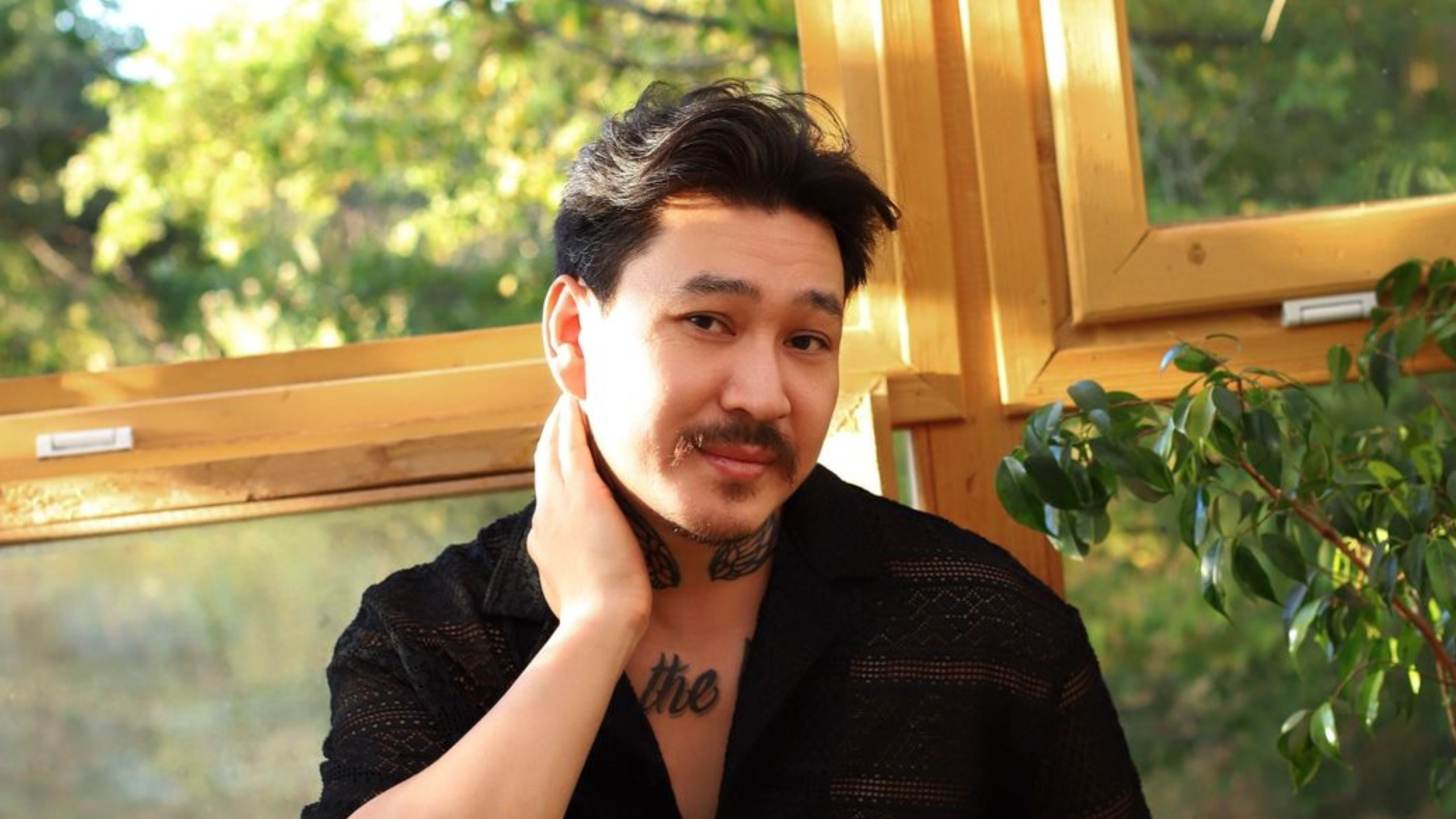
Born and raised in a village near the city of Oral, a few paces from the Russian border, Arkhat’s musical background is unremarkable, not in any unflattering way, but in that his path began by taking dombra lessons with his father in their modest bungalow. Continuing to follow the beaten track of lessons, practice, and assessments left him with a diploma, but also a burning desire to create rather than repeat.
This led to the formation of the mini-ensemble, Trio Khan, which showcased the dombra in a fresh way from 2013 to a few years ago, upon which the three members felt they had gone as far as they could.
Armed, though, with a reputation for originality, plus a unique brand, they have landed work in the entertainment industry, not perhaps beyond their wildest dreams, but their more realistic expectations when graduating.
saqtimes.kz met Arkhat Kuanshaliyev to learn about his unique path as a musician and proponent of this highly valued Kazakh art form.
Arkhat explained to me that he had been in Almaty for about 17 years, having made the 1,310-mile trip over from his hometown to study at the Kurmangazy Kazakh National Conservatory, our version of the Royal College of Music in London, a course which he completed in 2013.
“While preparing for my finals, I had the idea of putting a small group together with friends, to do something that hadn’t been done before, at least not commercially, so as with many footloose and free-thinking 20-somethings, we just drifted down the let’s-start-a-band road.
“There are plenty of options for Conservatory graduates, but at the time, this idea took root, and we put all our energy into it.”
Trio Khan: The Dombra in a New World
Trio Khan largely came from messing around with a friend, the brainchild of the casual jamming sessions which punctuated serious preparation for their exams, Arkhat long since having transcended the need to be directed or sit in front of a music stand.
Investigating the prospects for a fusion of jazz and blues played on the dombra (an embodiment of hundreds of years of Kazakh history and the breath of a very proud culture), Arkhat and his bandmates found that their unique style divided opinion, but met with approval from those who understood.
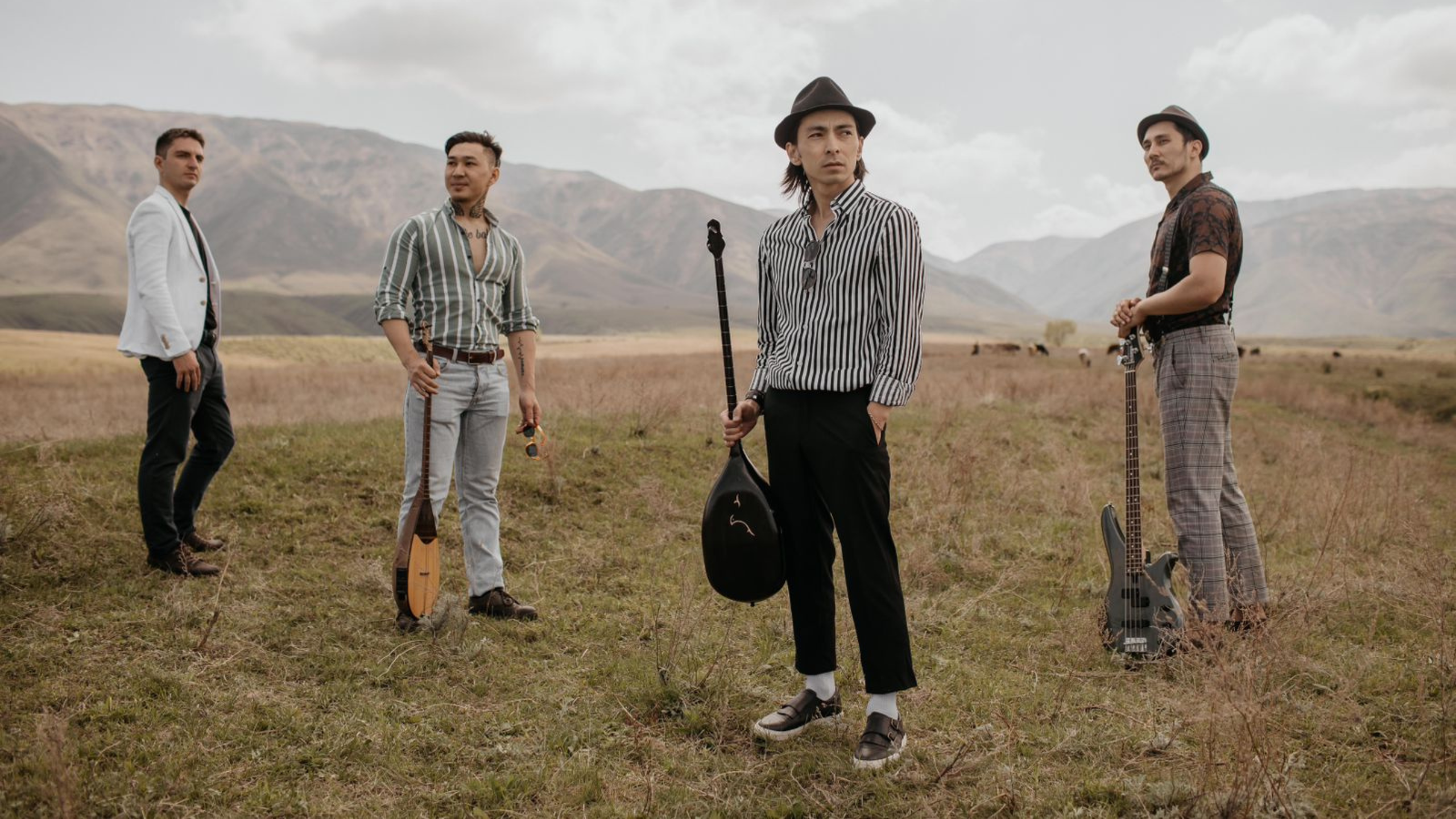
“Beside me, there was one singer, and later on we added a second dombraist, plus a drummer. We played together every day, and then started to get bookings, albeit for small gigs. Then we found an agent, and played concerts in pubs, at weddings, even on television. Our tours were mostly dominated by private gigs, though, in different places, but only in Kazakhstan.”
The gap between becoming very popular and going viral (and not bridging it) means the many views on social media didn’t lead to a world tour for Trio Khan, but laid the foundations for a decade in which they represented both the past and the present of their country’s music in their own way, not to the extent that they rewrote history, but added a footnote to the next history books.
“There was a lad with me, our singer, who made up the creative force of the band. I guess we were a bit like Lennon and McCartney, and we inspired each other to create new music. To be honest, when we started, we only had a couple of tunes plus some traditional favourites, so to keep the brand fresh, new ideas became a high priority.
“Yes, I was the main composer, and as a result of being able to showcase my work with Trio Khan, I was able to get work writing music for other performers, singers, ensembles, and others.
“For the past 5 or so years, I have been composing music for various ethno-folk ensembles, as well as helping with their musical direction. Notable examples include Ushkonyr, Khazar, and Korkyt.
“Additionally, in recent years, I have worked on the arrangements for an album by Erkesh Shakeev, a respected singer-songwriter. I have also collaborated with various other performers. My future plans now centre on developing my own solo creative work and breaking into the film industry.”
A lot of British people wondered what had happened to Gary Barlow after Take That originally wound up operations and Robbie Williams took on the world, yet he was active in the background writing songs for other people, much the same as Arkhat today, whose priorities have evolved since the Trio Khan adventure. He now sits in his own studio, a much sought-after composer, with his repertoire set to include film soundtracks, which is where his interests mainly lie, as of 2026. Add to this a young family, and it all keeps him busy.
The Gary Barlow of Kazakhstan he may not quite be, but a musician whose unique contribution to his country’s musical landscape has introduced more options to young and aspiring musicians beyond the range of classic melodies that the country holds so dear.
Arkhat and I agree that our revered musical traditions, especially the dombra, are the cornerstone of the culture and merit preservation.
But beyond that, the creation of new music is part of moving forward, both aspects important in their own right.