
Undoubtedly, one of the most important days in Kazakhstan, as well as about 15 other countries, is 9 May, known as Victory Day.
Germany’s surrender came on the evening of 8 May 1945, at that late hour already past midnight in Moscow, where the Victory Day parade is attended by many thousands.
The same could be said of Almaty and other Kazakh cities, which at 10:00 a.m. hold solemn parades to remember the enormous price that the country and its people paid during the Great Patriotic War.
The day is more than symbolic, as during the war, very few families were untouched by the horrors of the conflict, and the Soviet Union lost an estimated 24-27 million people over the years of hostilities.
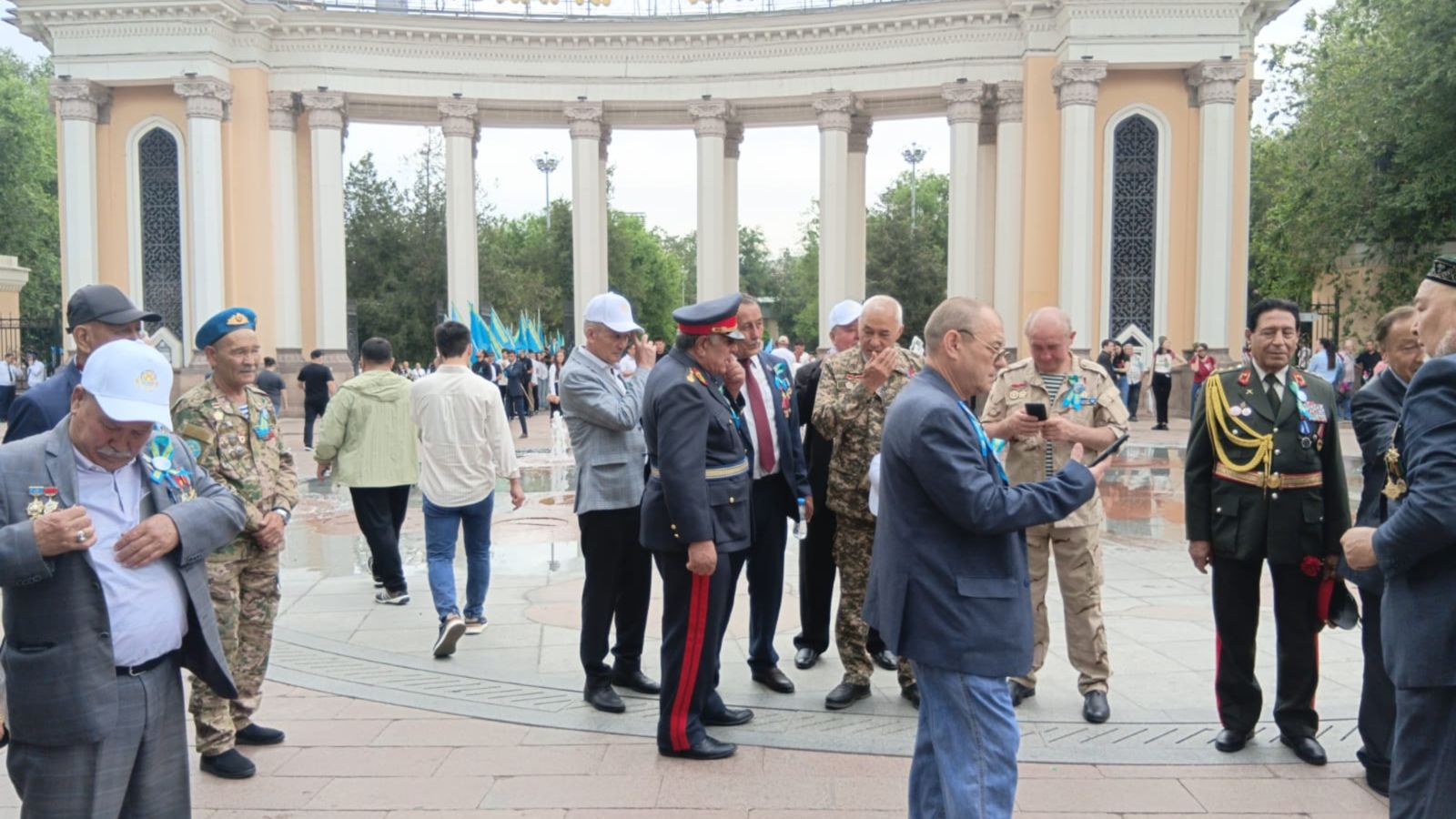
Several generations were touched by the Second World War, as it is widely known globally, from people who died on the battlefield to those missing in action and never accounted for.
The day also remembers civilians starved or executed, children who lost one or both parents, and the villages that were lost forever.
Kazakhstan has recognised Victory Day since 1991, and it has always been an official national holiday.
President Kassym-Zhomart Tokayev is in Moscow to attend Victory Day commemorations there, this year marking the 81st anniversary of the Great Victory.
9 May, and the parade that passes along streets in hundreds of towns and cities, is not about military spectacle; it is about remembrance.
Families make the walk holding photos of those who died in the conflict, as well as those who survived.
Dima (right), attending with a friend, is holding a placard with photos. He tells me that his uncle served his country and returned to tell his story, which he and millions of others agree we must never forget.
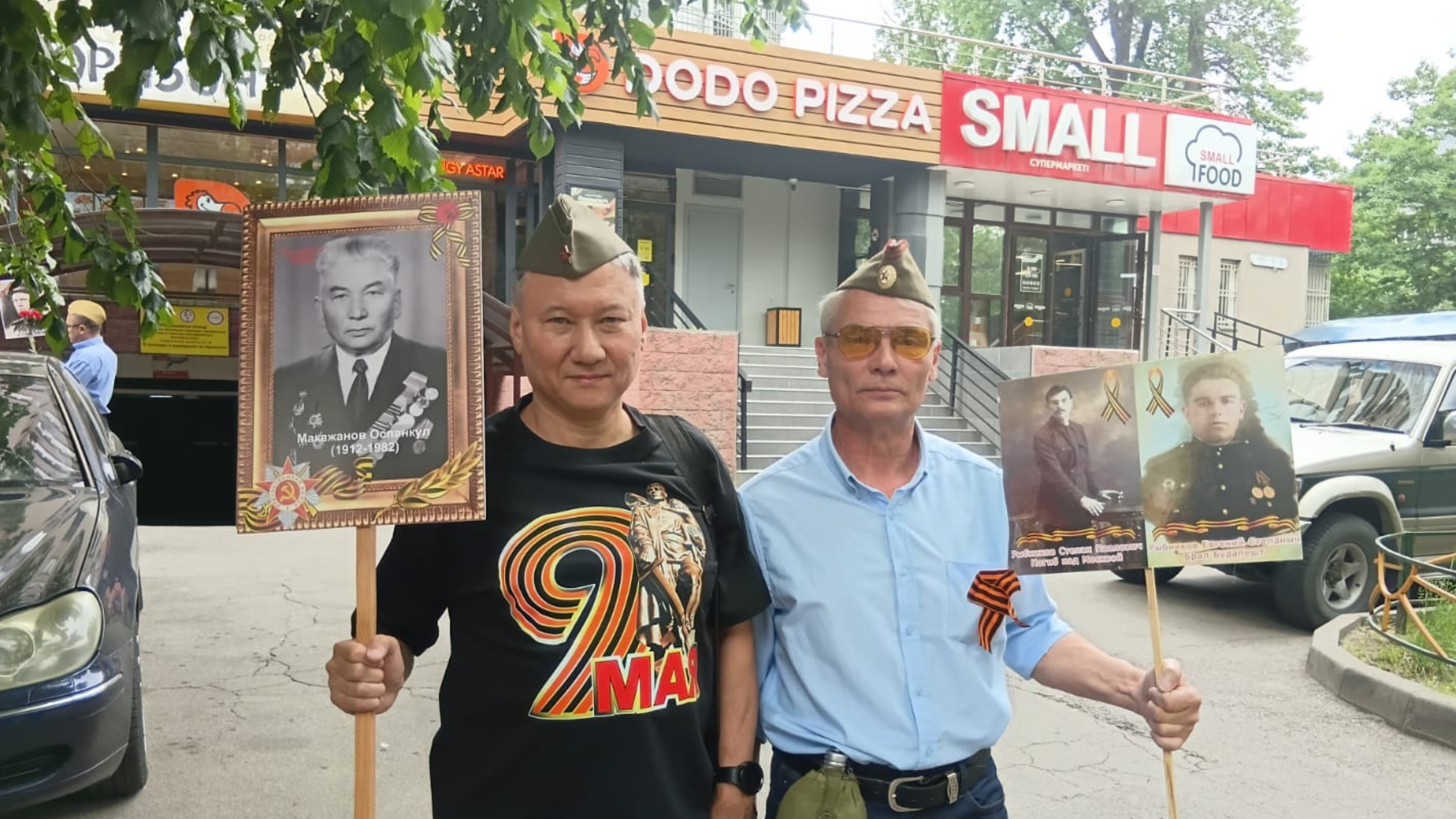
“He died a few years ago,” said Dima, visibly proud of his relatives, who gave so much.
Gulshat told me that many of her family members went to the war, some of them never to return.
“The parade is to remember that they died so we can live in peace.”
Her friend also attends every year. Her father survived the war, but the sacrifice he made was enormous. His descendants consider it an honour to keep his memory alive and taking part today is something they believe to be indispensable.
The photos on display, sometimes perhaps the only surviving images of grandparents, aunts, and uncles, are often not just of those who fought in the war, but similarly of people who worked in factories or hospitals, survived sieges or occupation, or died during the conflict.
Those who died physically but still walk with us.