
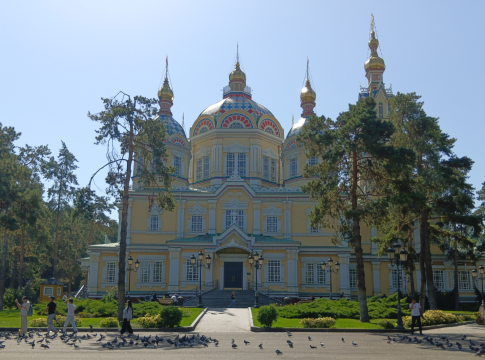
Believed to be the second-tallest wooden church in the world, Ascension Cathedral in Almaty is one of the iconic buildings of its city.
Also known as Zenkov Cathedral, the 46-metre-tall structure was built in the area known today as Panfilov Park, after the bishops of the Turkistan eparchy decided that the emerging city of Almaty needed a Russian Orthodox Church. Following their decision, and the consecration of its foundation, construction took place from 1904 to 1907.
Including two short periods of restoration, namely 1973-1976 and 2017-2020, the structure has held out against not only the passage of time, but also the 1911 earthquake.
It has also survived political upheaval, for a long period not even being used as a place of worship, as after the Russian Revolution, the building became the home of the Central State Museum of the Kazakh SSR. In the 1930s, it was used by public organisations and to host radio transmitters.
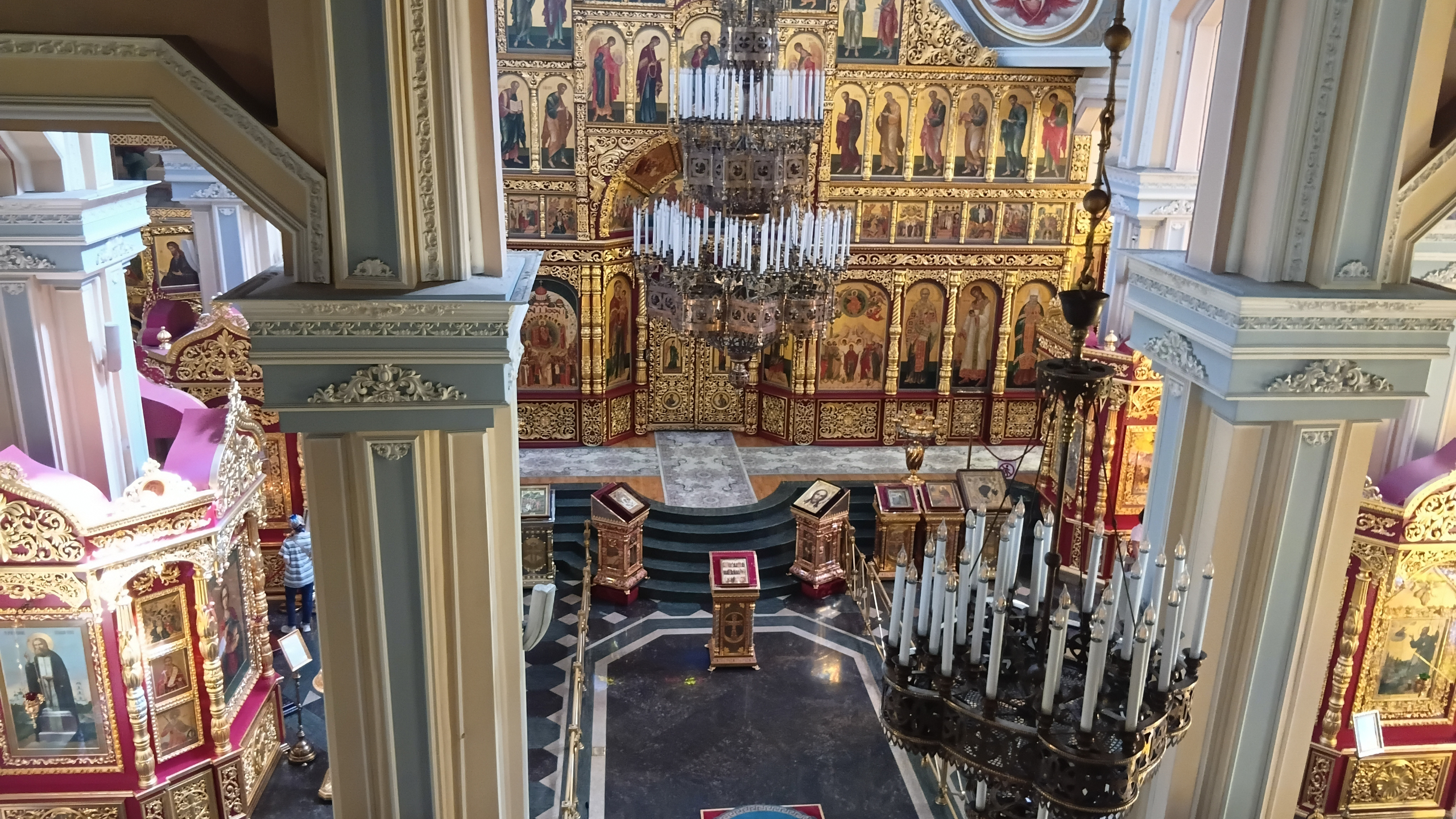
The director of Ascension Cathedral and keeper of the keys, Alexander Suvorov, added some fascinating information to what is available on basic online resources, first of all taking a step back from the 30s to a few decades earlier.
“The Russian Revolution of 1917 changed the landscape so much, and look what happens next: in 1929, the cathedral is closed; they wanted to demolish it, but its builder, the architect Zenkov, is alive, and fortunately, not only is he alive, but he occupies a significant position in the Soviet system.
“And he preserves this cathedral.
“A second floor was built here; it was turned into a museum, and thanks to this, the temple survived, although the communist leaders of the time really wanted to get rid of it; it was a real obsession.
“It was restored, and surprisingly, the Soviet school of restoration of the 1970s treated it quite carefully; the crosses were never removed, well, not before our own restoration.”
After a very trying 20th century, it was finally returned to the Russian Orthodox Church in 1995, and today welcomes guests and tourists and is once again a major centre of religious worship.
“In 1995, it was returned to us. The state provided a modest amount of assistance to restore services there. Then in 2017, we began a new restoration, where we attempted to bring the church as close as possible to its historical design. This wasn’t an easy process.”
Alexander smiled when asked about the famous legend of Ascension Cathedral, that it was constructed without a single nail.
“It makes a nice story for foreign tourists, that’s for sure, but it’s not as amazing as many people seem to think. The structure simply doesn’t need nails because the builders used different methods, like staples, wooden steel ties, bolts.”
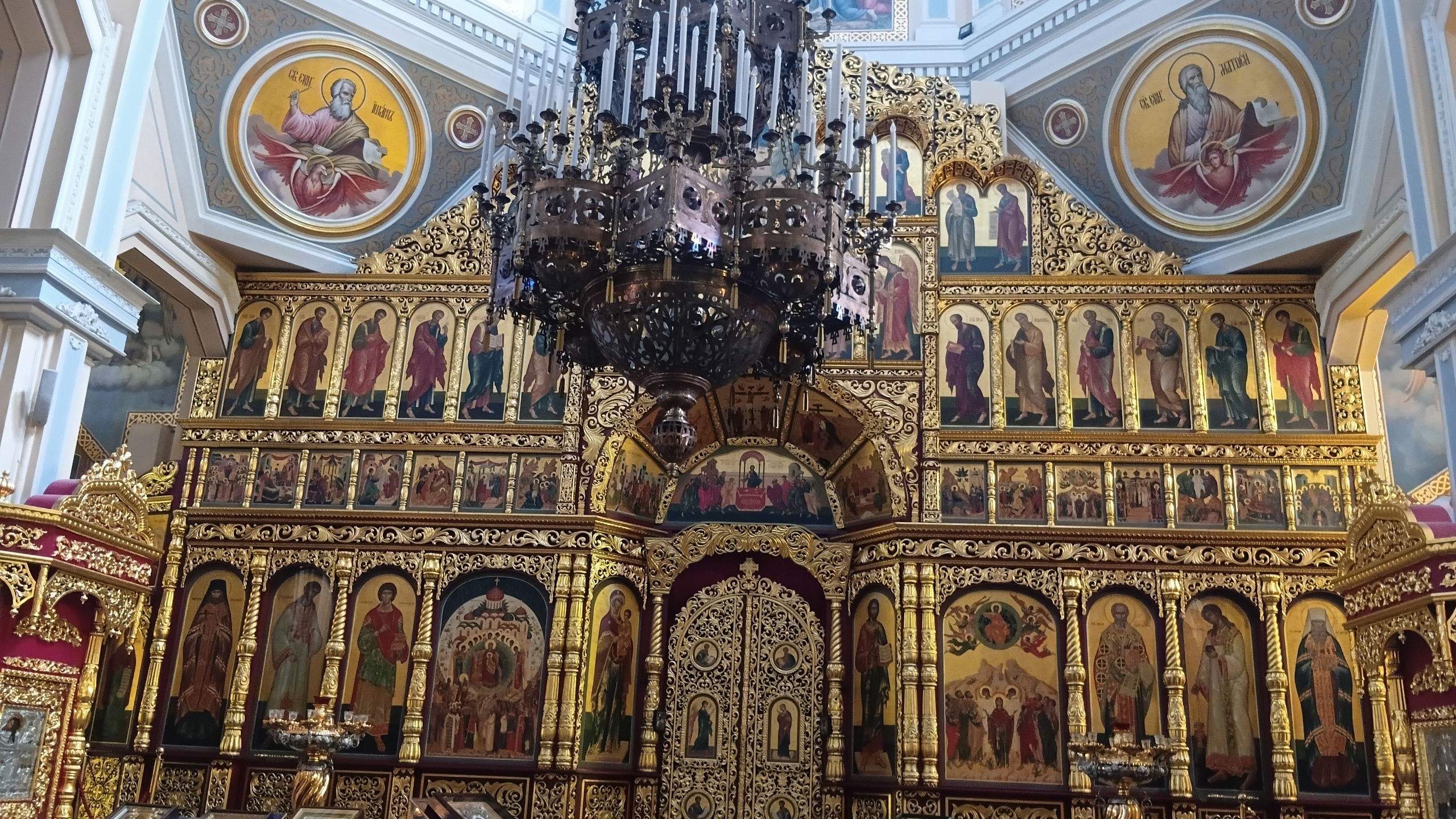
As to whether the decision to forego the use of nails owed to the bishops of the day choosing not to use them because of their association with the crucifixion, well, that remains another story for tourists, but one thing is known: the resilience of the cathedral to the 1911 earthquake was attributed at the time to divine intervention by some of those bishops.
Alexander Suvorov was born in Almaty, originally educated here but later on trained and ordained as a priest at the Moscow Theological Seminary from 1995 to 1999. He also has a degree in Jurisprudence and International Law, topped off with a Master’s degree in Theology.
After working as a deacon and priest, he has been the director of Ascension Cathedral since 2003. Although first and foremost he sees himself as a priest, his broader remit is not only religious but organisational, as he oversees the running of the cathedral, including its finances and schedules.
“No organisation, no matter how religious or Soviet, can exist without management. You need an organiser, a schedule, a work schedule, a work crew, a kitchen, and my administrative position. This includes the economic management, the general oversight department, something like that.”
Alexander is proud that the cathedral today is worthy of what was intended when it was conceived and then built. All this, despite over a century of hindrances, 1917-2020 presenting so many challenges to the church both as a building and as an institution.
2020 is when the religious services started again after the latest reconstruction, but it is far from complete in the sense that staff need to monitor the building, partly because a type of plaster that would not crack when applied over a wooden structure has not yet been invented. What’s available now can’t do the job they would need it to.
“If it’s a pure polymer, it won’t be breathable. So, for us, this is a truly complex technical and scientific problem, and it shows us how expensive the building will be to maintain.
“We even had meetings with major global construction giants, but the technology we need doesn’t exist yet. That means, in about a year or two, we’ll have to plaster again.”
As with many religious institutions all over the world, Ascension Cathedral has both devoted parishioners who participate in the sacraments of the Church, in the Eucharist, or communion. There are also those who come to confession, which pushes numbers up, albeit not quite as high as those who come in their droves during Easter.
For example, every Sunday two Divine Liturgies are celebrated at the cathedral, with an average of 100 to 200 people receiving Holy Communion at each service. Overall, the total number of people attending the two Sunday Liturgies usually exceeds 600.
According to Alexander:
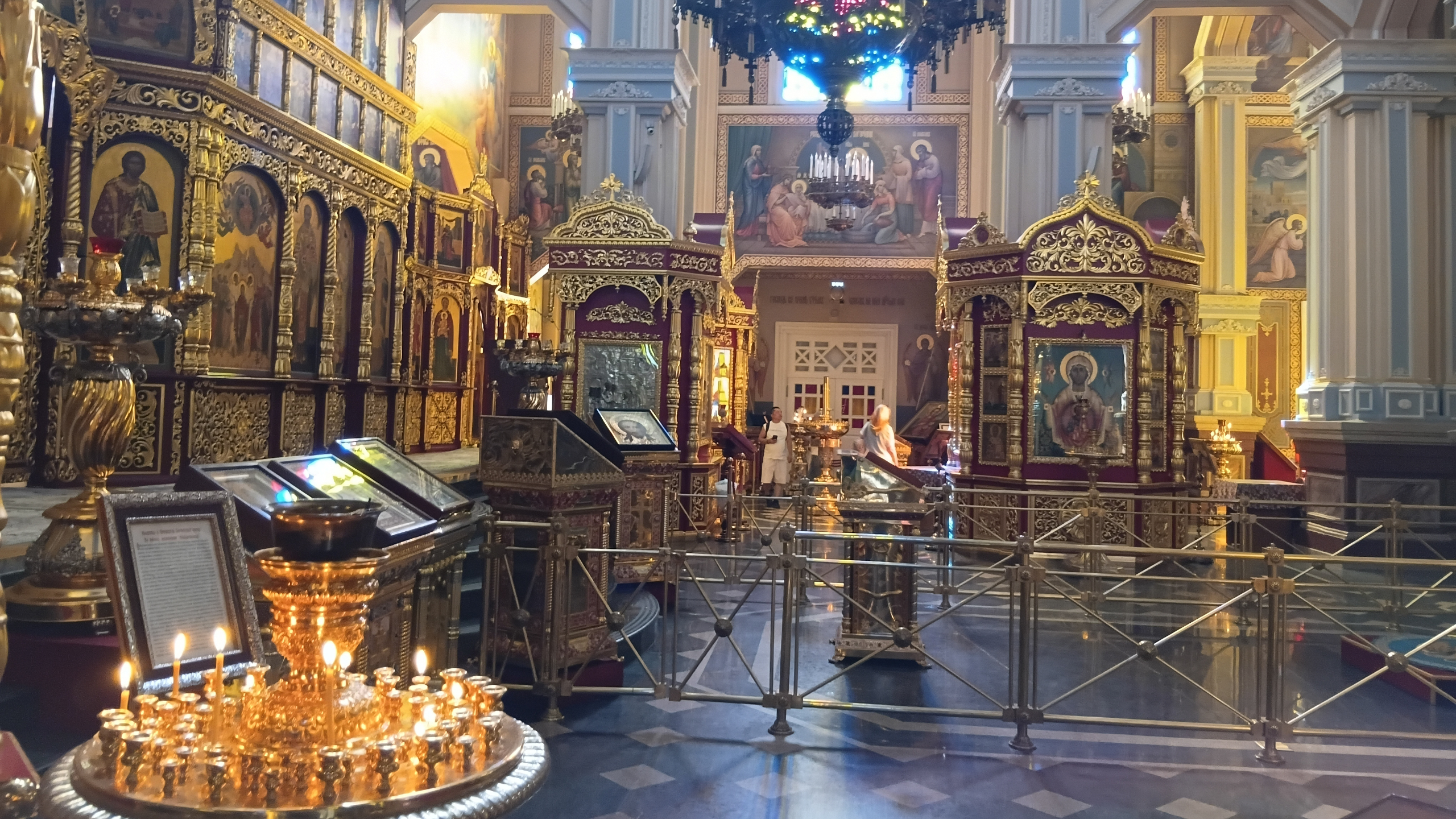
“As you know, the cathedral is open to everyone, and we don’t judge people. And even someone who simply comes into the church may receive Communion — maybe they also light a candle here. Everyone has the right to come, including tourists.”
Yes, a building of this beauty and significance, not to mention history, is inevitably going to be part of tourist itineraries for visitors from all over the world, be they Christians or of any other faith.
Equally as inevitable is the raw statistic that the overwhelming majority of people entering the sacred doors on any day of the week (perhaps with the exception of Sunday) are people in Almaty on some kind of trip.
That’s a fact of life for cathedrals all over the world, and many tourists pass through without any interest in the spiritual aspect, and balancing these sites as both places of worship and visitor attractions can be challenging for people like Alexander.
“The cathedral is truly a unique engineering and architectural structure in the entire world, primarily because such a large building was constructed of wood. It wasn’t some whim of its creator, and this building is truly unique, so we don’t mind tourists coming along, but there are things we cannot overlook, and we will possibly need to change our stance.
“We plan to ask tourists to pay for admission in the foreseeable future, although we want to make this a voluntary contribution for now. Why? Because the cathedral doesn’t receive any small funds or subsidies from the public purse.
“There are no travel agencies which naturally generate income for us. All our infrastructure loads are our maintenance workers, and that’s quite difficult, especially in autumn and winter, when, say, the streets are dirty, we simply can’t cope, and our budgets don’t allow us to hire a cleaning company. There’s no income for it.
“We do need to sort some of the practicalities, though, as we don’t have any easy modern payment systems that tourists can take advantage of, as they would in Barcelona, Sofia, and Istanbul, where I have personally seen this system in operation.”
There have been tourists entering who, it has been felt, did not respect the cathedral in one way or another, and in some cases this adds to their costs. In other cases, it’s just uncomfortable for people if, perhaps, tourists take photos of them while they are praying.
It is accepted that people from different countries have different values, but from time to time some guests lack consideration, and it adds to the inconvenience.
Resident in Almaty for approaching 20 years, this was my first time inside Ascension Cathedral, and the appeal to tourists is self-evident; something, I would say, is worthy of the highest respect.