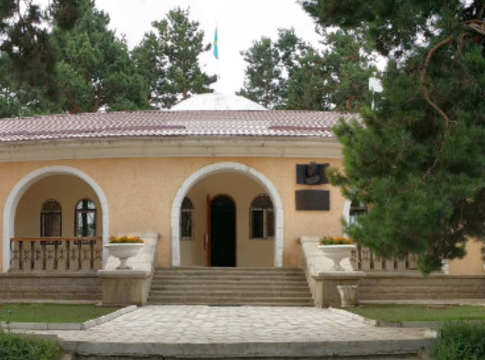
Founded in 1941 as the Institute of Astronomy and Physics by academic Vasiliy Fesenkov, the Astrophysical Institute (FAI) became a standalone entity in 1950 and was officially named after Fesenkov in 1989. It has worked continuously in the city since its inception.
FAI is a parent research umbrella that operates three distinct facilities, rather than being just a single observatory. The Almaty city location is referred to as the Kamenskoye Plateau observational site.
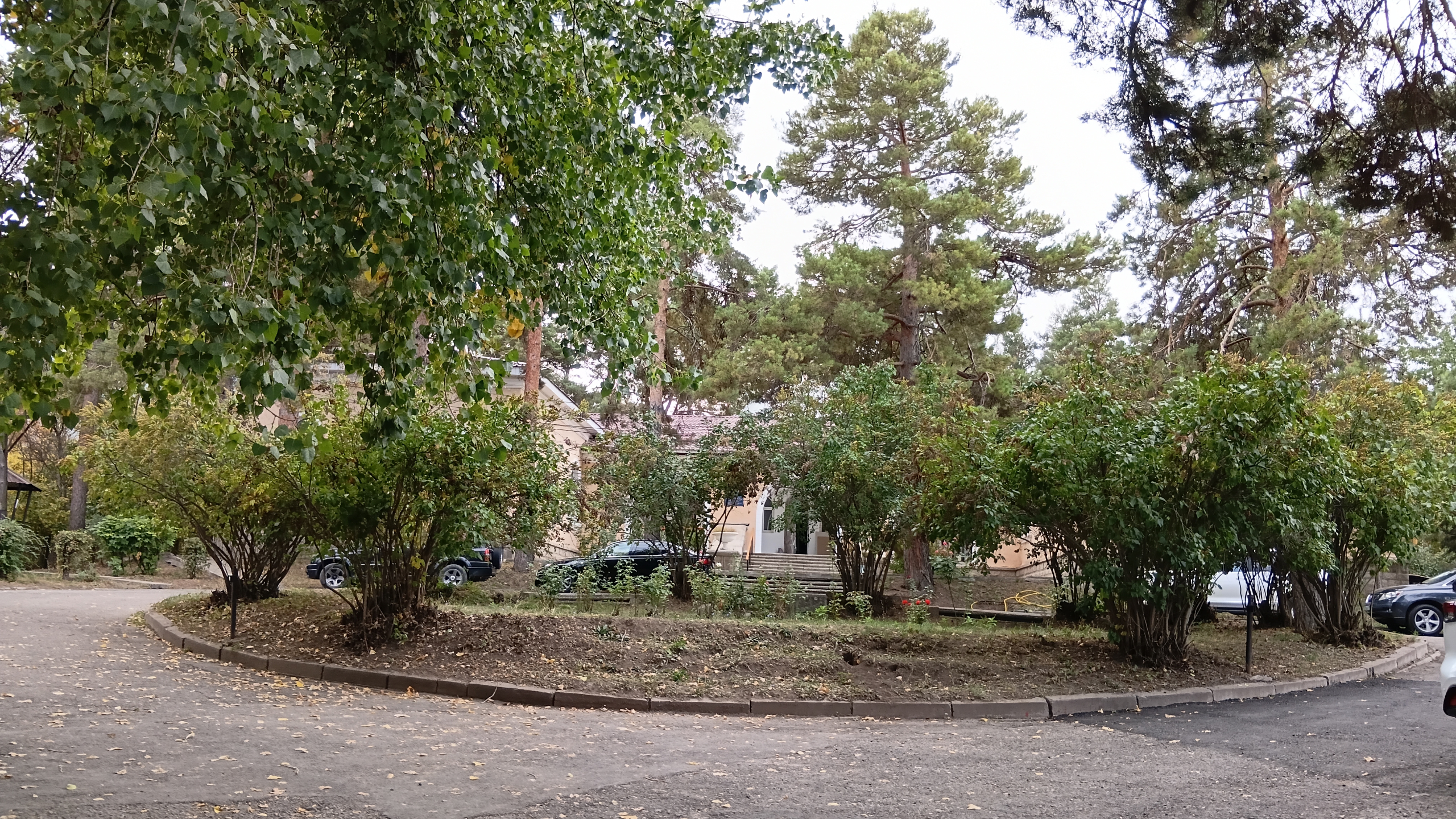
The premises are nestled in a wooded hilltop area in the south of the city. For anybody who may wish to sample a more traditional part of this major Kazakh settlement, the vicinity is borderline idyllic: views, peaceful avenues, trees, flowers, and a small housing district one might presume was built for the staff of the site back in the day when it was a relatively isolated community. Even the stray dogs are friendly.
Although its observational work here is sometimes hampered by air and light pollution from the growing city, its function is of enormous importance, and since 2012, FAI has officially represented Kazakhstan as its National Member of the International Astronomical Union (IAU).
Its current director is a man called Chingis Omarov, whose experience and CV include far more than his PhD, but also the Order of Kurmet (2024) for his contribution to Kazakhstani science (not so dissimilar to an OBE, for those reading in the UK). He specialises in celestial mechanics, stellar dynamics, and computational astrophysics.
The Institute combines theoretical research at its headquarters with observational facilities at the Tien Shan Astronomical Observatory and Assy-Turgen Observatory. According to research fellow Ildana Izmailova:
“Generally, the institute’s work is divided into two areas: theoretical and observational. The theoretical side is where they perform calculations, simulations, and modelling. All those complex formulae are dealt with by a team of dedicated scientists.
“Then there are observations. This includes data from telescopes, their processing, the construction of our own models, and the writing of articles based on these observations.
“We work in different areas – near space and deep space. Near space includes satellites, near-Earth space, asteroids, and space situational awareness and planetary defence. Deep space includes other stars, nebulae, galaxies, and so on.
“This area endeavours to gain a more fundamental, theoretical understanding of the structure of the Universe as a whole.”
Ildana earned both Bachelor’s and Master’s degrees in Physics and Astronomy from the Al-Farabi Kazakh National University after having relocated to Almaty from East Kazakhstan. She joined the FAI team to complement the specialists already working there in various areas.
In her six years working at FAI, one of which was combined with study for her Master’s, she has mainly been involved in the development of the Kazakhstani National Virtual Observatory (KazVO), which is an ongoing infrastructural project being actively developed.
She explained her work in more detail:
“My job involves publishing data in the public domain according to international standards. We recently developed our virtual observatory node where we publish data that our staff has collected on our telescopes from the 1950s to the present day. That is, both old, digitised data and streams of data from the telescopes now.”
This is something she speaks of with pride, because it is not just a project of interest to local people but has truly elevated the FAI, and Kazakhstan in particular, to a global level, where they exchange data, publish data, and their work becomes visible to the entire world.
“Even people not involved in astronomy can come, download the data, and use it for their own purposes. So, this is all for other people, for society, for some kind of global community.”
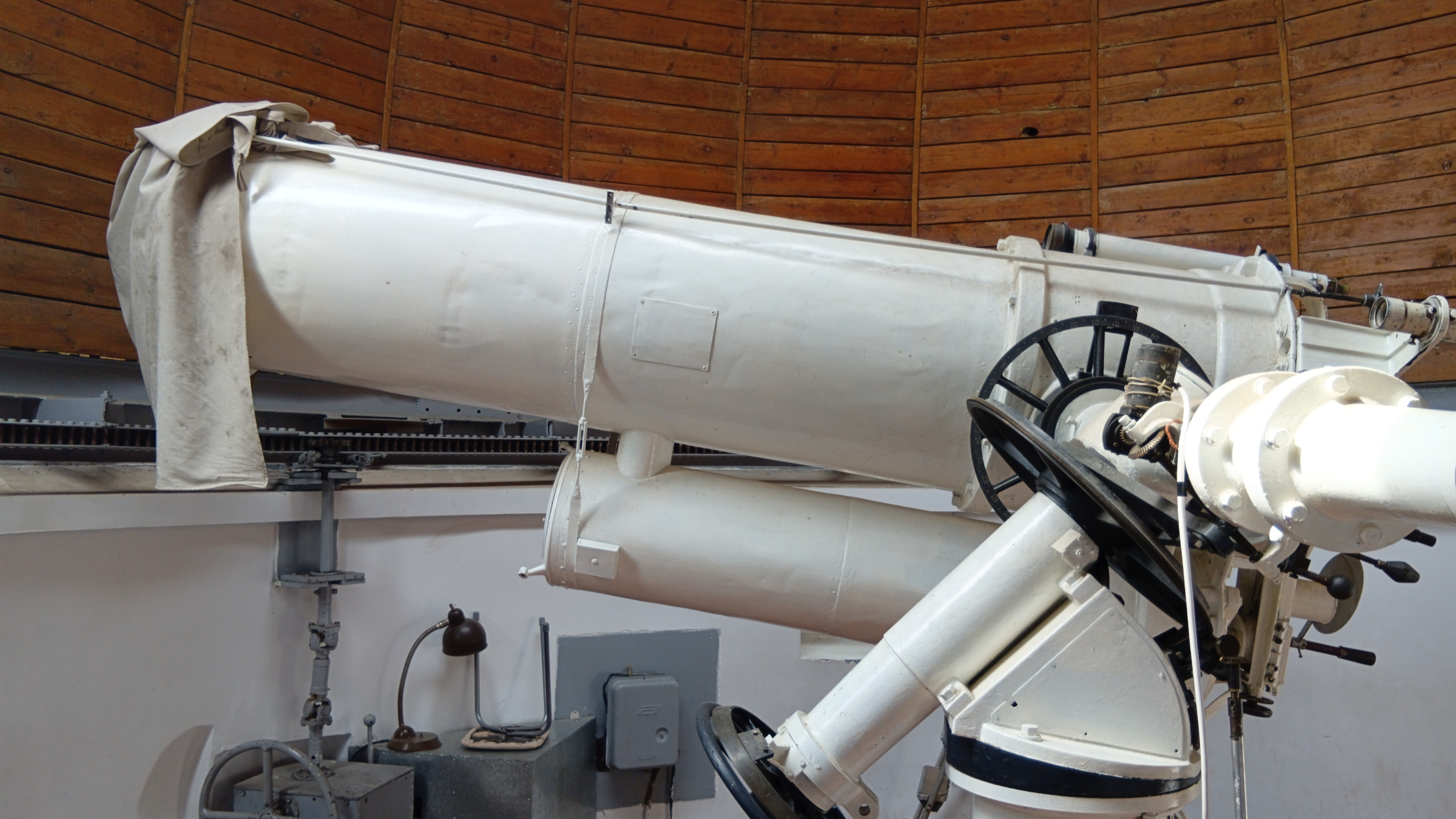
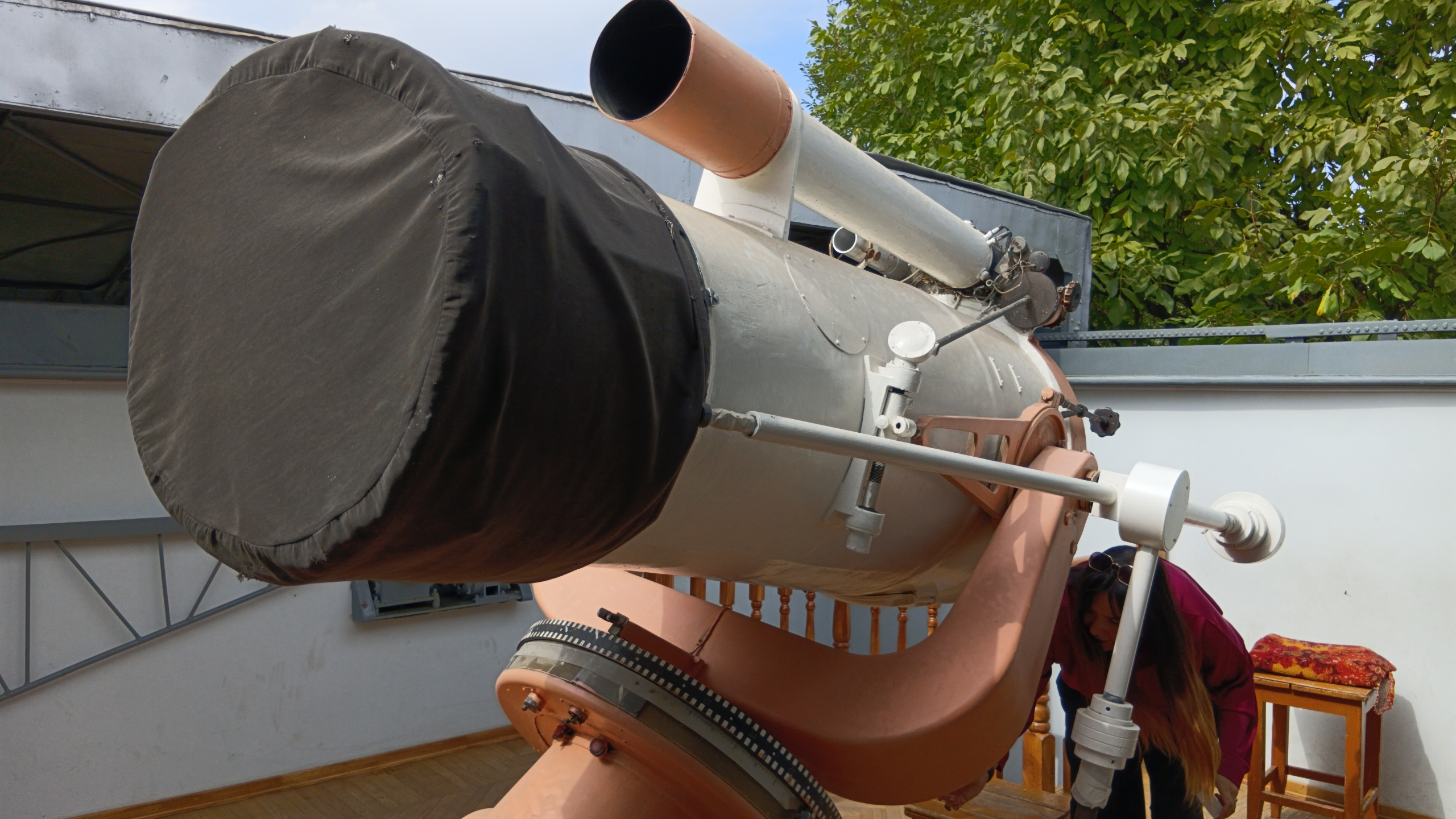
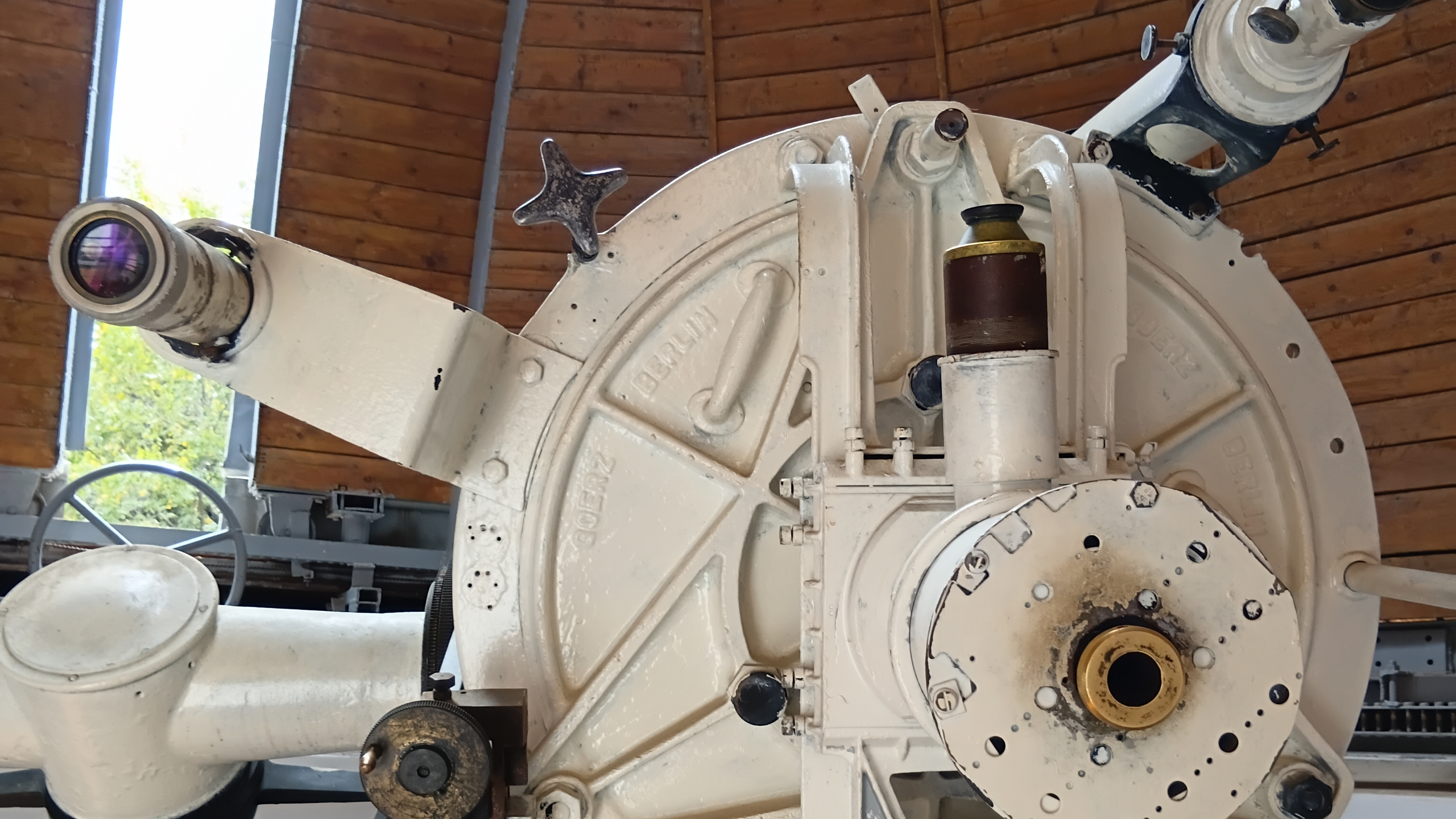
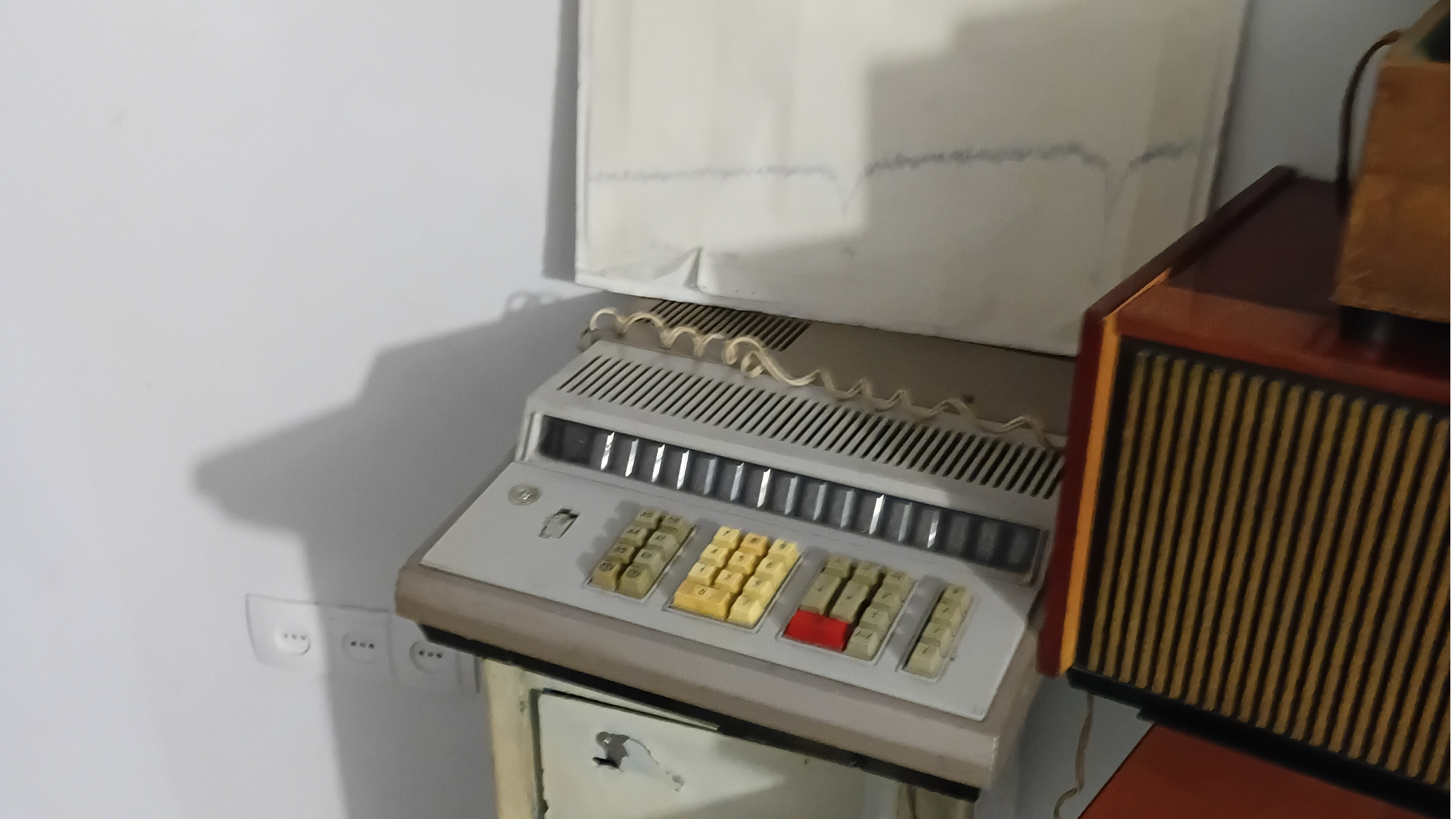
There is also visitor access and a small museum, very much worth seeing, all the more so if accompanied by somebody who can explain some of the equipment there. Some of it dates back decades and showcases the earlier years of the Institute. There’s also a fragment of the Sikhote-Alin meteorite.
The evenings are more interesting because visitors can come, listen to the history, go up to the pavilions with the telescopes and look through a telescope – a real working scientific telescope – at the most interesting objects in the sky.
The Institute’s territory is a restricted scientific facility and not a public park, so general leisure access is not permitted. Furthermore, all visits are conducted as paid educational lectures with telescope demonstrations, and advance booking is mandatory. Guests are a wide variety: schoolchildren, even preschoolers, come, as well as older people, retirees, absolutely everyone. Tours can be in Russian, Kazakh, or English.
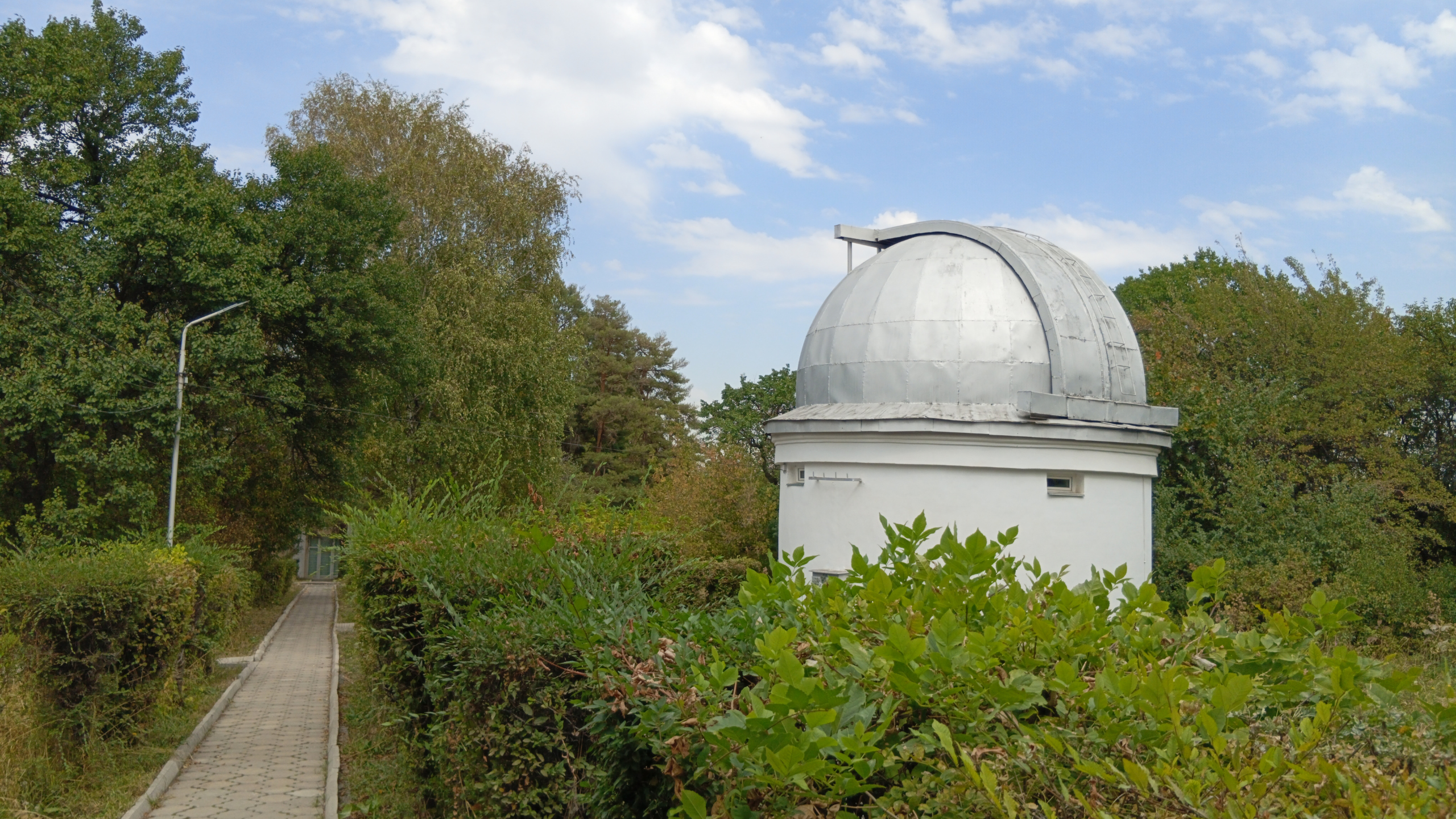
In terms of the work of the Kamenskoye Plateau centre, located, aptly, on Observatory Street, it is notable that some scientific observation has been shifted to higher-altitude sites (Assy and Tien Shan), largely because light pollution from the city makes it harder to see the stars as clearly as they would need in order to gain valuable data.
Consequently, the higher-altitude telescopes near Big Almaty Lake and those on the Assy-Turgen Plateau are dedicated to making detailed observations of space, while those here are used less frequently, with the historic telescopes on Kamenskoye Plateau now primarily dedicated to educational and public outreach programmes (excursions, lectures, public stargazing).
“There’s no big difference between what’s being done on the ground at the Tien Shan Observatory above Big Almaty Lake and what’s being done in Assy-Turgen. We have different instruments, but the astroclimate in Assy is much better. There are a lot of parameters involved in astronomy, including the darkness of the sky.
“Accordingly, many of our key observational programmes, including tracking artificial Earth satellites, are concentrated at Assy-Turgen.”
Growing up in the West led to many misconceptions about life east of the old Iron Curtain, but the British mind did tend to associate the former USSR with space, partly because that’s what we were told on TV. But there was far more to life here, of course, and astronomy was only one aspect.
Ildana believes that astrophysicists today work as much, if not more, as they used to back then, giving a few reasons for it.
“In my personal opinion, we work no less. In particular, certainly in observations, because we have many more telescopes now, and we install something new every year or two. We also attract other foreign partners to install telescopes.
“We also cooperate with international partners through our AstroHub programme, which provides a framework for joint telescope installation and shared observational resources. So, a lot of work is being done.”
Even those who may take an interest in astronomy might consider it just that: a curiosity, and there is often a debate to be heard in some countries about whether public money should be spent to fund space research.
As this is not the purpose of this article, we can leave the debate to those keen to have it, but listening to Ildana reassures that this is not just an expensive hobby and that studying space has led to things down here on Earth that humanity has benefitted from.
“I think it’s important to observe space because it helps answer the question of where we are in this Universe and how it works.
“And this is a more philosophical question regarding human curiosity in general. But again, if we return to the topic of observing near space, say, satellites or asteroids, this is very important now because there are more and more satellites every year.
“Space debris is growing. And it’s important to monitor all this in order to adjust operating satellites so they can manoeuvre and not break down. And, in particular, to see if something is suddenly hurtling towards us. So, in any case, it has a purpose.”
I tend to cycle past the Observatory on my way to the mammoth mountain climbs that I then invariably struggle up, and the quaint, beautiful tree-lined roads of the private district have always seemed somehow magical to me. Not so much that time forgot them, but decided to leave them to just get on with it.
For whatever plans the builders had when this was all brought into being, it’s plain that they did a very good job, and just as plain that it is one of the underrated places in Almaty, both for its tranquillity and its contribution to knowledge.