
Those adults who grew up without touchable screens may have spent time as children looking through encyclopaedias and/or at maps of the world. The desire to pass the time was no different than today – only the options were different.
As one of them, I distinctly remember, in my lifetime, knowing that the Aral Sea was the fourth biggest lake in the world, a piece of trivia I often recounted, and, although it impressed nobody, it wasn’t something anybody disputed either.
The Aral Sea at its Peak
In 1960, the Aral Sea covered an area of some 26,300 square miles (68,000 square km). Its greatest extent from north to south was almost 270 miles (435 km), while from east to west, it was just over 180 miles (290 km). It sat in a vast lowland depression on the border between modern Kazakhstan and Uzbekistan and was a major inland sea, the livelihood of thousands. Its waters were both an entire economy and a thriving ecosystem. The lake, the size of Ireland, was responsible for a sixth of the entire fishing industry of the Soviet Union, with the fishing villages dotted around the shores prospering, over 40,000 people employed in total.
Why did the Aral Sea dry up?
Another industry embedded in the Soviet economy was to prove catastrophic, environmentally, as in the 1960s, the Soviet government decided to plant cotton fields in the region and divert the two rivers feeding the Aral Sea for irrigation. 45 major dams and 80 reservoirs were created, together with 30,000 kilometres of irrigation canals often just dug over loose desert sand. By the 1980s, in dry years, the inflow had dropped to nearly zero. The lake lost more water to evaporation than the rivers could supply. Without the waters of the Syr Darya from the north, and the Amu Darya from the south, the Aral Sea virtually disappeared in the space of a few decades.
And this became a self-perpetuating problem. The shallower the lake became, the faster water evaporated from its surface.

By about 2010, the once great lake had drained, and all that was left were four small bodies of very salty water. Within the territory of Uzbekistan remains a toxic desert known as the Aralkum, by now but a memory of a former geographic treasure.
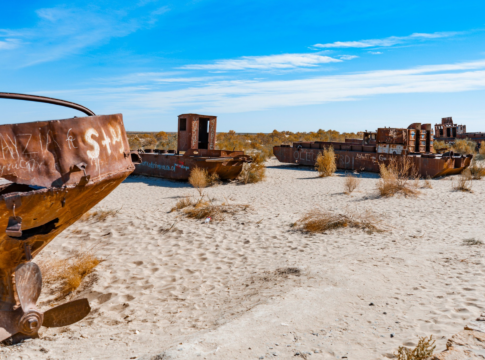
To many, the cracked salt flats and abandoned ships, miles from what water remained, meant that the region had traded the lifeblood of its rich ecology for cotton. That Uzbekistan in the late 1980s was the world’s largest exporter of cotton is not in itself a bad thing; in that sense, the White Gold programme had been a success, but the cost at which it had been achieved, not to mention the ongoing harm to health done by the chemicals used in the latter industry, left scars far too deep and a lake far too shallow.
The remaining feeble stretches of water were too saline and polluted to sustain the rich diversity of life it had until the 1970s. According to many, the Aral Sea was dead, and even though in the early days of the unfolding catastrophe, many local people believed the lake would recover, it never did, and few by that point still held out any hope that it ever would.
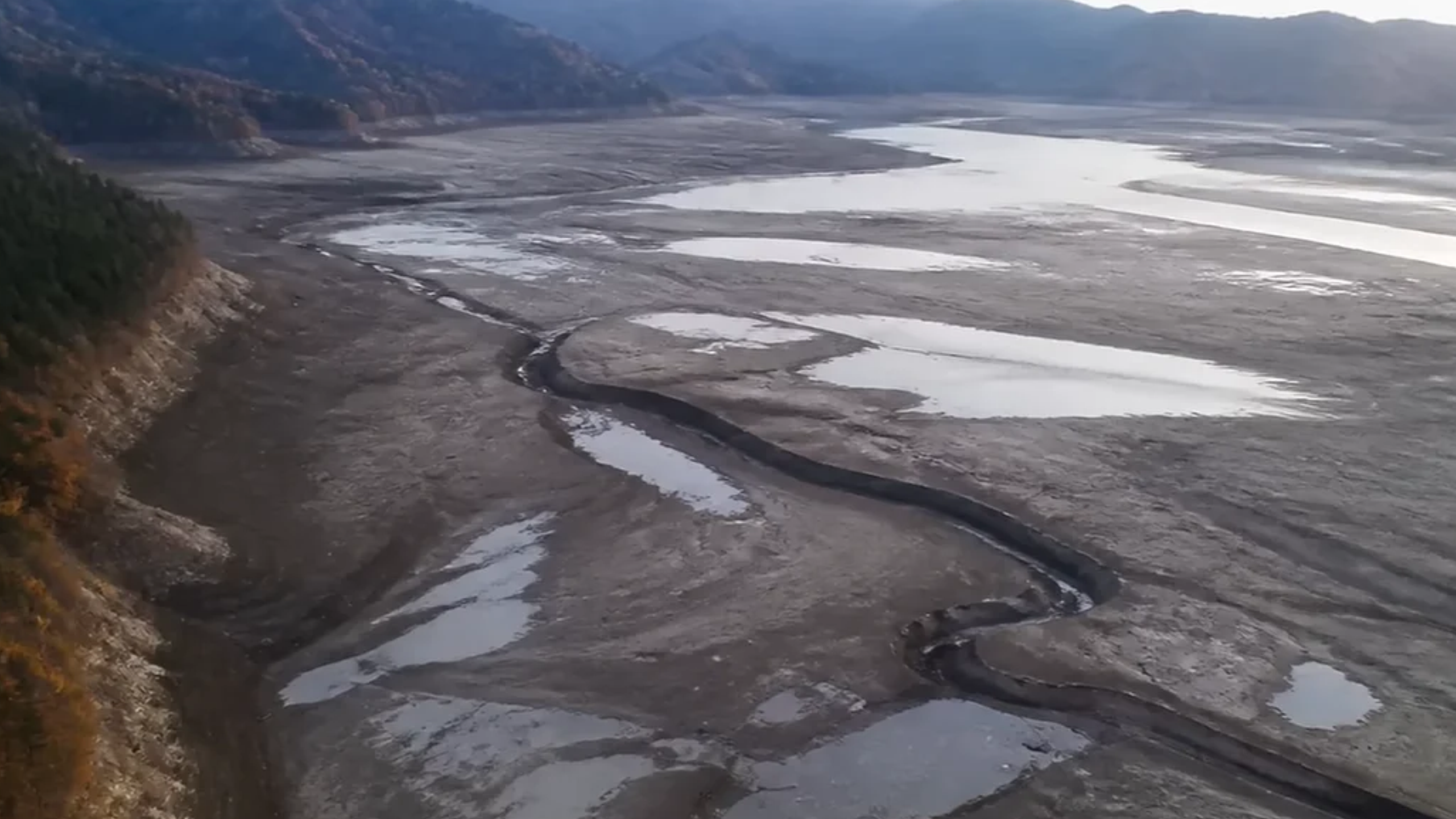
The phrase bandied about by observers was sacrifice zone. A piece of the planet that is simply terminally sick and beyond the salvation of any engineering project.
Interestingly, this was not the first time that the Aral Sea had dried up. According to some geographers, such as Hafiz-i Abru, diversions in both the Amu Darya and Syr Darya led to the disappearance of the main body of water until 1573, when the latter waterway resumed its natural course into the lake.
Early Attempts to Recover the Aral Sea
While it is not known if this historical knowledge underpinned the initiative in 1992 by a local mayor, it stands to reason that restoring the flow of the Syr Darya River to the lake would give the once vast body of water a chance at recovery.
His plan, one scorned by officials and scientists alike, was to build a wall across 13 kilometres of open water, a dyke made of sand collected from the desert by the convoy of trucks that carried it in.
In spite of the cynicism, the mayor and his few hundred workers persisted and eventually plugged a hole, so to speak, in one of the most famous environmental disasters on the planet, and, slowly but surely, the lake crept back until the salinity dropped and the fish returned.
According to Dr Edmund Hale:
“The Aral Sea was not dead. The science was wrong. The lake wanted to come back.”
All it needed was a wall that wouldn’t break, which, sadly, wasn’t the case with the original wall, whose lasting success was perhaps to prove that the lake could be saved, and how to do it.
How was the Aral Sea Saved? The Kokaral Dam and its Value
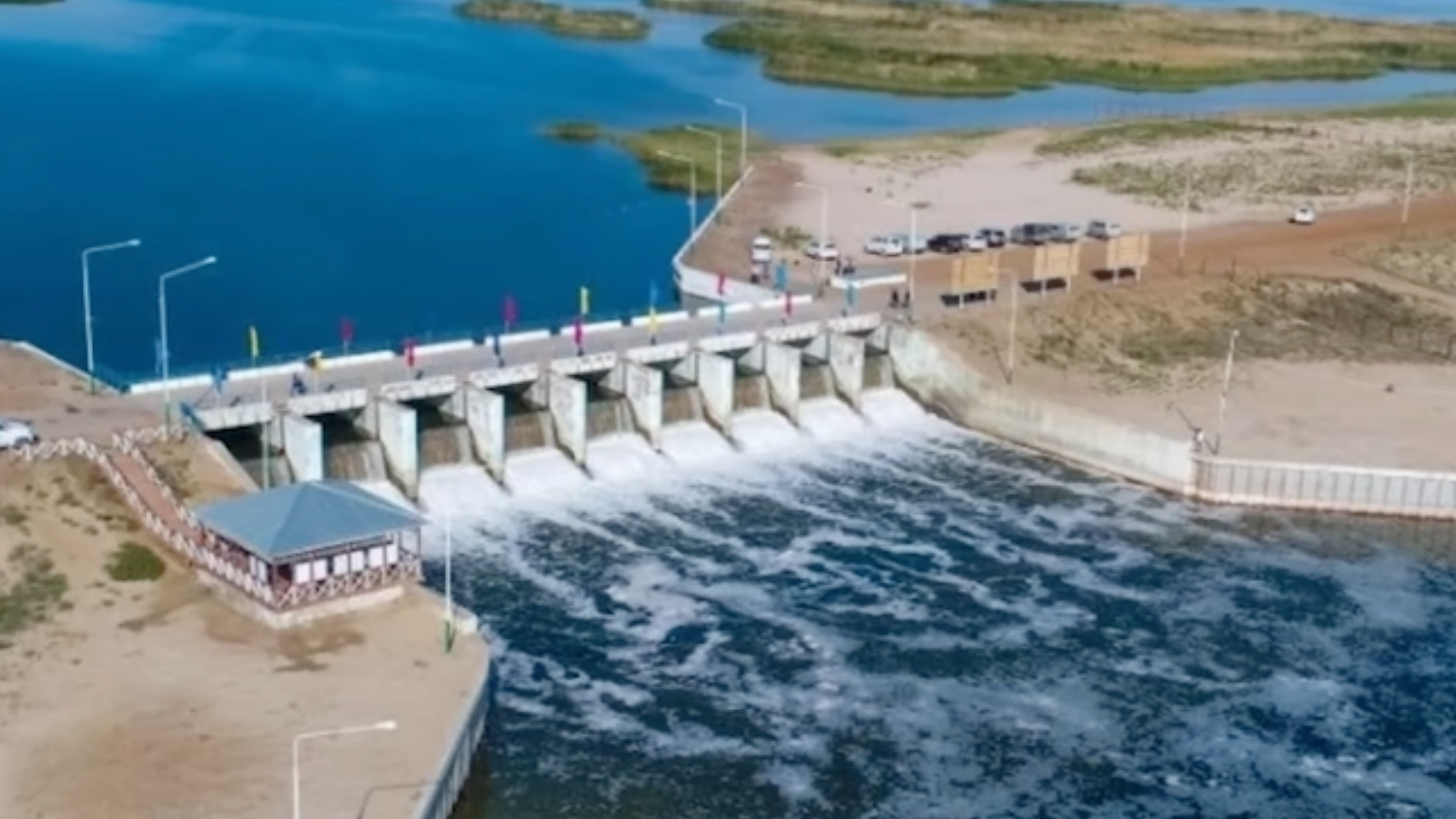
On a hot August morning in 2005, the Kazakh government finished building the Kokaral Dam, fundamentally there to do the same as the original structure, but this time made to last.
The rest writes itself, albeit cautiously, slowly, and not without lasting concern for the long-term survival of the lake, given that the Syr Darya River is fed by melting glaciers in the Tien Shan, thus under threat from rising temperatures. This is another reality the Kazakh government is facing head-on, along with the falling levels of the Caspian Sea.
Encouraged by the miracle that is the new Aral Sea, they point to the rebirth of the northern part of the lake, which reached projected levels in 2025, four years ahead of predictions – still accelerating. This data was shared by the Kazakh Ministry of Water Resources and confirmed by the World Bank. Dr Hale believes that this achievement should shape how environmentalists see their work all across the world.
“This single dam has revealed how broken ecosystems actually come back when we let them, [and] is something that I think genuinely changes how we should be thinking about environmental restoration around the world.”
The reality of the Aral Sea is not shared by the northern and southern portions of the lake. The South Aral was receiving almost no water as the flow of the Amu Darya was still being used by the cotton fields of Uzbekistan, while the North Aral was deeper and still had a much depleted Syr Darya flowing into it.
Yet what came in didn’t remain in the lake; it quickly ran in, spread out, and evaporated. The problem was seen as like filling a bath but without the plug – making the solution simpler than many learned scientists were willing to acknowledge. It was a case of ‘covering the drain’.
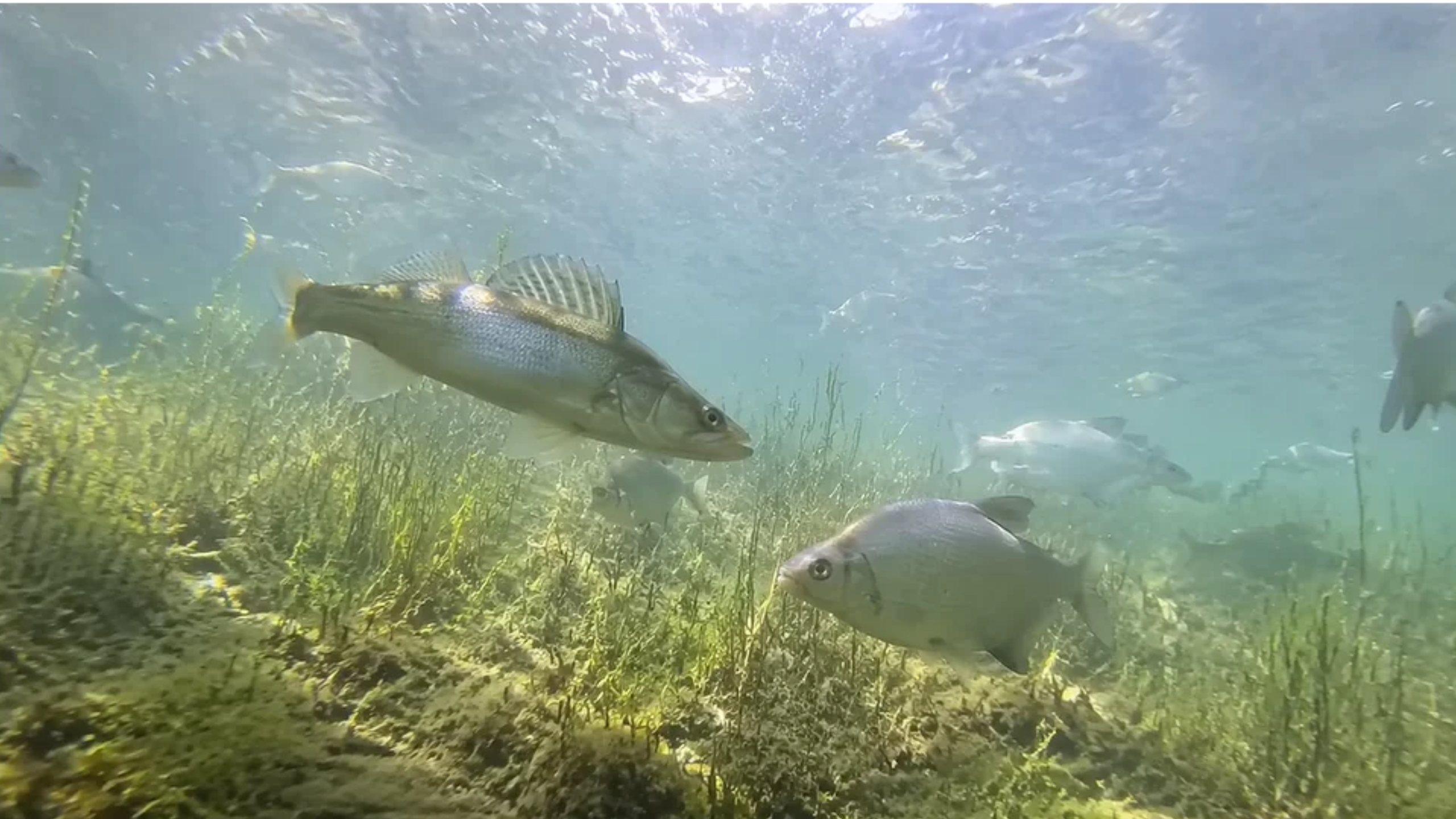
This worked, and while the original wall collapsed some years later and had to be replaced, the new, stronger Kokaral Dam was up to the job, and results surpassed even optimistic predictions. The northern part of the lake returned, with satellite imagery detecting the advancing waters not annually, but monthly. Salt levels fell drastically, and fish returned; according to the Kazakh State Water Enterprise, 22 native fish species have now returned to the North Aral on their own.
Not only the fish, but also the birds. According to recent Kazakh ecological surveys, over 300 bird species are using the revived Syr Darya delta as nesting and migration habitat, with a vast ecosystem now able to depend on a healthier lake and more humid environment. Wild boar, wolves, and the once critically endangered saiga antelope also feature.
Add to this the fishermen. Families who had left the area when their livelihood disappeared are now repopulating the villages that stood silent for years. This reverse migration, a rarity in the region, has brought communities back to life, all thanks to a 42% increase in lake water since the dam was constructed. From zero fish to 8,000 tonnes a year, there are now 12 processing plants, a resounding 12 more than there had been previously.
The town of Aral, once a lakeside community, is planned to become that once more, as the shores have crept back to only 20 km from the settlement – a recovery of 80 km according to some sources. Although nobody expects the Aral Sea to become what it once was, the fourth biggest lake in the world, according to Dr Hale, a low-budget initiative has demonstrated how intervening in a way that allows nature to reassert its superiority is often exactly the way to restore nature itself.
“With one single intervention at the single critical point in the system, without billions of dollars, without high technology, with one wall in the right place that did exactly one thing, kept the water in a deep, narrow bowl instead of letting it spread across a shallow desert and evaporate.”