
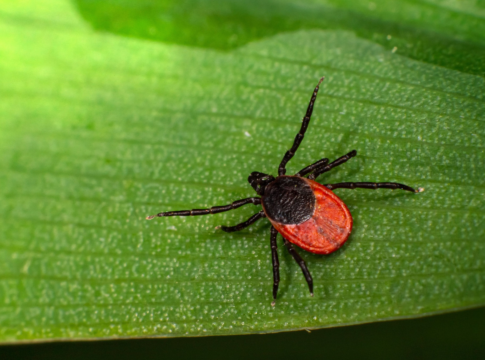
Widely known to be a risk to health, tick bites are relatively common in Kazakhstan and although the peak season for this parasitic arachnid is nearing an end, it pays for locals and visitors to remain aware of the risks.
Ticks are a member of the the parasitiforme family, a distinctive group of mites that are separate from the acariformes.
Tick species can be found around the world but their primary habitat is warm, humid climates. Ticks in Kazakhstan are common, certainly in areas with a higher density of vegetation. It is also observed that climate change is leading to the spread of tick populations into new areas.
According to Wikipedia:
A habitat preferred by ticks is the interface where a lawn meets the forest, or more generally, the ecotone, which is unmaintained transitional edge habitat between woodlands and open areas.
Caution is advised in this type of area, while visitors to any outdoor space should remain mindful that tick bites can lead to a number of illnesses, ranging from Lyme disease and Q fever, to Colorado tick fever and tick-borne meningoencephalitis.
It should be noted that while the majority of tick bites lead to no medical complications, the above list is only exemplary, and if a tick is found on the skin, especially on that of a child, urgent attention is required. According to MSD Manual:
Tick removal should occur as soon as possible to reduce the cutaneous immune response and the likelihood of disease transmission.
The video below offers information about removing a tick. Note that medical care may be required even after removal has been successful because in extreme cases, the central nervous system can be compromised and the sufferer can fall victim to paralysis and long-term disability.
Bites are not rare in this country, as according to Qazinform, 4,479 people have sought medical assistance in the East Kazakhstan region for tick bites since the beginning of 2026.
Many of these cases involved children, and in 94% of all cases, the patient received potentially critical preventive immunoglobulin treatment.
Tick season is any time outside winter, although the arachnids are more active in spring, the risk does not subside significantly until the first snowfall later in the year.
Further expert English-language advice is available via the following links:
RSE Medical Centre Hospital of the President’s affairs Administration of the Republic of Kazakhstan