
As much as it is said that you can’t go to London without a trip to Oxford Street, in all its novel pedestrianised glory, people often say that time spent in Almaty is incomplete without various boxes being ticked, depending on how long you stay.
Any more than a week and the absence of a trip up to Big Almaty Lake starts to feel like a void, with the mountain walk (or bike ride) a must-do for even the reluctantly intrepid.
The information provided here is not exhaustive, but a basic overview.
The lake itself is the source of drinking water for much of the two-million-strong southern Kazakh city, so there are restrictions placed, and these include a blanket ban on anything which involves actual contact with the water: angling, swimming, sailing, and even approaching the shore is strictly controlled. Camping and open fires are also not allowed, at least, visitors are advised to check all regulations before heading up. As per Tengri News:
Tourists are also advised to prepare in advance for the hike: check the weather forecast, assess trail conditions, and plan enough time to descend before dark. While on the route, visitors are asked to stay on the trail, follow signs, and treat nature with care.
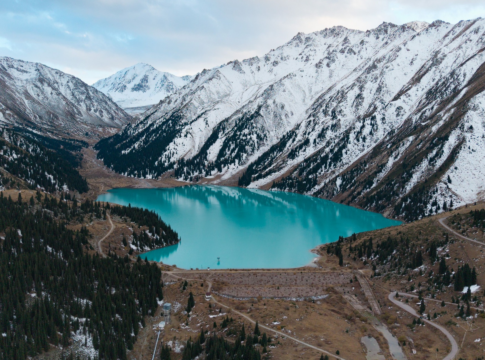
The lake has a two-mile shoreline and is a natural alpine reservoir at 2,511 meters above sea level on the upper side of the Almaty Canyon, within walking distance of a few major peaks in the area, all suitable for anybody who’s done their homework and has plenty of solid mountaineering experience: Mt Sovetov (4,317 m), Mt Ozyorny (4,110 m), and Mt Turist (3,954 m). A guide is recommended.
Formed by the movement of glaciers, fed by their meltwater, the lake’s turquoise colour stems from the mineral content of the water caused by glacial erosion and, depending on the sunlight hitting the surface, seems to change, making the lake all the more fascinating.
Although the regulations on travelling to the lake have been subject to recent change, with authorities responding to the ever-changing dynamics of the area and the commitment they have made to improving access to the zone, planning to enter the protected area by car, motorbike, or e-bike is not advised, as even the latter are restricted at the moment.
As recently as October, electrobikes.kz were reporting that their company had been granted permission to operate their rental service to the lake, while by now their season has closed.
Reaching the ecopost and paying the entry fee, little more than a dollar per person, will then permit visitors to walk to the area of the lake, albeit not the lake itself. Real bikes are not currently listed among forbidden modes of transport, the only limitation here likely to be the level of fitness of the individual rider, as cycling from the city to Big Almaty Lake involves about a 2,000-metre elevation gain. Basically, two kilometres up into the sky.
Interestingly, recent years have seen a bike and running race (called Kosmos Uphill) take place from Ayu Sai park all the way to the Cosmostation past the lake, although sadly this event doesn’t seem to be a fixed part of the local sporting calendar any more. In the years it was held, only a handful of people finished the course, the challenge factor is off the scale.
The lake lies in a border area, and movement is restricted in many cases, with physical ID such as a full passport required for anyone heading past the ecopost. Once again, it would pay visitors to avail themselves of information in this regard to avoid running into difficulty.
Recent restrictions should not be taken to mean that access to the lake area is going to be limited, rather, that the response by the authorities is to protect the lake and the surrounding area while actually making it more available for guests, something that Tengri News have also reported recently.
Ile-Alatau State National Nature Park and the city council are carrying out improvement works on the Marmar hiking route leading to Big Almaty Lake.
The Marmar Trail is 5.3 kilometres and the main recommended route up to BAO, as the lake is locally known. Making the trail safer is expected to reduce the number of people walking up the road, and the park management has made this clear:
It is expected that most visitors heading to the lake on foot will use this route. The paved road toward Big Almaty Lake will also remain open to pedestrians. Visitors who choose this route are asked to exercise caution, pay attention to road signs, and follow the instructions of national park staff.
Although the lake is eternal, restrictions and advice are subject to change, so those planning to visit should check both before setting out. The following websites offer valid information, while any trip into the mountains in the Almaty region is undertaken at your own risk.