“The Internet provides information. Libraries enrich the soul.”
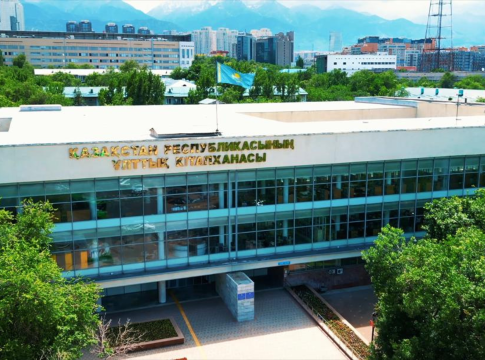
The words of Gaziza Nurgaliyeva, Director of the National Library of the Republic of Kazakhstan, located at the top of Abylai Khan Street, in Almaty.
Gaziza, Honoured Worker of Kazakhstan (similar to an MBE, for readers in the UK), hails from Semey, a north-eastern Kazakh city.
She has worked with books since she was 17, first of all taking a job in a small bookshop, but she describes her profession since then as bibliographer and librarian.
In 2024, after a spell working at the national library in Astana, she was offered the directorship of the biggest library in Almaty and moved south to take the reins of what is still considered a national treasure, public centre, and an educational platform.

The institution in its current form celebrated its centenary in 2025, and is stoic about the rise of the Internet. The famous building on Abai Avenue is almost as popular as ever.
“The library is a centre for preserving the memory of the nation,” explained Gaziza, a confessed lover of books and a figurehead devoted to the well-being of the library and its 200 staff.
“Oral traditions came first, but books are more powerful.”
The current library was constructed in 1970 and has three storeys, including a basement containing the main book depository and utility rooms. A large area of the building is composed of well-frequented reading rooms.
In 1931, the library was transformed into the State Public Library of the Kazakh SSR. It was named after Alexander Pushkin, the Russian poet, while its story more generally has its origins in 1910, when the Leo Tolstoy Vernenskaya City Library was founded. A few name changes later, and the largest depository of books in the country was granted the title ‘National’ in 1991, awarding it state and public significance.
Its first director was a man called Oraz Zhandosov, and although he only served a single year at the helm, he oversaw the start of the transition from oral literature to printed literature, before the process was continued by Baten Zhumabaev in 1932.

Libraries became meeting places for readers and authors, and they promoted those authors and their literary works. Before the days of the Internet and even widespread book stores, this was often the only way that important works became widely known. Gaziza reminds us that without literacy, even the Internet is useless, and as literacy comes from books, the written word remains the foundation of it all.
For this reason, libraries are considered to be sacred places in this country. There are over 3,800 in Kazakhstan, with more being built – including an enormous one taking shape a mile from where we sat to do this interview, in one of the courtyards of the library itself.
The imposing yet welcoming building has a bright and spacious reception area, no books on show just yet, but 14 specialised halls seat up to 1,500 people, and within the walls of the whole library are to be found more than 7 million documents, rare books, over a thousand manuscripts, sheet music, phonograph records, rare newspapers, and magazines. It is open to the public, not just an exclusive ‘club’ for academics, and also welcomes many journalists and freelancers on a daily basis.
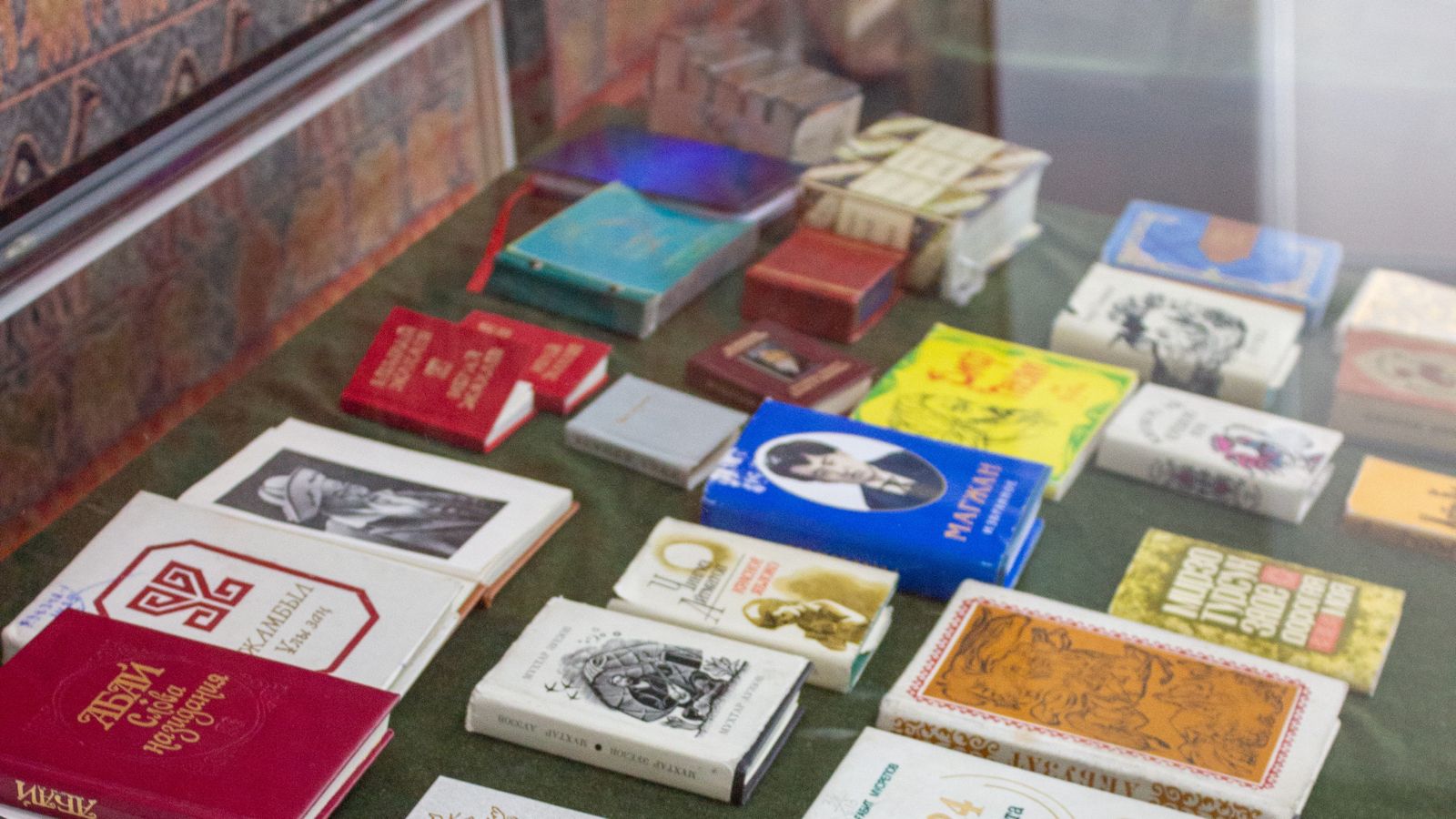
Gaziza Nurgaliyeva explained to me that she is not alone in understanding the nourishing role that books still have to play in an increasingly digitalised world. Students from as many as 15 universities fill this enormous building almost every day, not because there is a decent wi-fi signal, but because there are over 39,000 titles in 123 languages.
“The Internet is a plus, but it does not replace books: the basis of literacy is books. Digitalisation is necessary, but human relations (empathy) are important, too. Libraries deliver culture, which is still so important, especially to young people.”
Far more than a series of shelves, the National Library offers collection, storage, digitalisation, reader service, restoration, bibliographic description, and electronic databases. Many of these services are recent additions, and inevitably, the service evolved after the Soviet Union wound up operations, but its traditional functions were preserved.
As for the future, in a world in which libraries are closing in many places, Gaziza believes that they will retain their relevance in Kazakhstan.
“The future is bright for the printed word. Bookshelves are consolidating their role as a second place of education. People are no longer limited to one profession, especially young people. They may be translators, programmers, writers, or photographers. Now they study for four years, three years, maybe then an extra two years, and they still say books are the best source of knowledge.”
She also told me that some of their books are virtually impossible to find in standard catalogues. Their goals include supporting scientific research, improving the qualifications of restoration and conservation specialists, studying rare books and manuscripts, and documenting them.
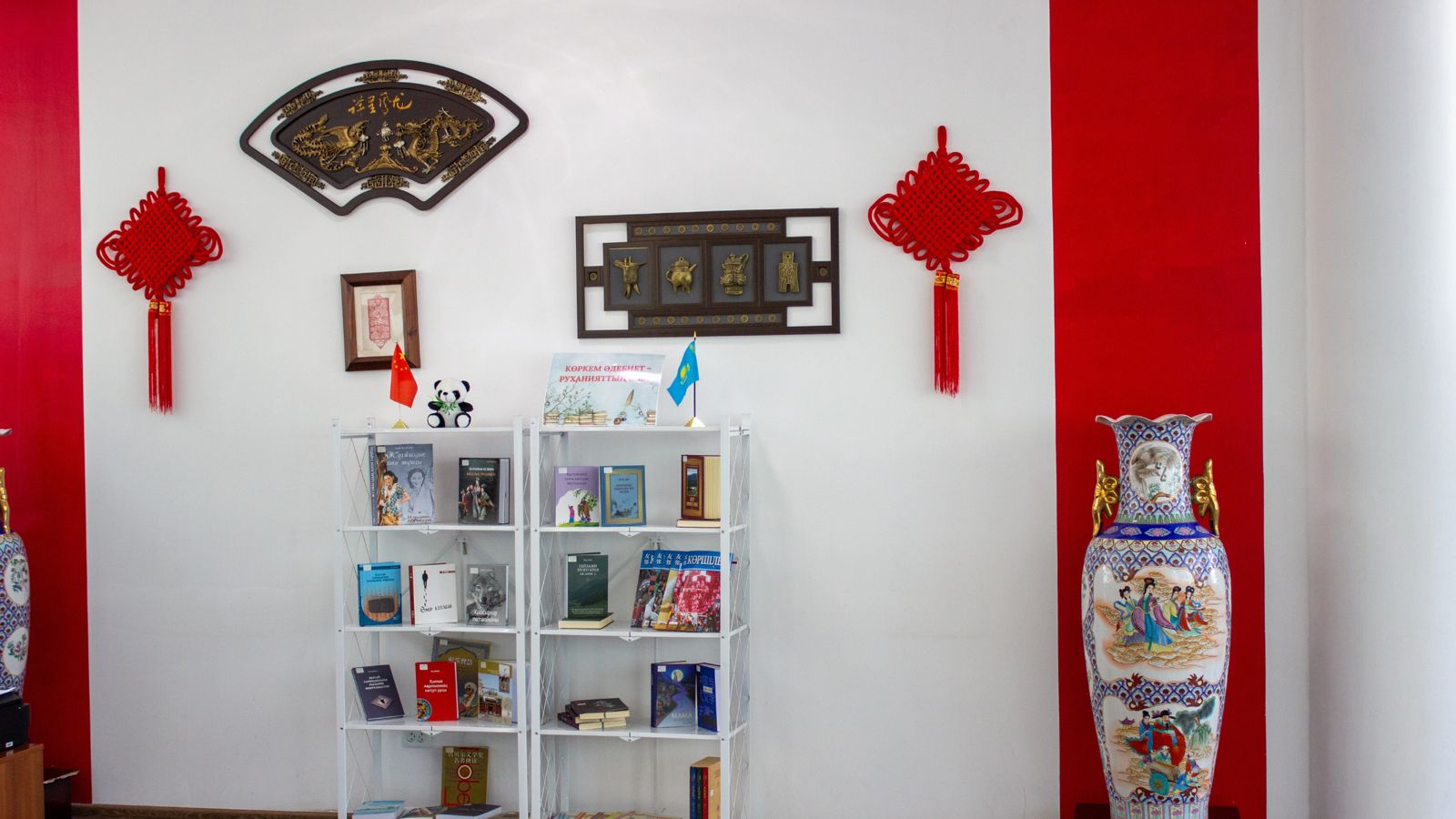
The library hosts events, which may include the launch of new books, with dignitaries often in attendance, although of the many events taking place here, it is not standard for them to involve statesmen or major celebrities. The coordinator, Shokan, feels that these days are valuable because of the books themselves, whether VIPs come along or not.
“I am a passionate bookworm, and I need to read every genre, every country’s literature, as much as I can,” continued Gaziza.
“For example, apart from our own Kazakh literature, world literature tells me a lot of interesting things. I love all the charms of Dostoevsky, and I like Chekhov.
“From world literature, Stefan Zveig is one of the others I admire. I like Jose Luis Borges, too. His short, simple notes are very deep, and to be fair, I am not even close to understanding his work at its deepest, yet.”
“Books help people see the world. Books heal. They connect the mind, feelings, and inner experience.”
Needless to say, therefore, that the largest collection of printed materials in the whole country is in safe hands.