
Like so many writers, I mistook disenchantment for inspiration, partly why I misquoted Jean-Paul Sartre, shamelessly and deliberately while in my solemn state, struggling to start an article on a language which you would learn in order to understand his actual words.
The philosopher also claimed that, to quote him correctly this time, everything has been figured out, except how to live, and many people felt he had a good point until we overlook the fact that he knew French well enough not to have laboured his way to fluency, instead strolling along roads of awkward subjunctives and advanced conjugation, able to look at the lavender fields instead of having to battle to understand how it all works.
Everything has been figured out, except ‘savoir’, might have been his wise observation had he been born into a lower-middle-class suburban English family with the erstwhile compulsory two hours of French on the weekly school timetable.
Mastering double entendres (unlike on IELTS, when you only hear the recording once) is one of the requisite achievements en route to competency in this romance langue, its vernacular copied and pasted into early English far more than many people realise.
Ever been to a restaurant? Bought a baguette? A bouquet of flowers? Watched a Grand Prix? Got blond hair? Then thank the French (or not – but it’s a fait-accompli).
The relative absence of French lexis on loan to the Russian language leaves local learners at a slight disadvantage when moving up through the levels, but Bakhyt Makhmetova of the Alliance Française informs me that many of them make great progress, and that quite fast, too.
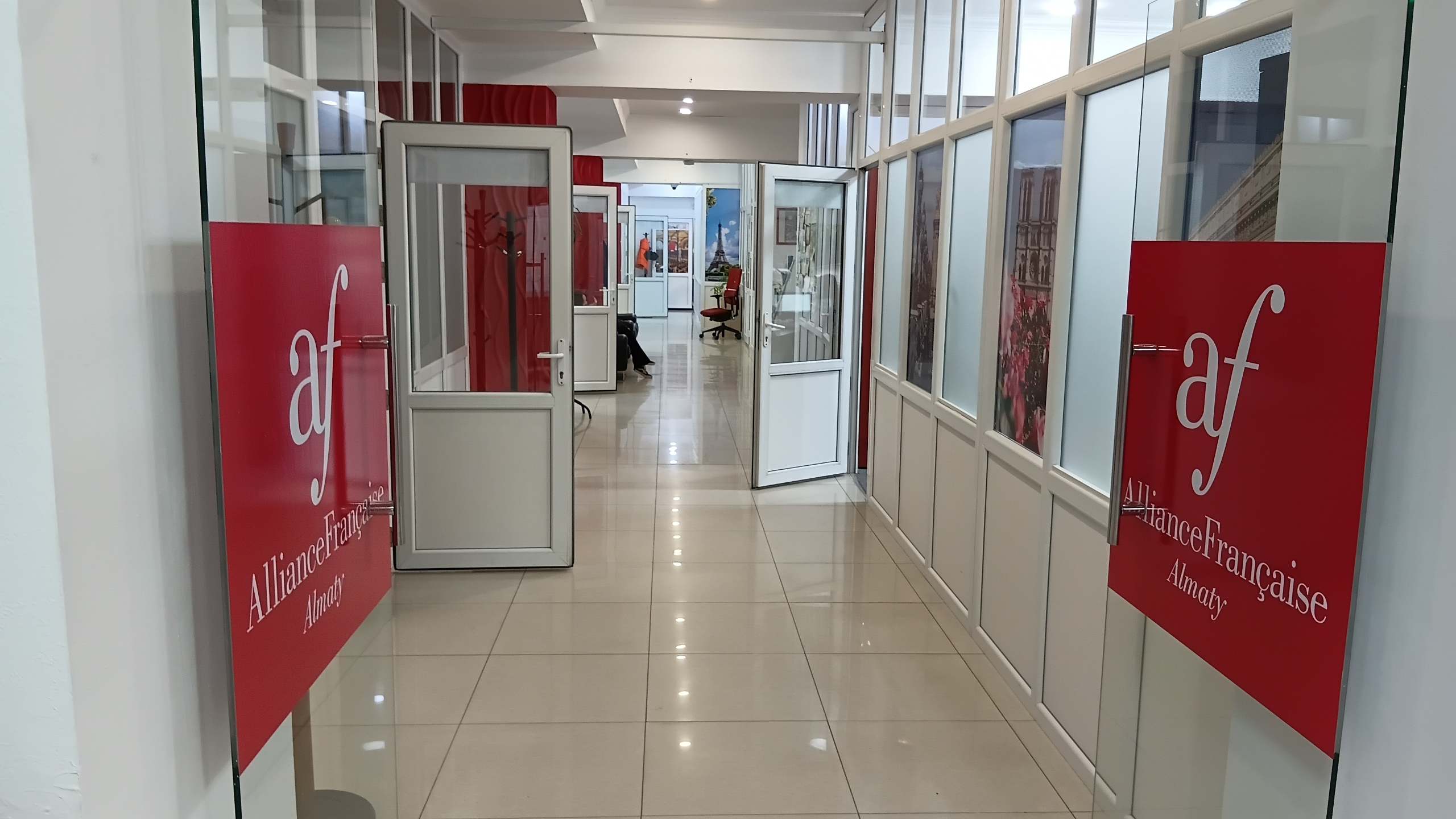
A teacher of some three decades, Bakhyt still loves the work and has been at the Alliance Française since, primarily responsible for teaching but not without some peripheral duties to keep the brand fresh and the centre busy.
“I started learning French in high school in Karaganda. It wasn’t really my choice, as it was just part of the curriculum, but I took to it and found that I was good at it.
“After a lot of dedication, I became fluent and then reached the highest levels, but I started before the Internet became the main source of information, so I used a lot of books when learning.”
This, combined with several spells living in France, means that her students are in very safe hands, not only because of the reliability of the information, but so too the quality of instruction.
Student, Akbota Yergali, speaks very highly of her teacher, and with ambitions of studying in France, feels she has been very well prepared for this.
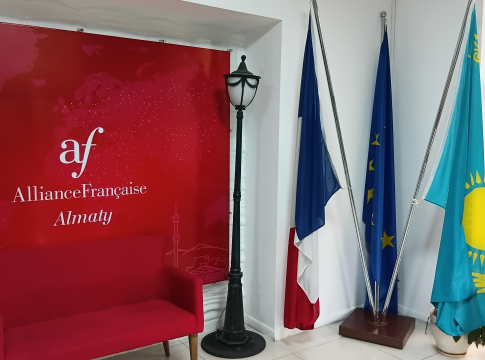
The Alliance Française has been in Almaty since 2004, and after a few changes of address, is now based on Satpayev Street, near the Seifullina crossing. Up to 300 students take lessons there, with three main aims:
“Our students come to us either to prepare to study in France, as they need to reach B2 level in order to do so, or to emigrate to Canada, as relocating to French Canada can be a more straightforward option than needing to study French and English at the same time.
“We also have a lot of people who just want to learn for pleasure, and we’re proud to say that after English, of course, French is the second-most-studied foreign language in this country.”
More than just a school, the centre is a registered examination hub, staging the DELF and DALF exams, much like the IELTS of French, which confirm students’ levels all the way from A1 to C2, the latter of which represents mastery of the language. The qualification is valid for life (although, as I discovered today, linguistic competence isn’t).
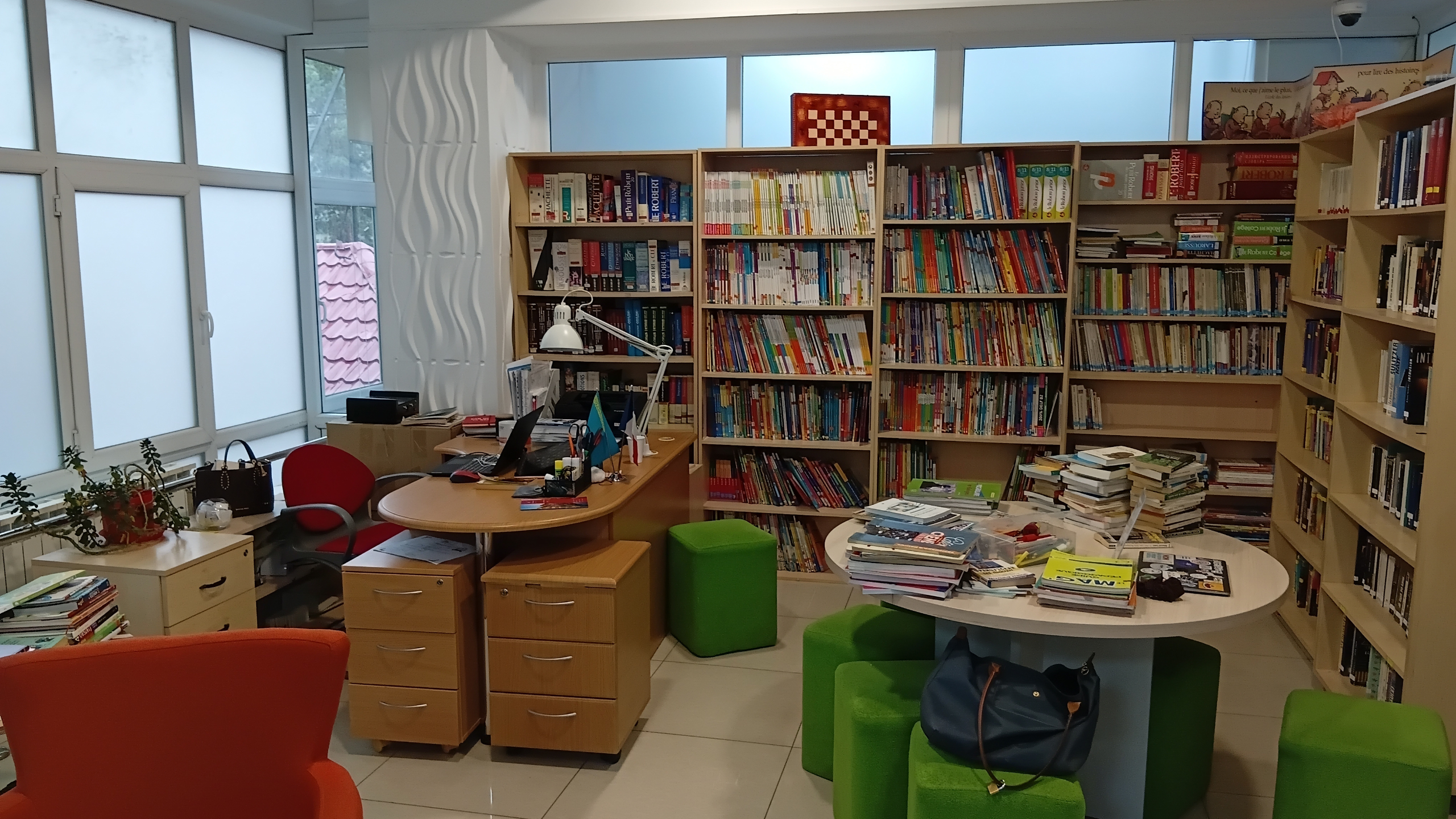
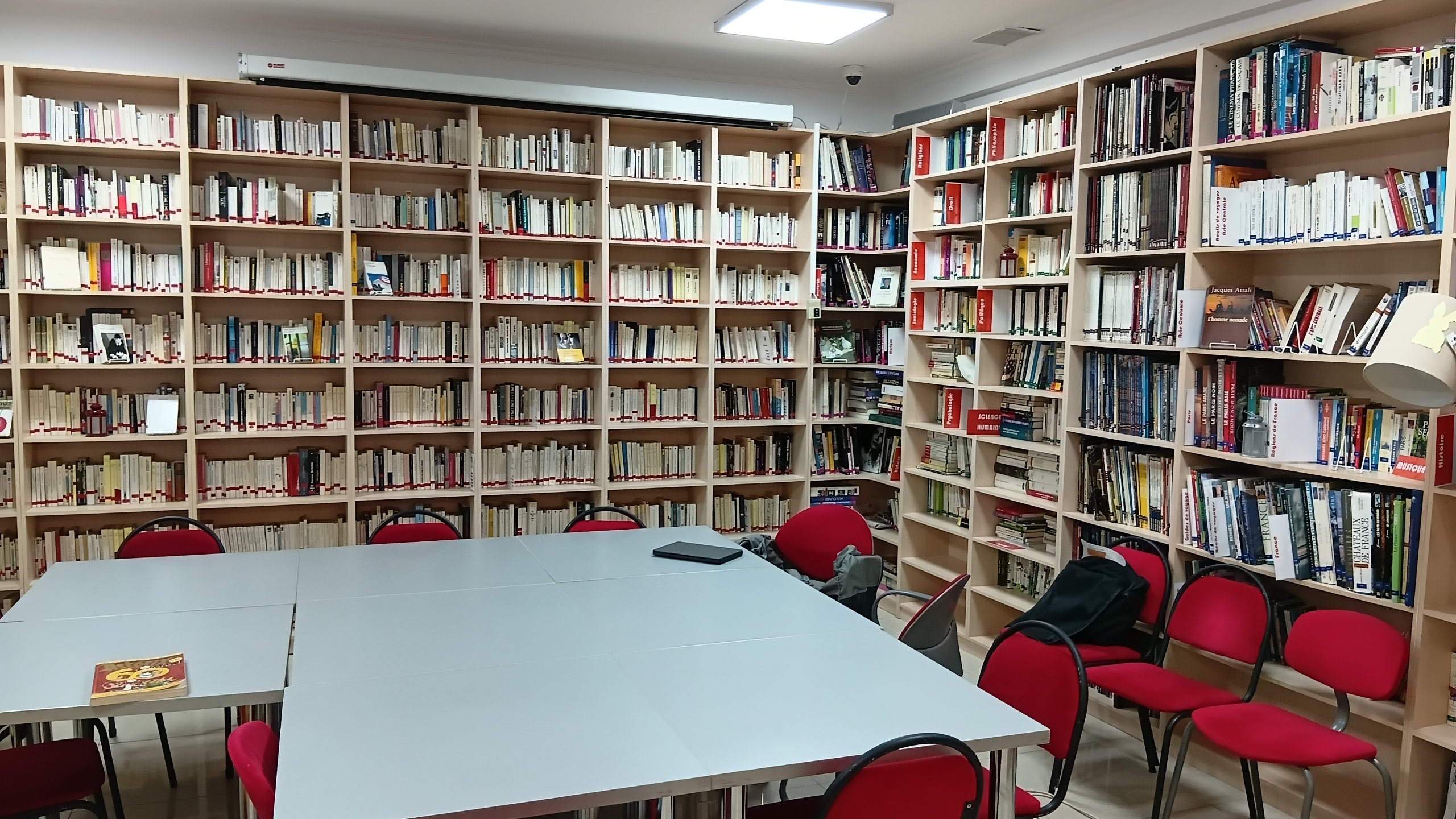
There is also an impressive library, one to rival (and embarrass) those of some centres in the city which teach English, the inevitable gulf in demand notwithstanding, a who’s who of French literature sidled alongside an enormous bank of practical learning resources.
They don’t only deliver formal training, however, but also offer French Club, discussion- or game-based practice sessions that are well-attended, often hosted by interns from France itself, all helping the many students improve their ability in Kazakhstan’s fourth language.
Given the differences between Russian and French grammar, students need a little time to get used to the way the French language works, but there is one interesting feature shared between both English and French that impresses (and confuses) visiting native speakers: Kazakhstani people manage to produce both without any pronunciation difficulty whatsoever.
“This is because young people in this country grow up in a bilingual environment, and a lot of the sounds in their languages resemble French phonemes, too,” said Bakhyt.
I respectfully and partially disagreed, given that some speakers of English in other countries also grow up in a similar reality, yet have strong accents when speaking, while in Kazakhstan, Kazakhs and Russians alike produce spoken English and French, sounding almost like native speakers.
There has to be more to it than environment, although let’s not look a gift-horse in la bouche for too long, the main thing is that they speak very clearly – to the envy of many another country.
Je ne sais quoi. That’s just it.