
They say that things are not always as they seem.
Doubtless, things can be appreciated on different levels, which means that to most, they are just as they seem. Asking people to look deeper can be pointless, because the superficial is often good enough. Most things don’t need analysing to be consumed and enjoyed; the way that music sounds, the way that food tastes, the way that story ends. Boxes ticked, what’s next?
Ainur Turisbek is a Kazakh fashion designer who reminds us that there is a world beyond the way things seem. She is an artist whose work is not just another transient sensory experience, but a bridge between what people first see and what they truly feel if they do look deeper.
Back when it all began, according to Ainur, she ‘wasn’t looking for fashion’.
To those who are familiar with her, this reads like a biographical statement, as it is widely known that her early life revolved around her studies and was underpinned by the values instilled and shared by a close family. Her earliest career aspirations were to be a doctor, quite the definition of not looking for fashion, but her reasons hint that even then, she was aware of the path she was to follow.
“In retrospect, I think what attracted me was the possibility of making a meaningful difference in someone’s life.”
No mystery then, but she was to become another kind of doctor when she received a PhD in Law. She knew that the ostensible merits of the job meant less to her than the human side.
“I trained as a lawyer and hold a Doctor of Law degree. Looking back, however, I realise that what has always interested me most was not law itself, but the questions that shape people, culture, and time.
“Later I came to understand that art has its own quiet way of doing the same. It doesn’t provide answers, but it can encourage reflection, awaken emotions, and reconnect us with beauty, memory, and ourselves.
“Perhaps that is why my path unfolded the way it did.”
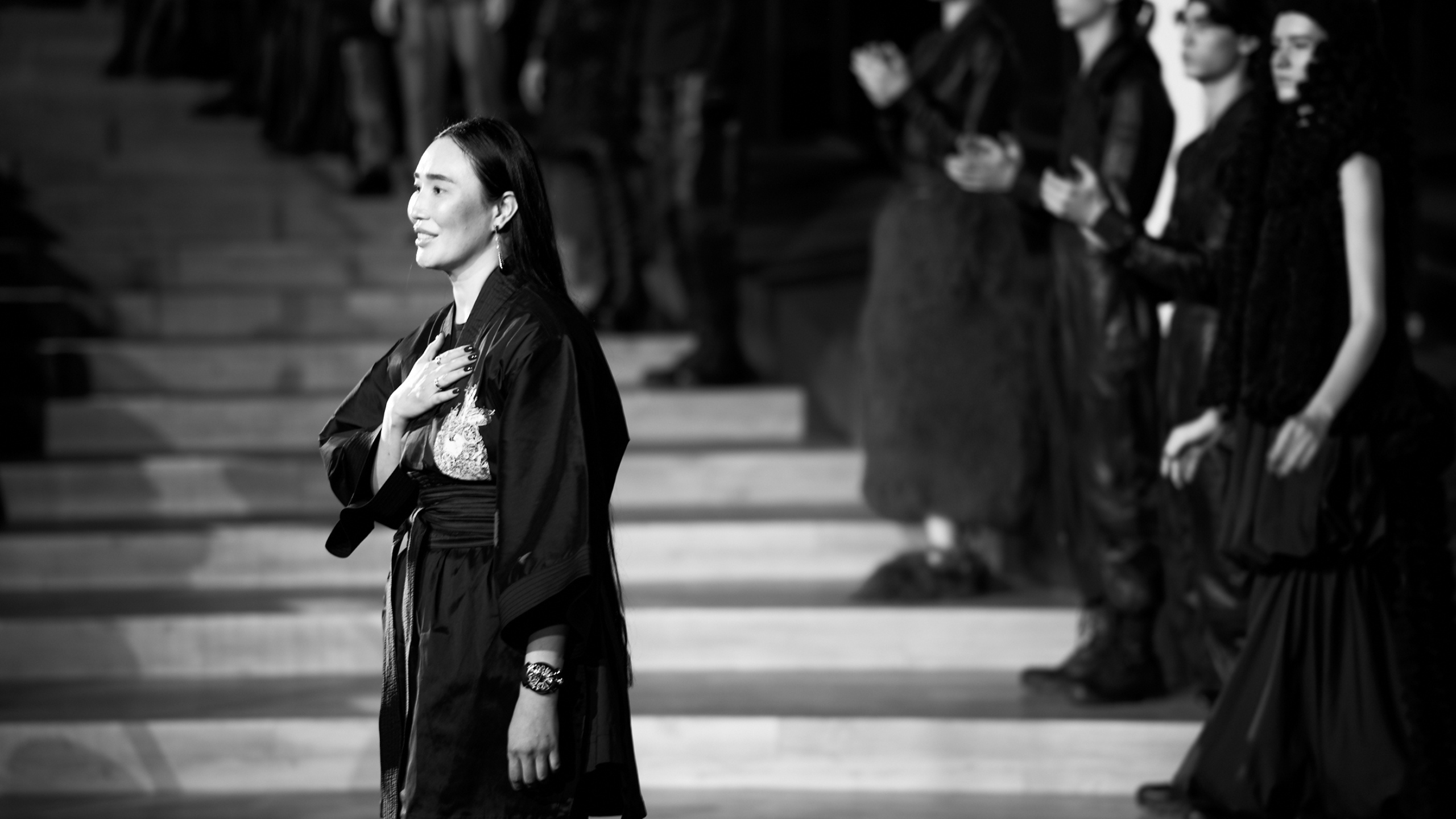
It is in this context that the assertion that she ‘wasn’t looking for fashion’ becomes more thought-provoking and instead entokens her fascination for art as a form of communication. ‘Not looking for fashion’ wasn’t a career statement but a holistic way of evaluating what was to become her life’s work.
“More so than fashion, I was looking for a language. I’ve always been fascinated by the way different art forms communicate. Literature speaks through words. Music through sound. Architecture through space. Fashion speaks through the human being.”
“I have never thought of design simply as a profession. For me, it is a way of exploring the world. I am fascinated by how ideas are formed, why some images remain relevant across generations while others disappear, and how culture is carried forward through memory, craftsmanship, and aesthetics.”
It was understanding this that led her into the world of fashion, but not simply with the desire to make nice clothes; more, “to understand why certain forms move us emotionally and why some objects stay with us long after we have seen them.”
For some, it would require bravery to give up the virtual guarantees of a career in law to chance yourself in the ‘fairy-tale’ world of the fashion industry, and indeed, it was far from a walk in the park. It took years.
“I spent years studying art history, architecture, traditional craftsmanship, construction, proportion and materials.
“Much of my education has been self-directed. I studied costume history, architecture, art, production techniques and traditional crafts. But I believe the most meaningful education happens through observation. Through travel. Through conversation. By encountering different cultures. I don’t think an artist ever stops learning. Every experience becomes part of an inner vocabulary, and over time that vocabulary shapes one’s own artistic language.
“Gradually I came to understand that form is never independent. Behind every meaningful form there is an idea. And it is the idea that gives it lasting value.”
Form is what most people see and like, and that includes many of those who go to fashion shows. Creating something that can be appreciated on all levels is, I daresay, the key to real success in the artistic professions because some people don’t want to be challenged to think, even those who claim to understand. And of those, there are very many.
And as emotions are the connectors of human life, linking the physical, mental, and spiritual, then so too are ideas the connectors between the levels of Ainur’s creations, stepping stones that may be optional but which lead you on a far longer journey than if you stayed on one side of the river.
Ainur is quite an experiential guide to her own designs; like a tour guide who tells you where to look but not what to see. She wants you to feel, but doesn’t tell you what to feel. She understands that, while many people may simply like the look of what she creates, fashion is experienced rather than observed, and that it becomes part of everyday life, quietly carrying stories, values, and emotions.
Thus evolved her career until what had been an adventure, even an experiment (albeit one of total devotion), became obviously what she had been born to do.
“When I realised that people were responding not only to what they saw, but also to what they felt, that’s when I knew I was in the right place. They were responding to atmosphere, to emotion, not just to the work but to the intention behind it.
“That was when I understood that clothing could become a genuine artistic language, and was my true calling in life.”
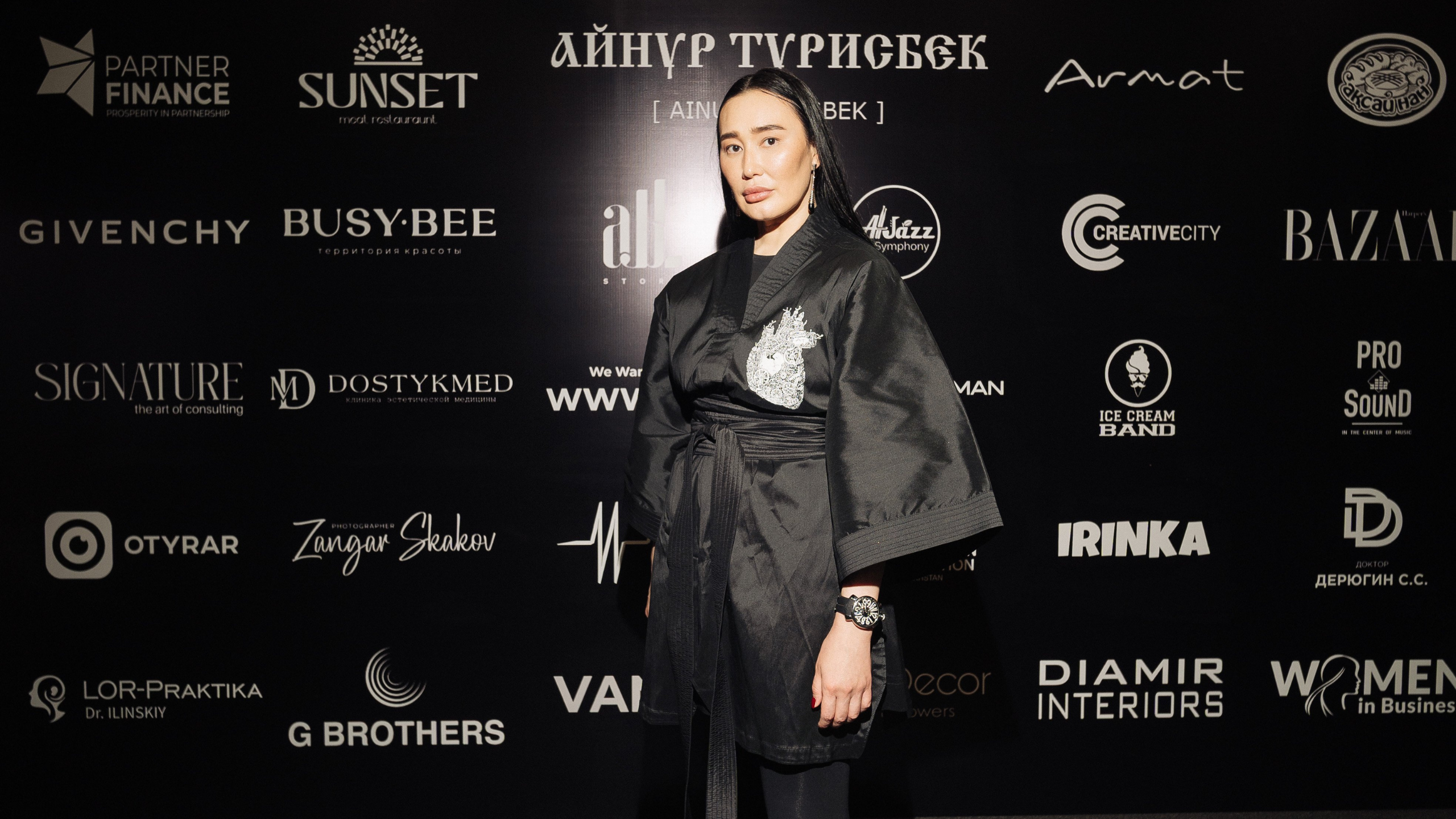
When asked who or what inspires her, there was no big list of famous names, no Gucci, no Versace, although we might assume they have been on her journey in some way.
“I have always been inspired more by art than by fashion itself. Architecture. Painting. Music. Literature. These disciplines constantly remind us that every generation asks similar questions, only in different forms.
“I have also been deeply inspired by history, craftsmanship, and what I think of as cultural code – not as visual decoration, but as a way of understanding the world.
“The deeper I explored those ideas, the more clearly my own artistic language began to emerge.”
Ainur has become a fixture of the fashion industry beyond her homeland, but has never seen them as markets, more as cultural conversations. She accepts firstly that countries have varied aesthetics, inevitably (as the visual experience of life informs our preferences far more than we realise), but that when it comes to the sincerity that defines a work of art, she also says that different cultures recognise this in remarkably similar ways.
“That inner landscape is what makes the work distinctive. Even Paris for me wasn’t just a place to visit; it is a global centre of artistic dialogue and what interested me was not becoming part of an existing narrative, but entering that conversation with my own perspective.”
Joining her in the conversation were influential people who were interested in ideas as much as aesthetics. They included stylists, editors, buyers, curators and their conversations often moved beyond fashion itself; rather, they became about art, identity, and culture.
“Those have always been the conversations I value most, right to the extent that my focus is not on my career or recognition, but more about connection, about artistic practice. I believe every artist spends a lifetime searching for their own language. It isn’t something you invent overnight. It develops through observation, experience, reflection, and time. For me, that search continues.”
On the subject of continuing, the Kazakhstani fashion industry is making progress, but Ainur believes that originality is the key: not trying to emulate the more established designers, but to craft designs shaped by our own cultural experience. Not trying to create symbols, but ways of seeing, thinking, and asking questions. For her, art is not there to provide answers but to help people ask better questions.
“If my work encourages someone to pause, to reflect, or to look at beauty, culture, or themselves from a different perspective, then I feel it has fulfilled its purpose.
“Ultimately, what has always interested me is not fashion itself. It is the human story that fashion allows us to tell.”
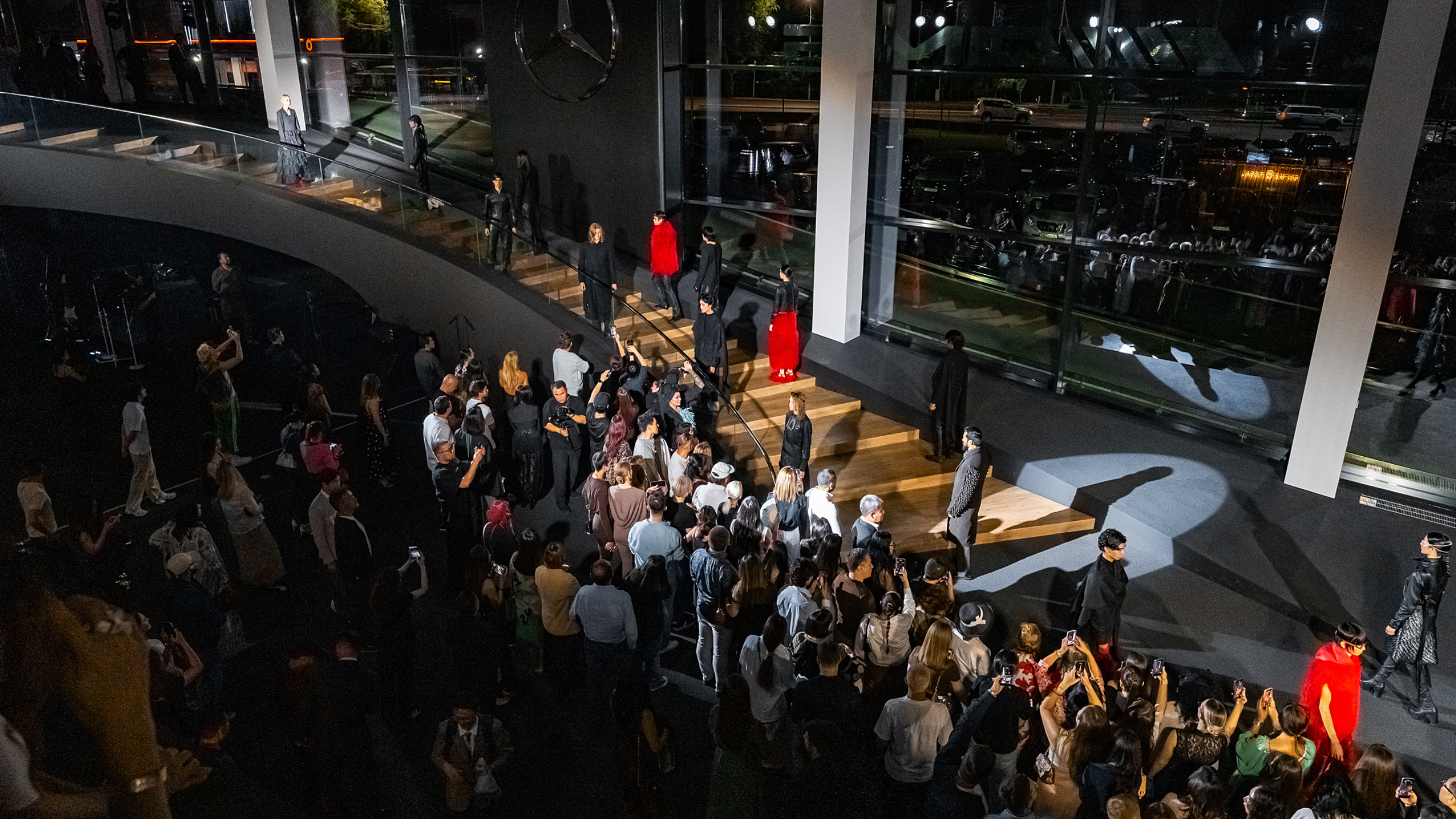
The French footballer, Eric Cantona, once said that an artist is somebody who can bring light to a dark room, and although the cynics may dispute that kicking a ball is a form of art, the wise know that it is.
Because, as with Ainur Turisbek’s work, it is a way that life becomes more than just a perfunctory gesture granted us by whomever, or whatever, makes all the big decisions, but a total experience complete with nourishment that can enrich every corner of who we are. Or just one of them. The choice is always yours.