
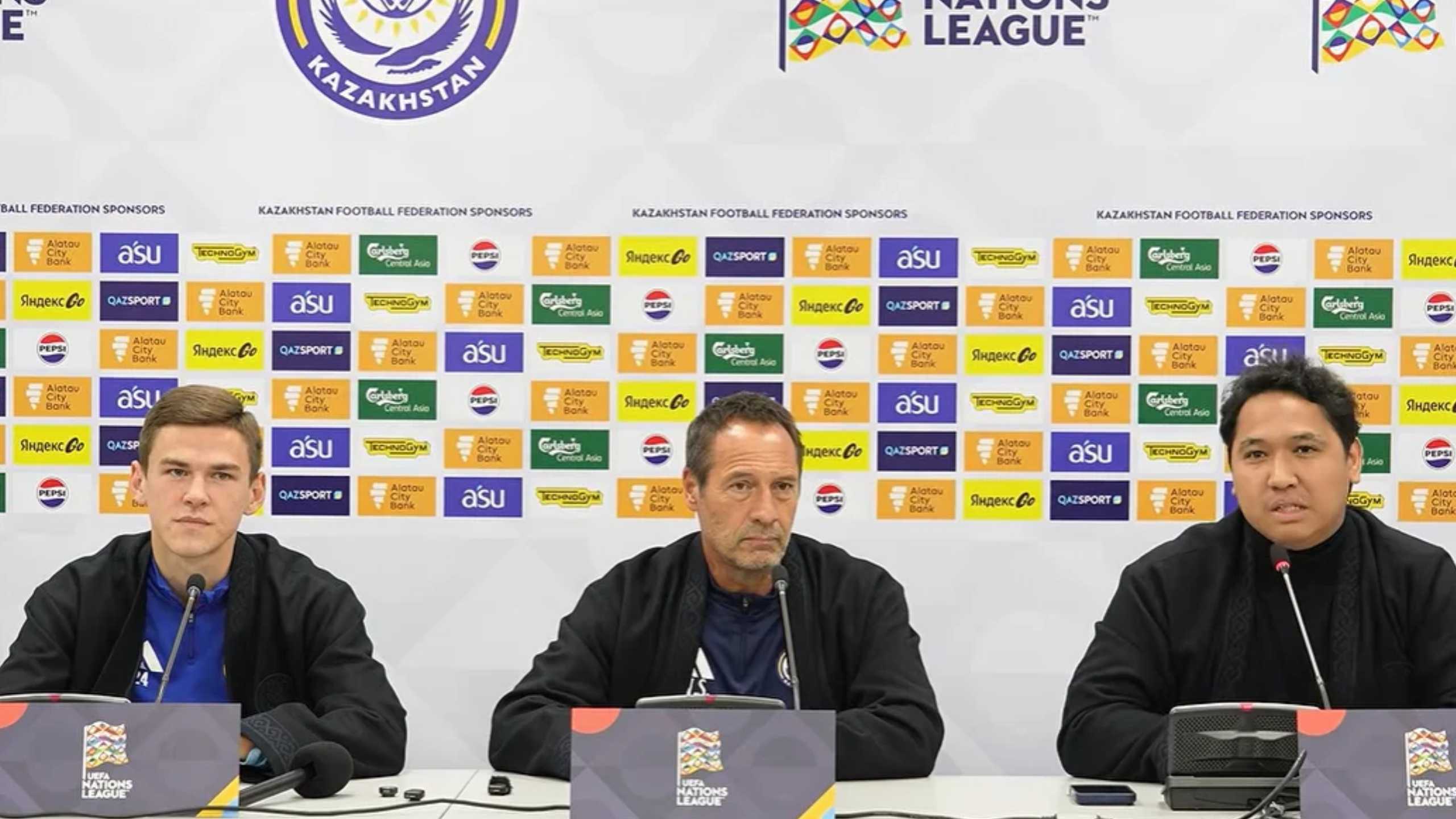
Canada-born Johannes Nicolaas van ‘t Schip has been the manager of the Kazakhstan national football team since August 2026, following an agreement with the Kazakhstan Football Federation.
His statement of intent was clear before a ball was kicked.
“We want to build a national team that all of Kazakhstan can be proud of.”
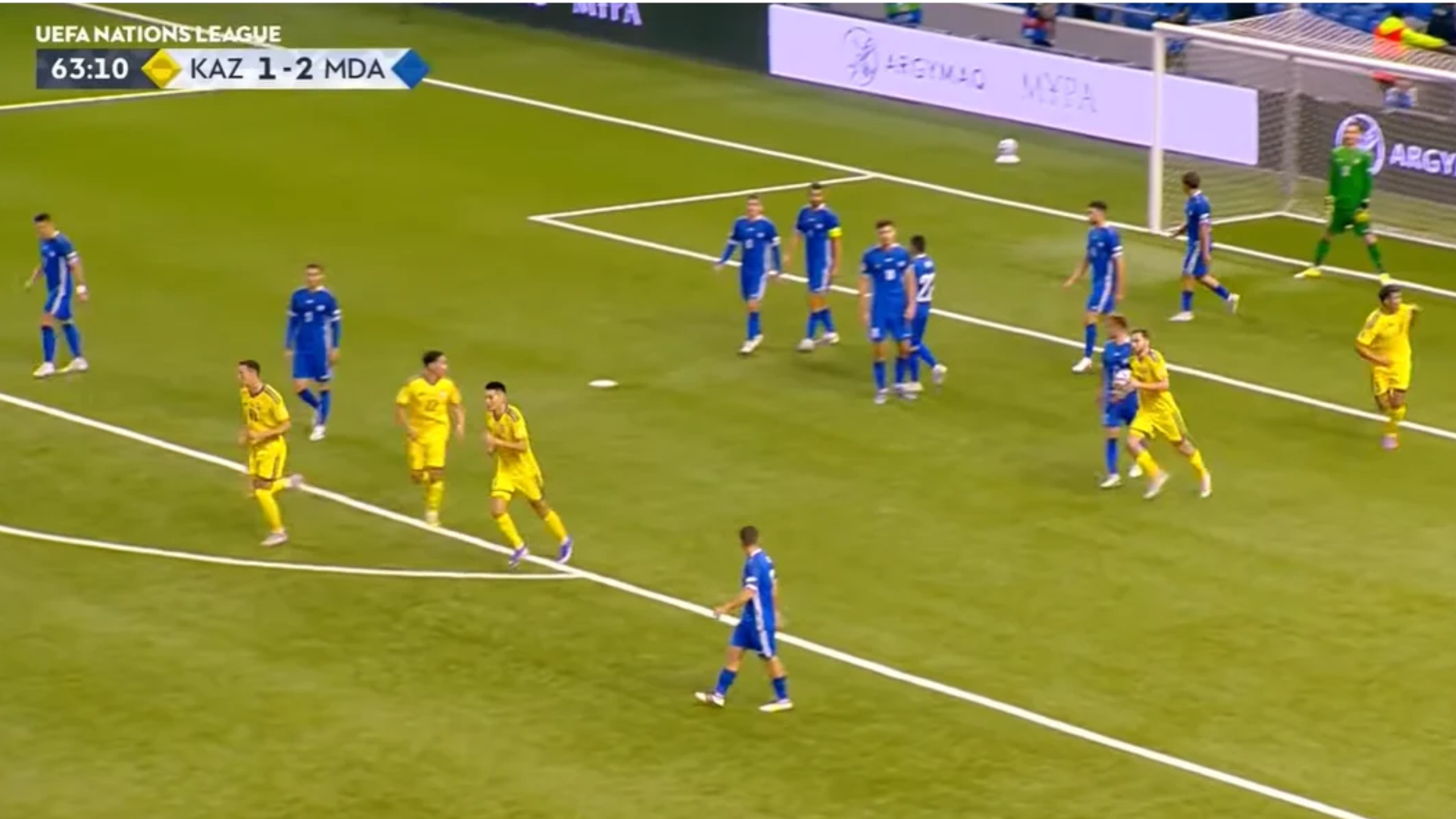
Into October, and it’s clear that this plan is yet to bear fruit, as the side has failed to win a single match in a spell which has included games against the Faroe Islands and Moldova, who beat the Kazakhs 2-1 on 2 October in the UEFA Nations League.
This leaves the Central Asian team occupying a sad bottom place in a group they hoped to perform very well in.
John van ‘t Schip was very honest following the defeat, doing the gathered journalists the thorough decency of an explanation for the loss to the unfancied Moldovans.
“I think it was my mistake as a coach: I wanted to play more attacking against Moldova, with the midfielders positioned between the lines. Unfortunately, we didn’t capitalise on that. We did everything we could to equalise, but in football you also need luck, and we lacked that today.”
Some might agree with him that winning the group will now be difficult, but less so that we need luck going into the final matches, hoping instead for harder work and better skill on the pitch.
Looking at this coldly, it’s a shame for a nation that seems to be winning so much at the moment to be writing off its footballing chances in October, of all months, but these things take time.
Van ‘t Schip has no plans to resign:
“As for the calls for me to resign, that’s not my decision. I hope to continue working.”
I, for one, hope he stays on. Building a successful team in a country which doesn’t have a rich footballing pedigree, albeit some good players, isn’t something any manager can do overnight.
Many of the best teams in history took years, or even decades to prove themselves. Spain hardly ever did anything of any note until they became unbeatable for three consecutive major international tournaments, plus normal service then resuming in the most recent.
France were much the same. Belgium were considered an also-ran nation until they started putting qualified coaches in schools and teaching kids to actually control a ball from a young age, at one point topping the FIFA rankings despite not winning any silverware.
Italy won the World Cup in 2006 and did next to nothing until 2021 after rebuilding a team, again needing 15 years to replace the old guard who had all retired with no suitable successors lined up to step in.
Away from national football, the picture repeats. Sir Alex Ferguson turned Manchester United into the most dominant force in world football, but it took several years – and a lucky goal to prevent defeat in a match that was rumoured to be his last, should he have lost it.
Dario Gradi turned Crewe Alexandra into a classy, Barcelona-style side, taking the consistently worst professional team in England up the divisions and nearly into the Premier League. Again, this took him over a decade. I was there.
Growing up in England in the 70s, 80s, 90s and then hanging on there in the early 00s, apart from the occasional fleeting moment, was painful for any fan of the England team who were utterly dire for most of those 40 years of hurt and never showed any sign of turning it around.
A former England player, Chris Waddle, summed it up nicely one time:
“The FA do nothing tournament after tournament after tournament. Why don’t they listen? Why don’t they look at other countries and ask ‘how do they keep producing talent?’ We coach talent out of players … We lack so many ideas, and it is so frustrating. The amount of money in our league is frightening, and all we do is waste it on rubbish ideas … We kid ourselves thinking we have a chance if we keep the tempo up. We can only play one way, and it is poor.”
Decades of development later and England these days are very good. They managed to get revenge on the country that beat them in the 2018 World Cup semi-final by humiliating them 7-0 in their own national stadium at the weekend, not even needing to get into first gear to do so. It was like a stroll in the park for the players who are almost all world class, a contrast to the days when England’s only truly decent player was Paul Gascoigne.
This is the same team which has made major finals and semi-finals in recent years at will, and come very close to doing better.
Yet it took them since 1966 to get there, a lifetime of mediocrity along the way, as they failed to win more than the occasional corner.
This is not unlike the reality that John van ‘t Schip faces.
No, it’s not literally the same, but it’s a long journey, and the Ajax legend can’t just shuffle players around and expect them to turn opponents over when those other teams are doing everything they possibly can to stop Dastan Satpayev and his teammates.
Having players ready to represent the country is a continual work in progress, and while there are many good players coming through, and many who could follow Satpayev to England over the coming seasons, the strength in depth of the national squad isn’t a quick fix – it is going to take time.
It is also going to take time for even the best players to learn the clever system that van ‘t Schip wants them to play, perhaps not the formation that they are familiar with from club football, or from previous international matches.
“The most important thing is to create the right atmosphere and positive energy within the team, so that the players feel free, can express their strengths and talent, but at the same time remain within the framework of team discipline. That is the balance we want to find.”
This guy knows football. According to the Ajax website:
John van ‘t Schip wore the white-red-white Ajax shirt from 1981 until 1992. The current Kazakhstan coach knew national and international success.
It doesn’t guarantee anything, only the players on the pitch can win matches, at the end of the day.
But all this talk of John van ‘t Schip vacating the premises is premature, at best. As he said himself:
“It’s clear that when you win, you have a lot of friends, and when you lose, you have almost none. That’s part of being a coach.”
It works both ways, though. Support and friendship can lead to success, and if combined with the right approach to building a national side, and perhaps a helping of patience, too, this coach could prove why the federation was so proud to unveil him as manager only a few months ago – as part of a long-term vision.