
“You need the nerves of a boxer and the concentration of a chess player. The steady posture of an archer, and the stamina of a race walker.”
That is, to become good at darts – something Kazakhstan hasn’t made more than the very first tiny steps in, so far.
Is it worth rectifying the deficiency? And could Kazakhstan really enter stage left into the immense global darting roadshow?
A Step Back in Time
In 1970s England, most pubs were decorated with photos, collections of beer mats, assorted pictures, and even, occasionally, decapitated deer heads, complete with antlers. Fortunately, the landlords had the good sense to station them towards the ceiling, near the pewter tankards hanging from the beams, out of harm’s way (even before the days of rampantly over-zealous Health and Safety legislation).
Granted, hunting trophies weren’t so common, a stark contrast to the ubiquitous dartboard, which, far from being just a splash of colour tucked away in the corner, was the non-negotiable basis of an entire culture. It embodied the inalienable right of the masses to recreational self-determination.
And this culture was ultimately to transcend the blurring boundaries of social class, then spread across the globe, the pace of its invasion onto screens and into pubs and clubs accelerating year on year, until it reached fever pitch in 2024.
The sport has its roots over a century ago, but very nearly didn’t happen, when a ban on gambling in pubs meant that darts was forbidden, all at a time when punishments were severe and indiscriminate. You see, back then, bizarrely, it was still classed as a game of chance, rather than one of ability.
It took a determined landlord, his best player, and a clever legal team to prove that darts, when played properly, requires skill (however easy today’s top professionals make it look). Ultimately, after accepting the obvious, the court verdict went the way of the publican, and darts was allowed to claim its place as the go-to leisure option for millions.
How the Game Turned Pro
In the mid 1970s, a Londoner called Olly Croft, himself a keen pub player, noticed that when the referee called ‘game on!’, the pub went quiet and people gathered around to watch. Understanding this meant that Olly got to work and gave the world professional darts. His contribution to what we have today doesn’t get nearly enough credit.
This was just the beginning. By now, in 2026, after the arrival of Luke Littler, darts is arguably the UK’s second most popular sport (even ahead of rugby and cricket) and is played by many millions of people all over the world.
Worldwide Growth of Darts
Nearby, Russia has thriving darts communities across its entire enormous territory; Mongolia has a darts scene so vibrant that over 60,000 people play regularly. Some have made it their full-time job.
China sends players to international tournaments including the World Championship, as do the Philippines; Uzbekistan has hundreds of clubs; India has many keen players, one of whom, Nitin Kumar, won a match in the most recent World Championship, making himself a small fortune in the process. Turkey has thousands of players, including a current World Champion. Even football-crazy Italy is catching the bug, with 15,000 already preferring to throw arrows than kick a ball around.
One other country which has seen a boom in darts is Kenya, whose government famously made a public U-turn when David Munyua won a match at the same World Championship as Nitin Kumar. On applying for funding to attend the tournament in London, Munyua had been rejected on the grounds that the government ‘could not fund pub sports’. One win and a week later, their President himself took to social media to congratulate the player, urging him to ‘bring that trophy home’.
That was never going to happen, but the reception Munyua received on his return to Kenya was enough of a hint that, perhaps, the government there might consider investing a few shillings in giving future champions places to play the game. There’s no shame in their original decision to refuse the payment; how were they to know what would happen? Now they do know, they are very willing converts to darts, and consider their countryman an honoured citizen.
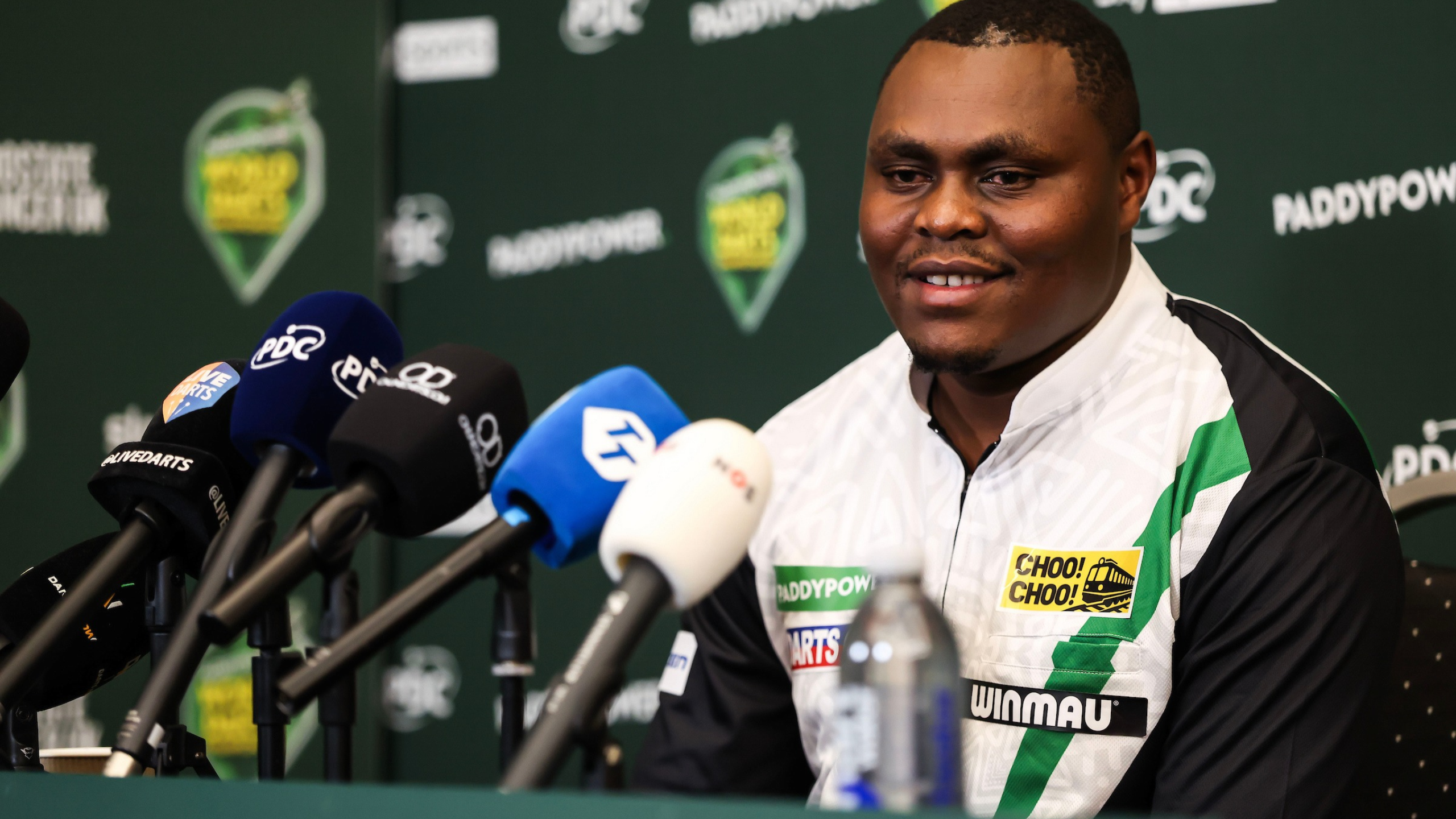
Incidentally, David will be in London once again in December with both eyes on more glory, millions watching. He won’t struggle for sponsors this time round – chances are there’ll be a very long queue of them. Hint taken.
People in Kazakhstan still see it as a kids’ game, something you might play at the fairground
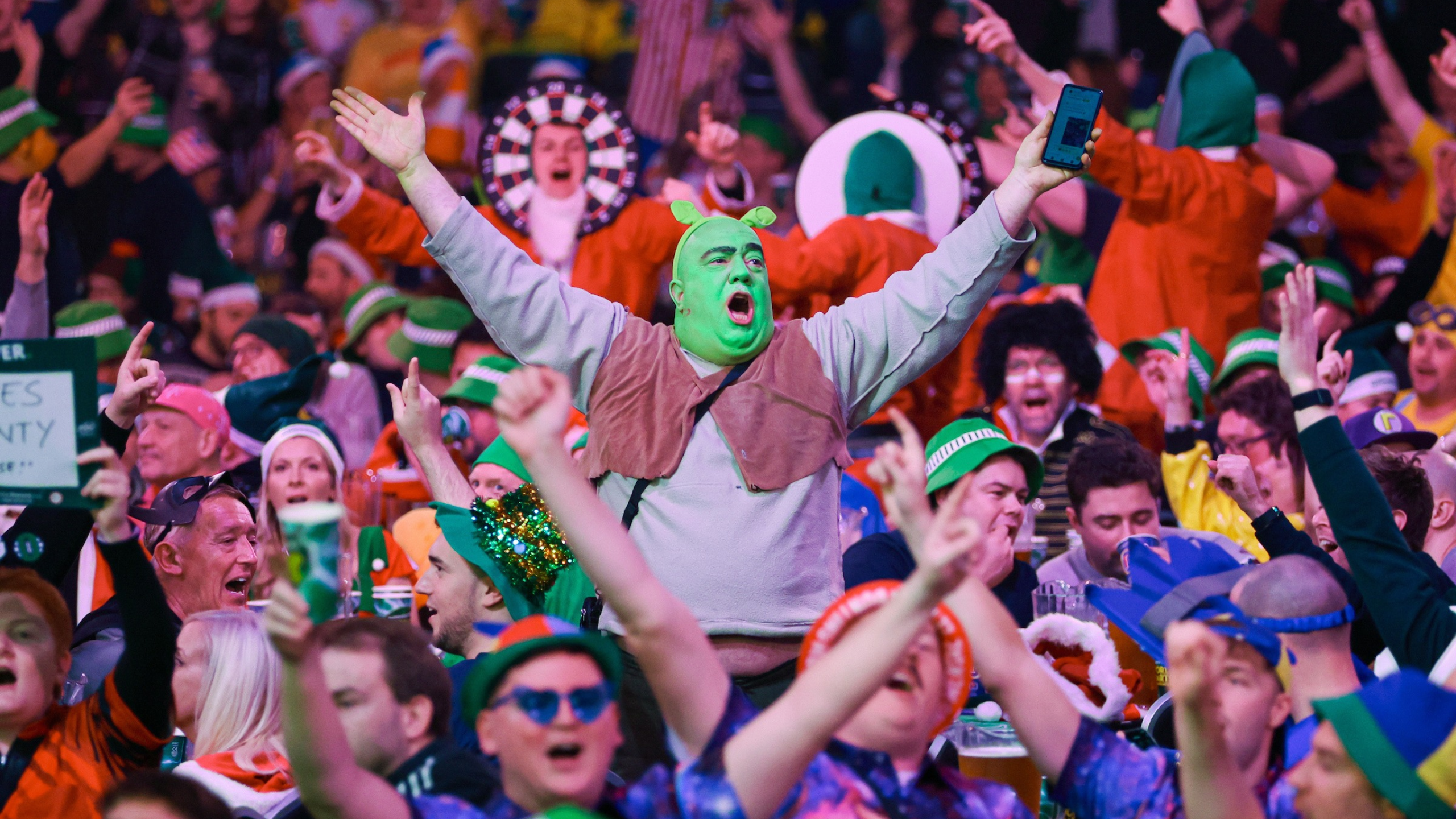
“I can’t believe that’s a darts match, are you sure it’s not a Taylor Swift concert?” asked a sceptical Gulshat when shown this photo of a ‘minor’ event taking place in Madison Square Garden, New York, with the usual thousands of spectators dancing around in the most amazing costumes.

Speaking to local people, both darts players and fans of other sports, it seems that lack of awareness is part of the reason. People don’t realise that it is a serious affair, let alone one of Europe’s greatest passions – when tickets cost a fortune and sell out within minutes.
“We have our own sports in Kazakhstan, and take an interest in others, but darts is not part of the culture here, and nobody sees it as a gap, not even those who are aware that it is a real sport,” was Zhamliya’s explanation for the lack of interest.
This raises the question: is it worth it? After all, we’ve managed without so far. Shouldn’t we just leave it to the rest of the world?
Many of the nations which affiliate to either main world governing body started with 20-30 players, none of them anything to write home about. Not needing a stadium or a lot of expensive kit, they got more and more people involved, often those who wanted new hobbies without new expense, or those who had sat entranced watching the world’s best players slug it out on the TV.
The competitive spirit and the camaraderie took root, and players were motivated not just by wins, but by taking part, socialising – that banter with friends and rivals, something Roy, from South Africa, values the most.
This grew and turned into officially sanctioned tournaments, membership of the World Darts Federation (WDF), and later on, players heading overseas to return home with medals and prize money. Some of those countries now have fully professional players who are well known around the world, but who grew up in countries where their parents probably didn’t even know there was such a sport.
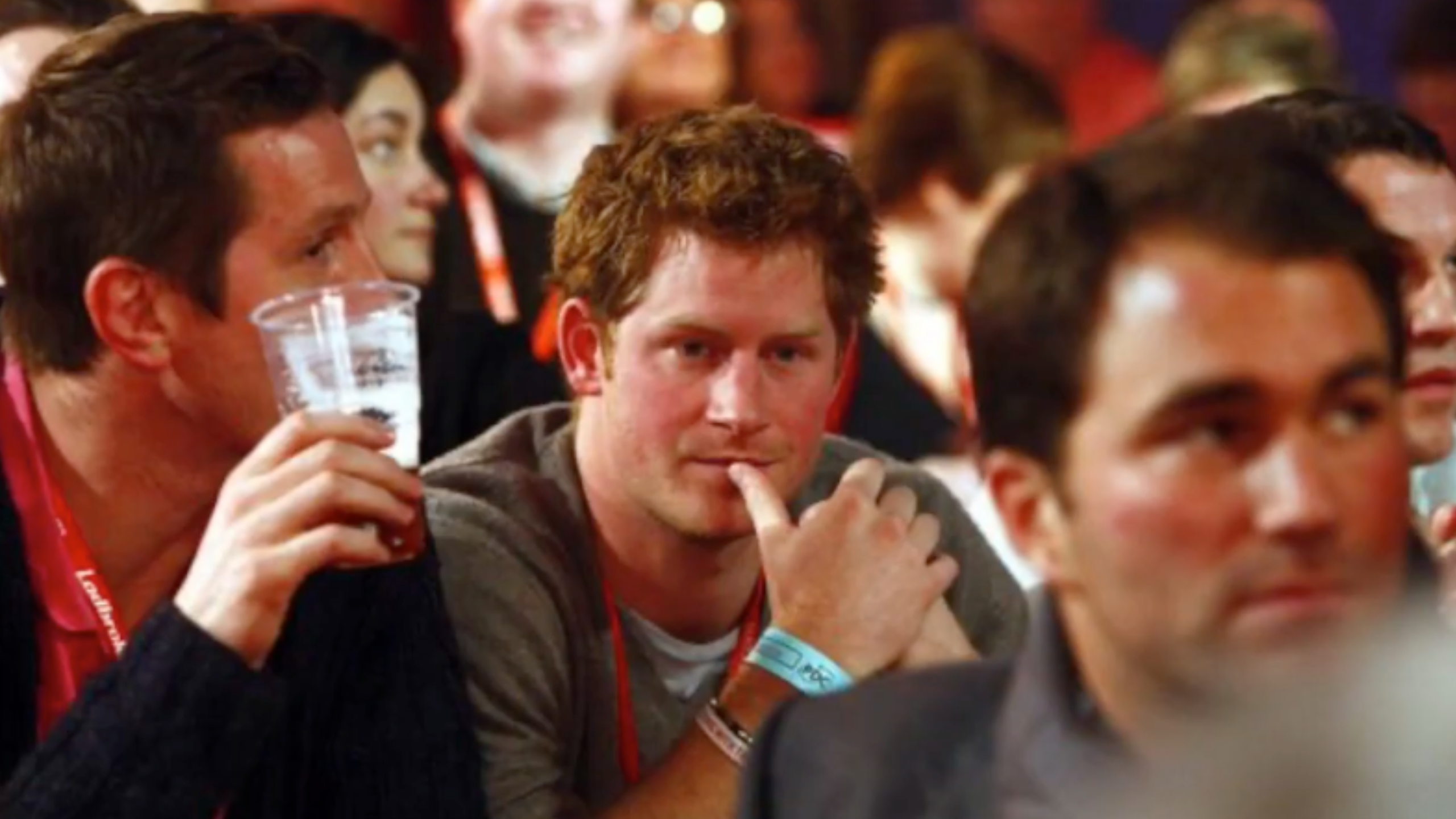
It’s worth noting that darts, once a bastion of the working class, is a treasured interest of many celebrities, including some of the British Royal Family. Prince Harry has twice spent several hours watching the World Championship in person at the venue, aptly the Alexandra Palace, as it is known.
The glitz and glamour, and the stadiums seating 20,000 (!) people for a single evening of darts come later. One step at a time. And to get playing one of the most accessible games there is you need a board, decent lighting, three darts, and a bit of space. And it’s game on!
Will Kazakhstan Ever Take up Darts?
The simplicity is part of the appeal. Who wants to tax their brains all evening after a day at work? The beauty of darts is precisely that you don’t have to think hard. It is delivered to you in a colourful box, and all you have to do is open it.
Another South African player Riaan, one of many thousands in his country, believes it’s got to be worth Kazakhstanis giving it a go, because back where he lives, it all started in much the same way.
“Kazakhstan already proves it can compete in precision, focus, and mental strength sports. Darts is all of that. It’s 90% mental. I have no doubt Kazakh players would be competitive incredibly quickly.”
John Steele, a keen player from Scotland, is less interested in the big money at the top of the sport and the famous faces you can see smiling their way through the biggest events. He values darts for the social side. For him, it is about friendship.
“I have played darts since the age of 14, mostly in social leagues. Now playing the African Tour. Although I still play for the social aspect, I am very competitive, and what I love about darts is that it’s all based on your own ability. There are no advantages with regards to height, weight or strength; it’s about practice and repetition. Learning your own technique and then mastering it.”
And he should know. He is a serving member of the WDF board, and supports Kazakhstan in its ambition to become a member, but also accepts that at the moment, the culture isn’t there.
“All countries should join the International Federation and take part in darts. It’s a great way to meet new people – and over the years we have seen even the smallest countries find some gems in the sport, Kenya and David Munyua, for example.
“Within the WDF, there are international events almost every single weekend of the year. So once you start within your country and you have players that are ready to take that next step, there will be an avenue to progress further.”
Kazakhstan is a nation expected to do well in many of the sports it enters, and in some of them, its best players are feared by any other competitor. Its presence on the world stage brings colour to many tournaments, from the speed and power of Gennady Golovkin to the effortless grace of Elena Rybakina; the lasting talent of Yeldos Smetov to the impressive work rate of Dastan Satpayev.
The best darts players over here right now aren’t ready to fly the flag so high, and participation on the Asian Tour is likely to win more friends than darts matches. Nothing to be sniffed at, but even that is a lot of hard work for the self-proclaimed organisers who struggle to arrange competitions because of the relative lack of interest and the total lack of funding. In spite of encouraging first contact with the WDF, things are not going to change overnight.
Making darts something that people talk about, even if only occasionally and in passing, is a useful first step, and also partly why sending somebody to play the Asian Tour (lose or lose) is going to pay off in the long term.
Offering places to play, certainly not just in pubs, with a comfortable environment, regular challenges, even amateur coaches, and chance to have fun would be a step in the right direction for the sport itself, but also for many of the players. Not everybody has the athleticism to compete in fitness disciplines; not everybody gains much by sitting in front of a screen in their free time.
It stands to reason that a presence in this sport would be worth working towards, a new part of brand Kazakhstan, a new name in a fresh arena, a familiar face that people associate us with. A new hero, maybe? Very few sports are as happy as darts – surely there’s talent somewhere in Kazakhstan that would love to be part of that.
To quote Riaan once more:
“Give Kazakhstan a dartboard and a year, and you’ll have a nation of darts fans. Once you get that 180 feeling for the first time, you’re hooked.”
No, it’s not on the cards (nor on the oche), but then, once upon a time, neither was a Kenyan vet who, in the space of a few hours, single-handedly rewrote his country’s sporting history. All by winning just one match.