
Visitors to the UK are often told that fish and chips is a must-eat, while those offering the advice overlook the fact that, of the most popular foods in the UK these days, the range of Indian dishes that so many British people regularly go out to consume, rank very high on the list. An immersive experience of Britain as it is today would come just as much from tucking into a chicken madras as it would a bag of chips.
With locals in Kazakhstan often not partial to spicier cuisine, Indian food is not as embedded in the culture here as it is in the UK, but while a decade ago there were one or two Indian restaurants in Almaty catering to a predominantly expat clientele, today there are up to a dozen establishments moderately prospering in and around the city centre.
Globalism is part of the reason for this, but residents of the southern capital will also have had the opportunity to meet some of the many Indian students who have chosen to make Almaty their home for up to five years. Hundreds of guests from the subcontinent study here for their crucial medical degrees, having in some cases declined similar options in countries such as Germany and the UK itself.
saqtimes.kz, understanding the value the Indian community can bring to an already highly multi-ethnic community, met two long-term residents, here from India studying General Medicine, both of whom recognise the importance of their five years in Kazakhstan to their career prospects.
Ankit Singh is a 5th-year student of the Asfendiarov Kazakh National University. His groupmate, Sahil Sharma, likewise, is working his way through the same degree course, but unlike Ankit, Sharma, from Delhi, has made the decision to remain in Kazakhstan for a further year. Ankit Singh is now ready to embark on a medical career back in his homeland.
Ankit Singh is from a medical family, as his father is a pharmacist, while his friend’s family has always been in business. Stepping away from that was motivated by a desire to help people.
“I chose Kazakhstan primarily because here we can get the same education over five years while most other countries require a commitment of six or more,” said Ankit Singh, with Sahil echoing his sentiments. “It also costs less here compared to India, where medical training isn’t always independent from political interests, which drives costs up.”
Sahil had originally chosen to study in Germany and was learning the language, but some of the conditions of study dissuaded him, and he came to Almaty. They both shared the view that it has been nice to live in a country which is stable and at peace, given that many possible study destinations have experienced more turbulent times.
Their training is delivered in English, which they both know very well, although there are occasionally language issues living and studying here, something foreigners may empathise with. While it’s unrealistic to presume that time spent abroad comes without any issues at all, both men have come to see Kazakhstan as a second home and will always feel that it was a significant part of their life path.
Knowing Russian would have been an advantage, but the progress they have made in their training has not suffered significantly as a result, and either this year or in 2027, they will both sit an exam in India to verify their suitability to go into general practice, confident of success.
“We don’t have any plans to remain in Kazakhstan and work as doctors here, although we feel we could be happy here, but to return and serve our own communities is, and always has been, the plan, and it’s something that means a lot to us.
“There is an area of India called Karambhumi, and Almaty reminds me so much of it because of the mountains and amazing scenery,” said Sahil Sharma, the student who has opted to stay in Almaty for a further year. “Almaty is a really great place to live, not just because of its similarity to a place I knew in my childhood, but because I find it so liveable in its own right.”
In the words of Ankit Singh, “This country has given me my career and helped me achieve my dream of becoming a doctor. I will always be grateful. The nature is incredible, and we have spent time hiking, especially to Kok Zhailau and the Three Brothers Peaks. Alma Arasan is nice, as is the Talgar area.
“City life is pleasant too; the air is a lot cleaner than you get in India.”
Trips to the mountains often require a whole day, or even more, if choosing to camp out. Students, even those not snowed under by constant assignments, don’t always have the luxury of full days, medical students no different in this regard. If only able to take a few hours’ break, a lot of Indian students spend time in local parks just relaxing.
“We might listen to a bit of Indian music, but other than that, the experience is totally Kazakh, just time spent in parks or in the city, even walking alongside the river into the hills is a nice escape from our commitments to study.
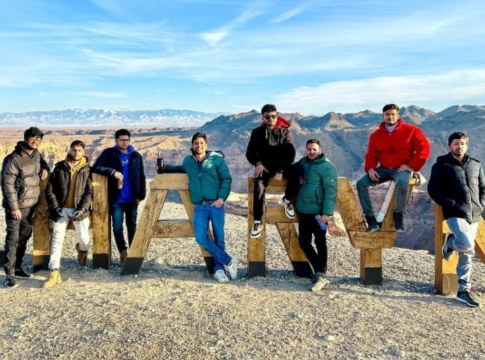
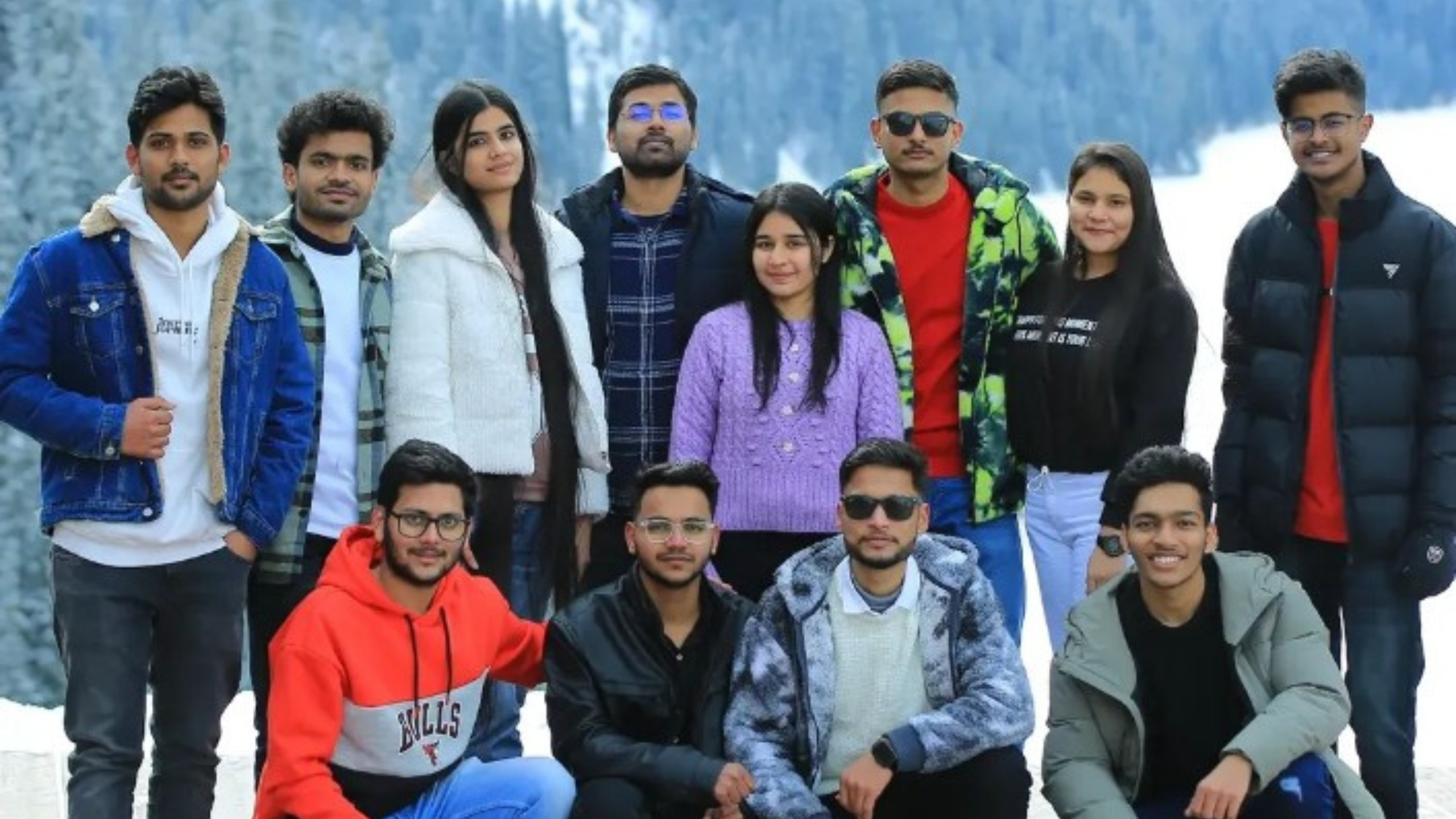
Sahil Sharma is often a source of information and advice for newcomers. “Some of us have been outside the city, but usually not as far as Astana. Charyn Canyon is popular, as is Kolsai Lake. New Indian students coming here should consider the same destinations, and I am the president of an international student organisation which helps organise trips to these places. The Association of International Students has over 100 members, but not only from India; we come from Pakistan, pretty much every country whose students come to Almaty. We also have local students joining.
“The main focus is on research and academic mobility, but the social side is popular too. Our remit includes helping people get more practical medical experience as well, and we liaise with local bodies to ensure that this is to the mutual benefit.”
Perhaps something we can’t fit into an article under 10,000 words is the sport of cricket, probably the most complicated sport on the planet, but people growing up in a culture in which this game is a fixed part tend to understand it. Teaching it to those who didn’t have it in their childhood is a tough job, even the basics take hours to explain.
This could be why cricket days only really feature Indian players, and also why locals who fancied giving it a go fell short even when attempting to grasp the basics (as well as the bat).
Cricket is the world’s third sport, and so popular in India that it dwarves football to the extent that the world’s most populous country has a football team which scarcely outranks nations of a few thousand people.
Bringing it to Kazakhstan was always going to be interesting. Much like darts, it hasn’t taken hold yet, but the group who turn out every Sunday to chase runs are devoted to the sport, some of them excellent players.
“A few local guys came over and wanted to try. They were fascinated by what we were doing, but perhaps they underestimated it a bit. Put nicely, they didn’t do so well, but left with a smile, and we enjoyed teaching them. Football is popular here, while back in India, it’s the opposite; cricket is so important to us.
“Perhaps there were a couple who might pick it up if they gave it a fair chance,” said Sahil Sharma warmly, “but it’s one of those things that takes time to learn.”
“Is there anything you might change about Kazakhstan?” I asked, curiously.
“We sometimes get stuck in traffic, but compared to Indian cities, it’s nothing, to be fair.”
There are dozens of Western expats living in Kazakhstan who have decided to stay permanently, while very few Indians, so far, have made that decision. Perhaps the education and the adventure are enough, for now, but many of them here report overwhelmingly positive experiences, which means the cultural exchange may become a permanent fixture.
And who knows, maybe later on they’ll discover a Kazakh Sachin Tendulkar if more local people decide to give cricket a try.