
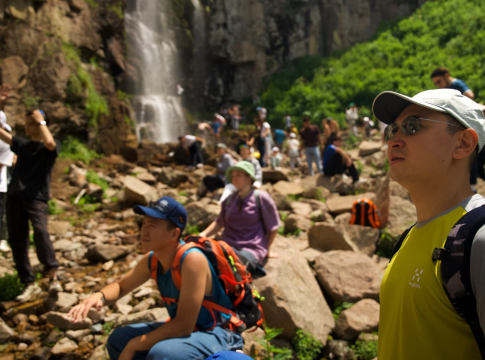
While it’s difficult to be exact as to how many, it is indisputable that thousands of tourists coming to Almaty do so for the mountains.
They could be casual hikers, campers, bikepackers, climbers, mountain bikers, canyoners, trail runners, scree runners, skiers, and snowboarders, most of whom presumably equipped not only with the right kit but an adequate understanding of safety and respect in these potentially dangerous zones just south of the city of Almaty. Let’s hope so, anyway.
Meanwhile, many residents of this major southern city know little about the magic of the peaks that overlook their very houses, and with interest on the rise, there are several key initiatives to both inspire and educate those who might be tempted to increase their altitude for an afternoon sometime.
Tau Zhurek is one of them, a large-scale educational project aimed at introducing the wonders of the Kazakhstani mountains to people who are yet to discover them, despite living in the country, sometimes quite locally. The course, run by expert mountaineers and dedicated staff, includes survival and navigation training, motivation, and mountain etiquette, not to mention, in the words of Nursultan Shokanov, “it teaches people to love and respect one another”, as well as the peaks and valleys.
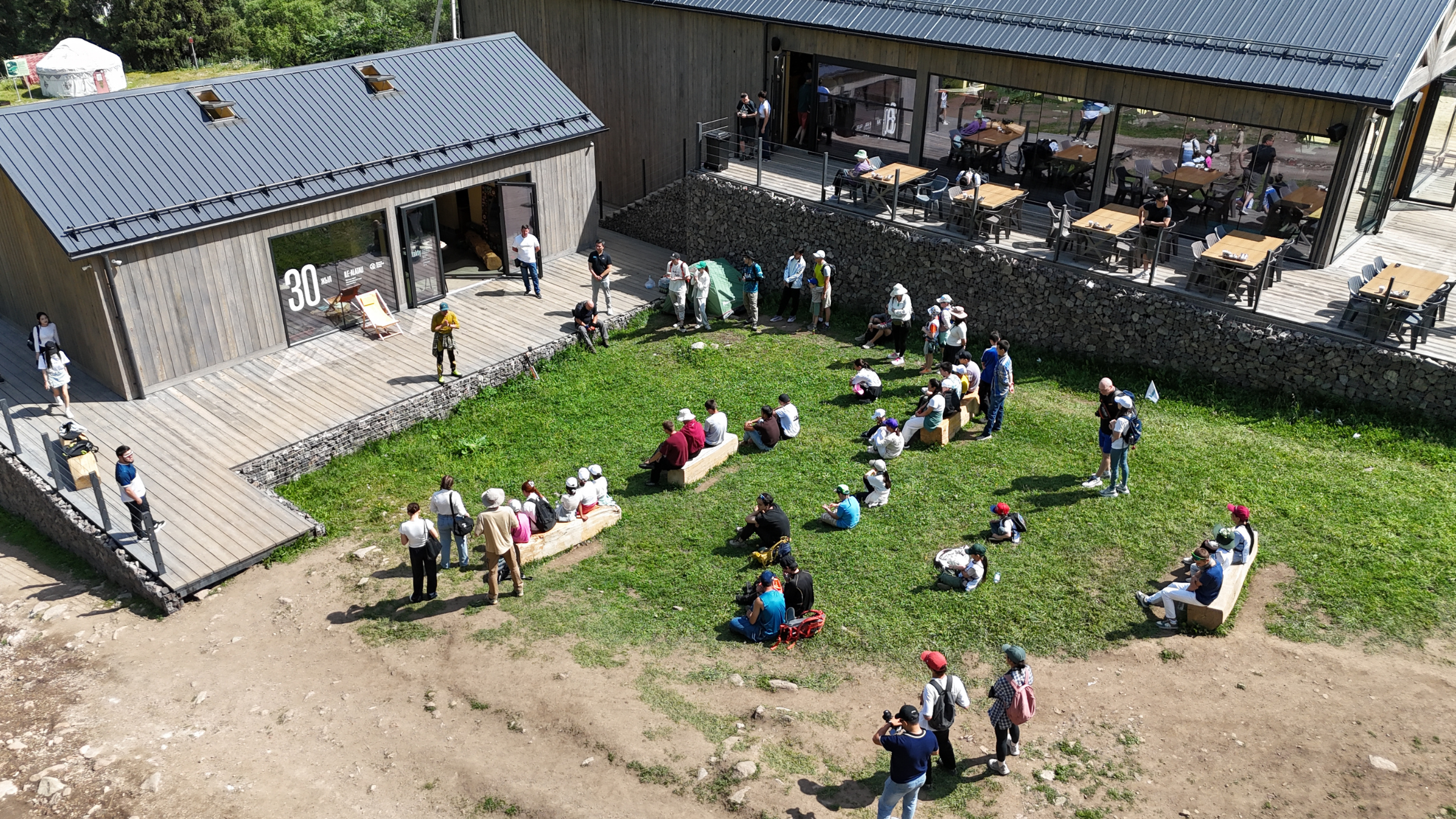
At base camp, Alexander Fedorov, the Managing Director of Butakty, told fascinated children that they were sitting at the site of a Bronze Age settlement of the same name, part of the Skazovsky route on the old Silk Road.
After a quick tour of the visitor centre, Alexander handed over to Nursultan Shokanov, the man behind the project, who explained that it’s simply not enough to tell people about the national parks and leave them to their own resources – it’s not enough to share stunning mountain views in the mass media, because as we have seen, the spike in people who think they can wander up hills and down dales doesn’t mean they are prepared to do so safely.
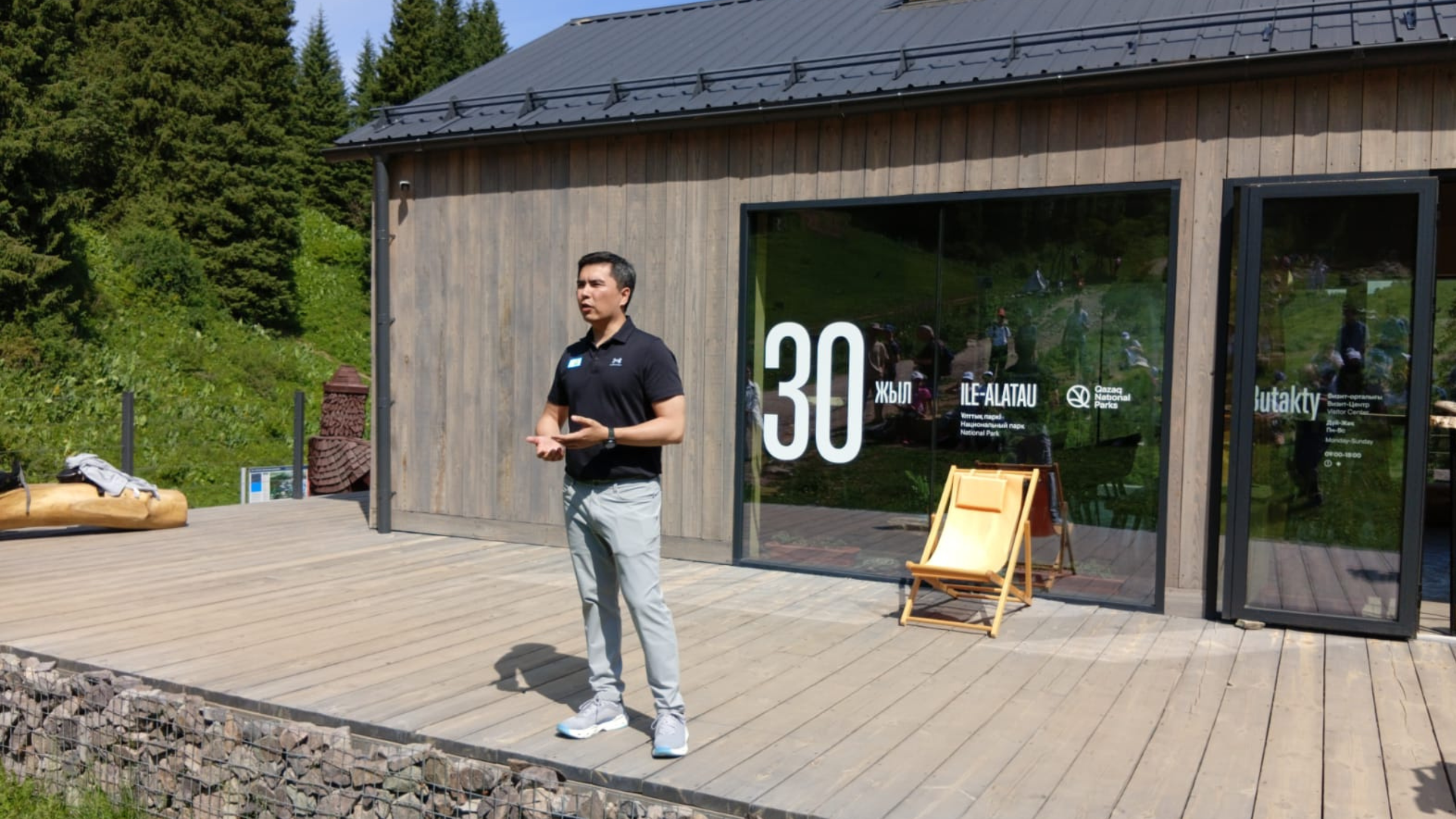
He added that over 400 rescue operations took place in the Almaty mountains last year alone, which proves that education is indispensable and must be delivered to as many as possible, with the target of 100,000 people through this single initiative.
“We want every Kazakhstani who sets out on the trail to be up-to-date with information, understand the risks, and treat the mountains as carefully as they would their own home. We are obliged to preserve our unique nature and pass it on to future generations in its pristine state.”
Tau Zhurek includes training centred on safety, navigation, and eco-ethics, and the project is designed for a wide range of audiences of all ages. It was conceived by the Shokanov Family Foundation in collaboration with the Mountaineering and Sport Climbing Federation of the Republic of Kazakhstan. It has the support of the Presidential environmental campaign Taza Kazakstan.
Guest of honour was alpinist Max Zhumayev, who, approaching his 50th birthday, says that 30 years of his life have been devoted to climbing, not only in Kazakhstan but around the world. He told the hundred or so guests about his passion for mountains, and encouraged them not to give up when they get a bit tired, while stressing the importance of safety above all else. He also had some inspiring words about life in general.
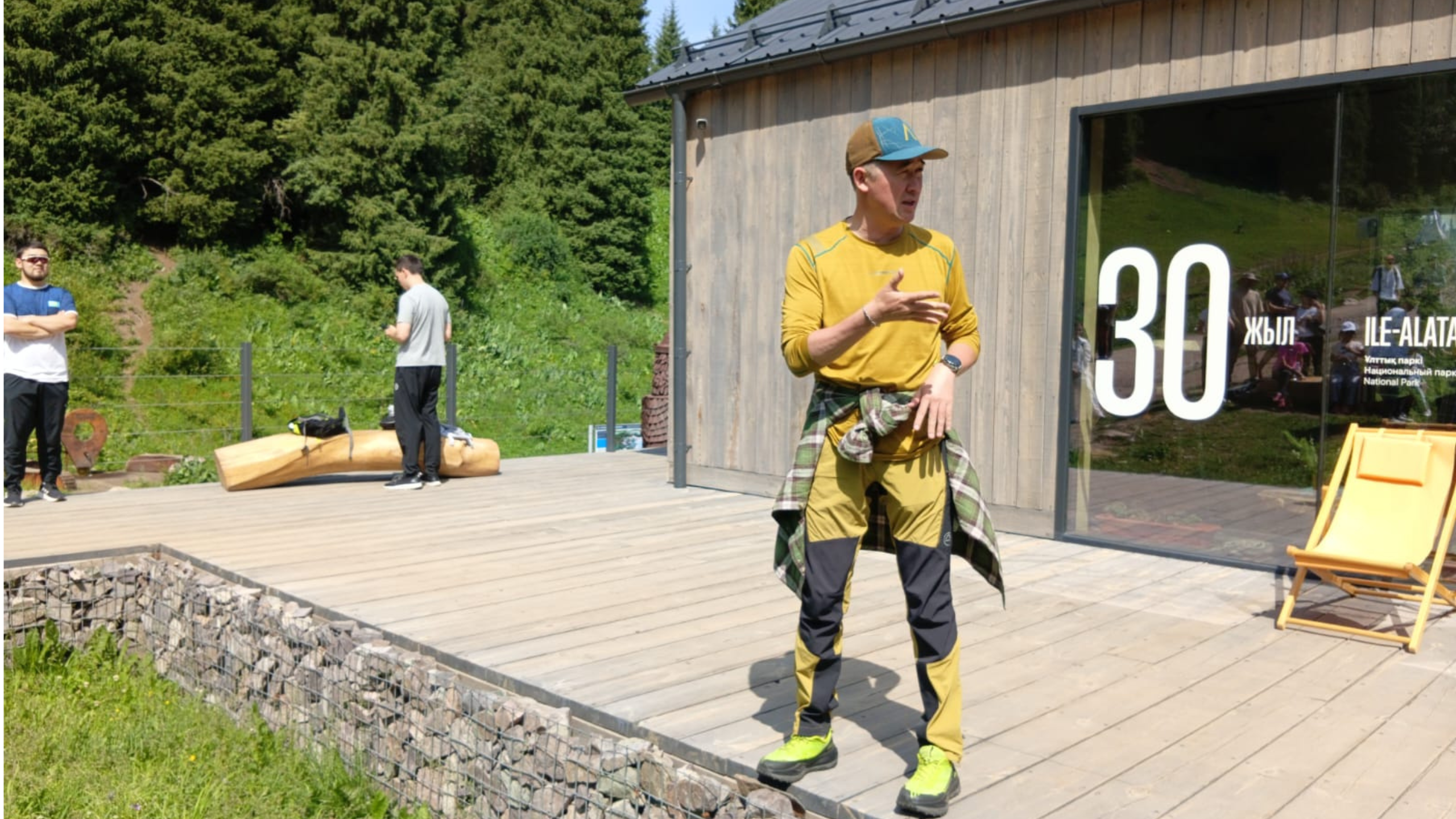
“Whatever your goals in life, it’s like climbing peaks. The main thing is persistence, the main thing is believing in the dream. And now, you know, looking back on my life and destiny, I’ll say this: I have done some incredible mountain walking and running, yes. But it’s one thing to get there and achieve your goal; the main thing, really, is to work towards that goal.
“When you guys face your weaknesses and overcome them, you become stronger. And if you become a strong person, I assure you, you will achieve whatever you want in life.”
His words of wisdom and encouragement were addressed to some 50 children from a local orphanage, most of whom were in the mountains for the first time, joined by a smaller group from the Damina Montessori team.
The route was to the famous Butakovka Waterfall.
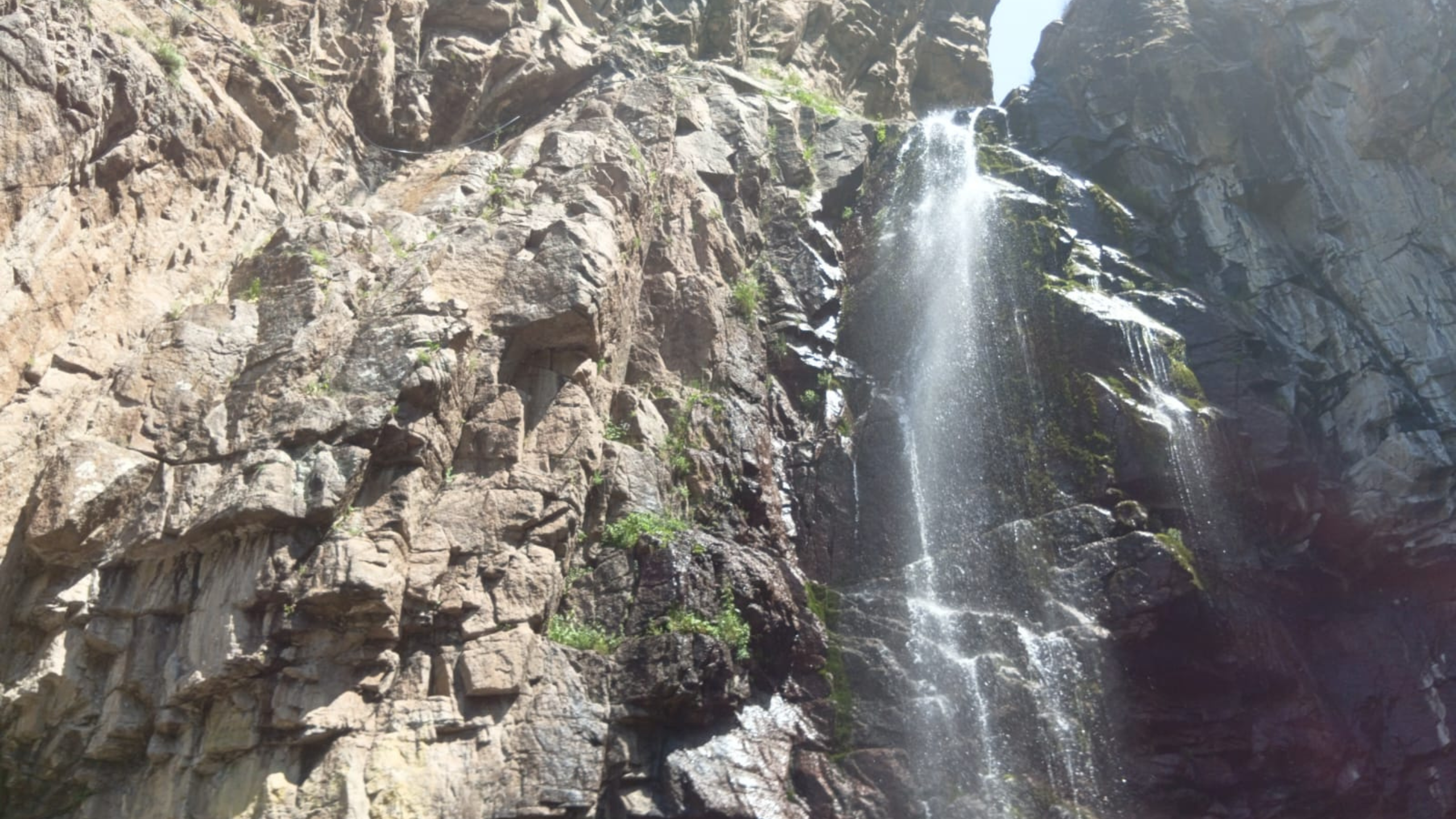
On the excursion partly led by the legendary climber himself, supported by an able team of mountaineers, the youngsters combined excitement with the seriousness of training in basic safety, plus a challenge to clear up some of the litter left behind by those walkers who might swallow their arrogance and learn some mountain etiquette themselves.
Edige Margulan, project leader on the side of the children’s home, is clearly passionate about his work, and took time out from observing the supervised rock climbing sessions to explain how his organisation fitted into the Tau Zhurek scheme.
“This is our second such expedition. We initiated it primarily because we want to show the children at the orphanage the mountains and take them on organised tours. Then, of course, our main goal is to move on to introducing school education, a culture of behaviour, and mountain safety.”
He then took charge of a bag of litter that one of his group had collected, while the young boy made the most of his big day.
Fortunately, there wasn’t a lot in the bag, but the prizes given to those children handing in bin liners half full of trash were only topped by the enormous free lunch they tucked into at the end of the morning, and then, perhaps, of course, the memories.