
There’s a well-known saying in England,
it’s the taking part that counts,
which reminds people that winning is not always what matters.
Imperfect, as most things are, there are those who say that it undermines fighting spirit, makes sportspeople too ‘nice’ and removes some of the win-at-all-costs mentality that has defined so many champions over the years.
That’s probably true, all told. Being content to finish second (or seventh) has arguably consigned many a potential sports champion to the wastes of underachievement, left to a life of regret and wondering what might have been.
Two sides to every story.
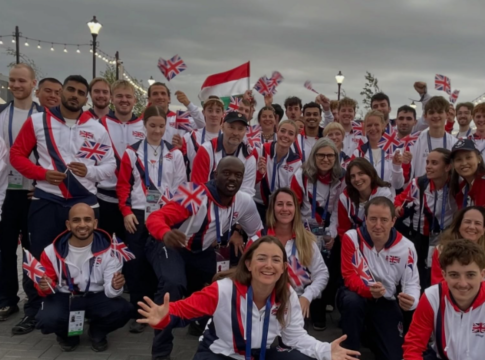
Today’s story, however, has only one side, summed up by the very same words, because Team Great Britain, with all 47 of its members, left the recent World Nomad Games without a medal, but to the very last entrant absolutely buzzing about the experience that has evidently touched them forever.
Left to a life of, well, pleasant reflection, eternal gratitude, pride, and something to tell as many grandkids as they all end up having.
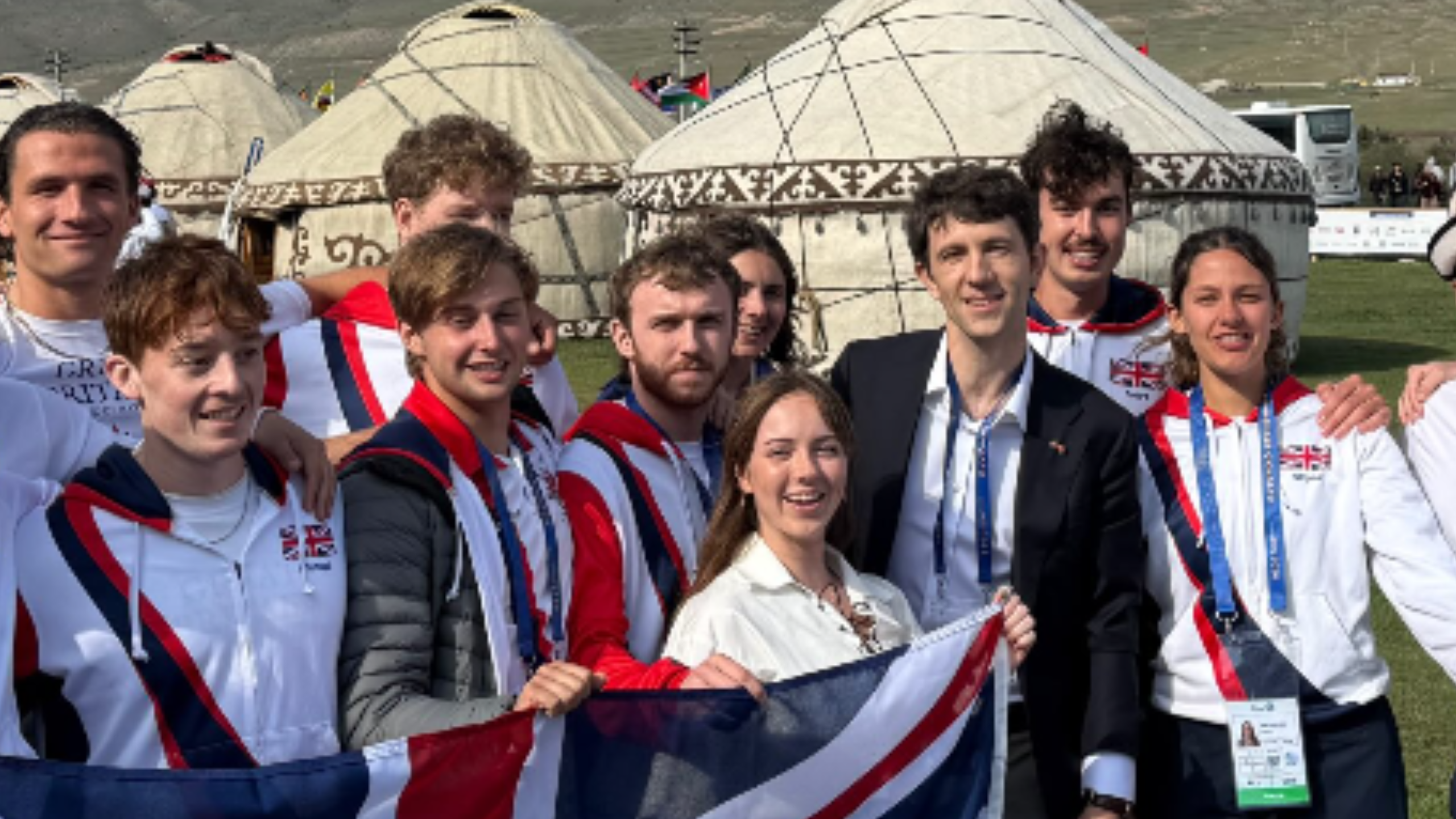
The 2026 World Nomad Games took place in September on the northern shores of Lake Issyk Kul in Kyrgyzstan, and welcomed competitors from over 100 countries. 29 of those countries saw at least one team member head back home with a medal of some colour, the bi-annual event growing in size and influence, far beyond what was probably ever expected.
The Brits were among the most passionate at the WNG, displaying a spirit that enriched the whole event. Not some nationalistic football-crowd type screeching, trying to put opponents off, but a wholesome enthusiasm for the experience that, it is reported, warmed the hearts of even those who were beaten by the guys from the UK along the way.
The tug-of-war team, back after the spirited efforts of 2024, was partly unchanged but also fielding new talent, and after a few months of preparation in earnest, was more than a match for the South Koreans and Brazilians, whom they out-pulled. All this while cheered on by probably the most vocal teammates on the sand.
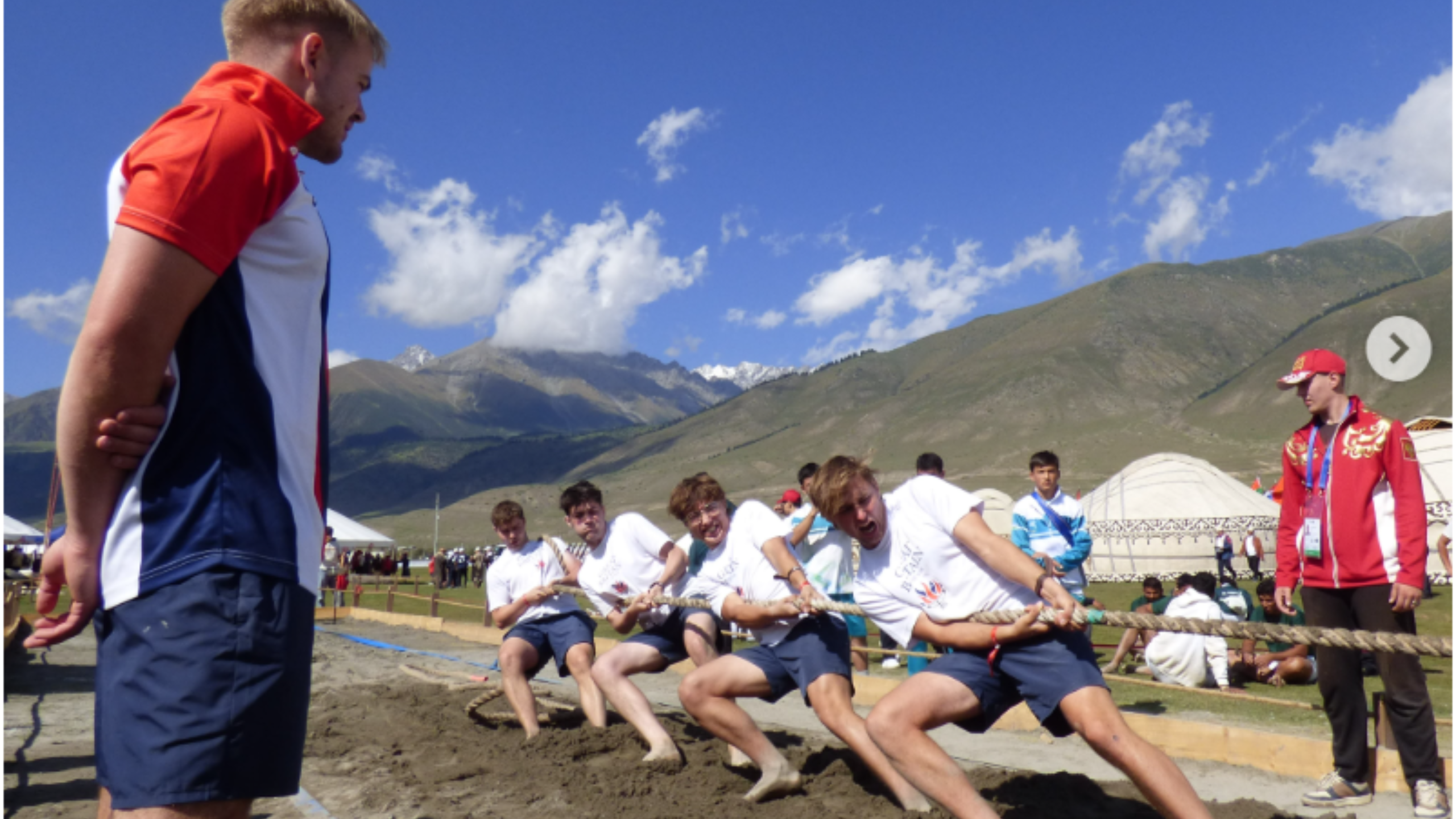
In the end, Kazakhstan won the tug contest, along with many other gold medals, but speaking to Matt Wilkinson from Tug Team GB was uplifting in itself, even a week after the games concluded and the guys are back at work again.
Just waking up after his night shift, 23-year-old explained that going to the WNG was one of the best things he’d ever done.
“Yeah, it was just an unbelievable experience, really. And I couldn’t recommend it enough, and I’m extremely grateful to everyone involved in getting us out there. Really, it was absolutely brilliant!”
He wasn’t on the team in Astana in 2024, so was really keen to go this time, as he will be for future WNGs, but the run up to the previous event was the first time he’d ever even heard of the Steppe Olympics.
“Sam Pollard found out about it. I think being involved in the tug of war scene is probably how he found out about it, but they sort of organised us. And there’s a lot of people who got involved with it through being known back home; there’s a big tug of war sort of scene in the UK. So we decided it sounded great.”
Matt believes that the event has grown massively.
This is not a reflection solely on the host nation, but simply because the World Nomad Games is starting to get recognition as one of the most significant global gatherings and only now gets anywhere near the coverage it deserves. Astana will have helped enormously with that, while the effort the Kyrgyz organisers put into this year’s games helped make it a success.
After Team GB had arrived at the venue, they made a coach trip to Bishkek for the opening ceremony, one which Matt described as surreal.
“I mean, the ceremony and everything with so many different countries and cultures was absolutely brilliant. Yeah, so all the GB team was at the opening ceremony, so there was like 50 of us, roughly. It was quite a long day, but it was unbelievably worth it. It was just quite a unique experience, I think.”
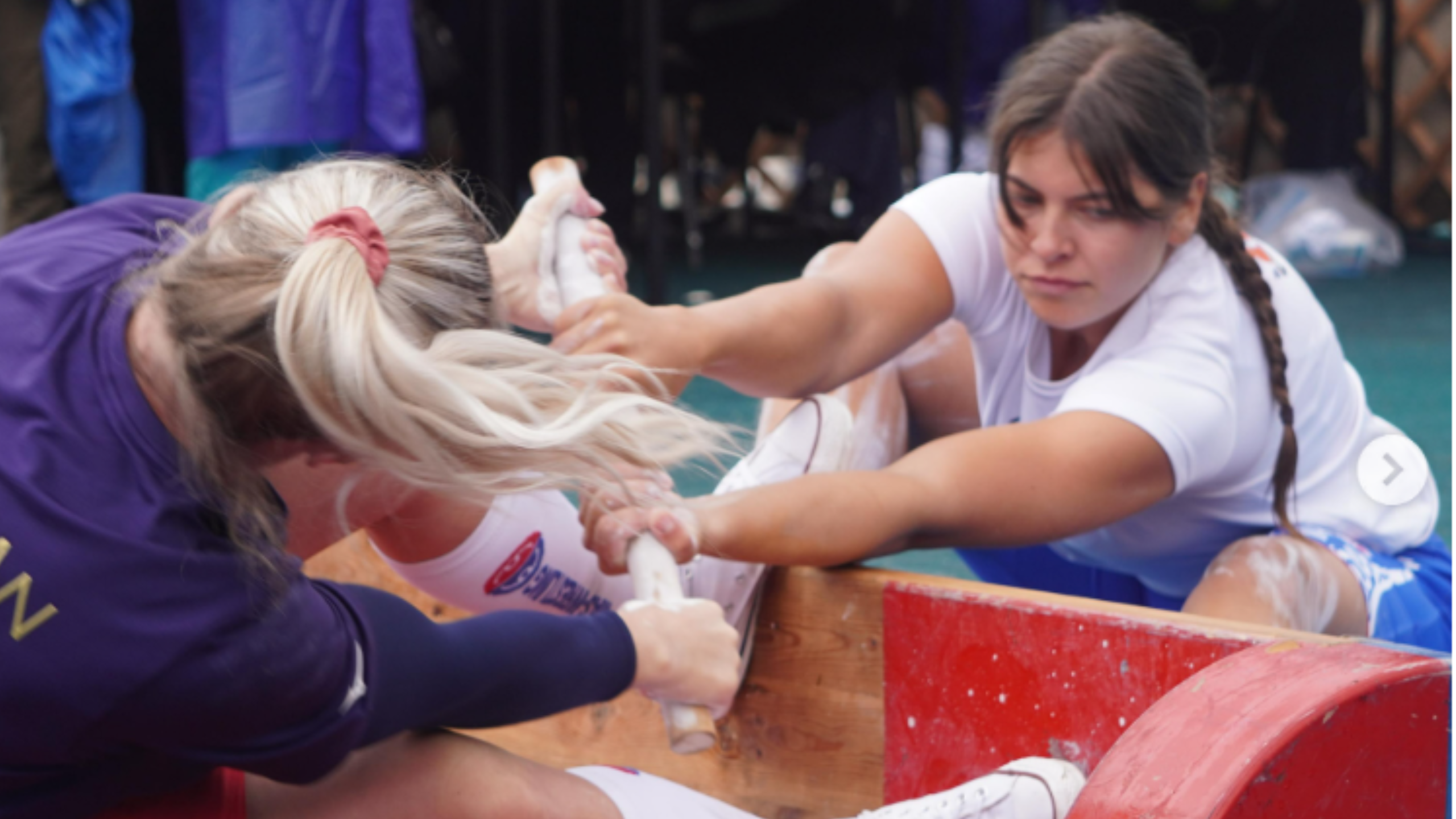
George, from Dorset in England, had come over for the mas-wrestling, although the reputation the British have for not being bothered by rain proved untrue when his foot slipped as he competed against an Italian in the middle of a deluge.
He first heard about the World Nomad Games from friends, one of whom had been on the tug-of-war team himself two years ago.
Even that was enough for George. “How can I get involved?” was the inevitable follow-up, and just two years later he was representing his country in mas-wrestling, a sport that has yet to really take root in the UK. So far. The team has plans to change that.
“We enjoyed it so much that we have decided to introduce mas-wrestling to Great Britain now. The will is there, along with the enthusiasm.”
Already quite strong, George didn’t quite make that count at Issyk Kul as he placed outside the medals, but one of his opponents was some 30 kilos heavier than him, and without a long pedigree in the sport, his technique wasn’t quite primed to compensate for the deficit.
If we haven’t already exhausted the cliché, it really was the taking part that counted for George. Coming 15th of 17 might disappoint some, and who knows, perhaps he had hoped to do better himself, but when a competitor leaves an event saying:
“I’ll tell you, it’s definitely, easily one of the best things that I’ll ever do.”
it is not only a vote of confidence for mere participation, but for the people who worked to make it happen.
“I’ll be forever grateful for everyone involved in organising it. I think, from Sam Pollard, putting everyone together, but also the Kyrgyzstan Government, and all the volunteers, especially Karek, who was assigned to our team, and overall it was a really unbelievable experience.”
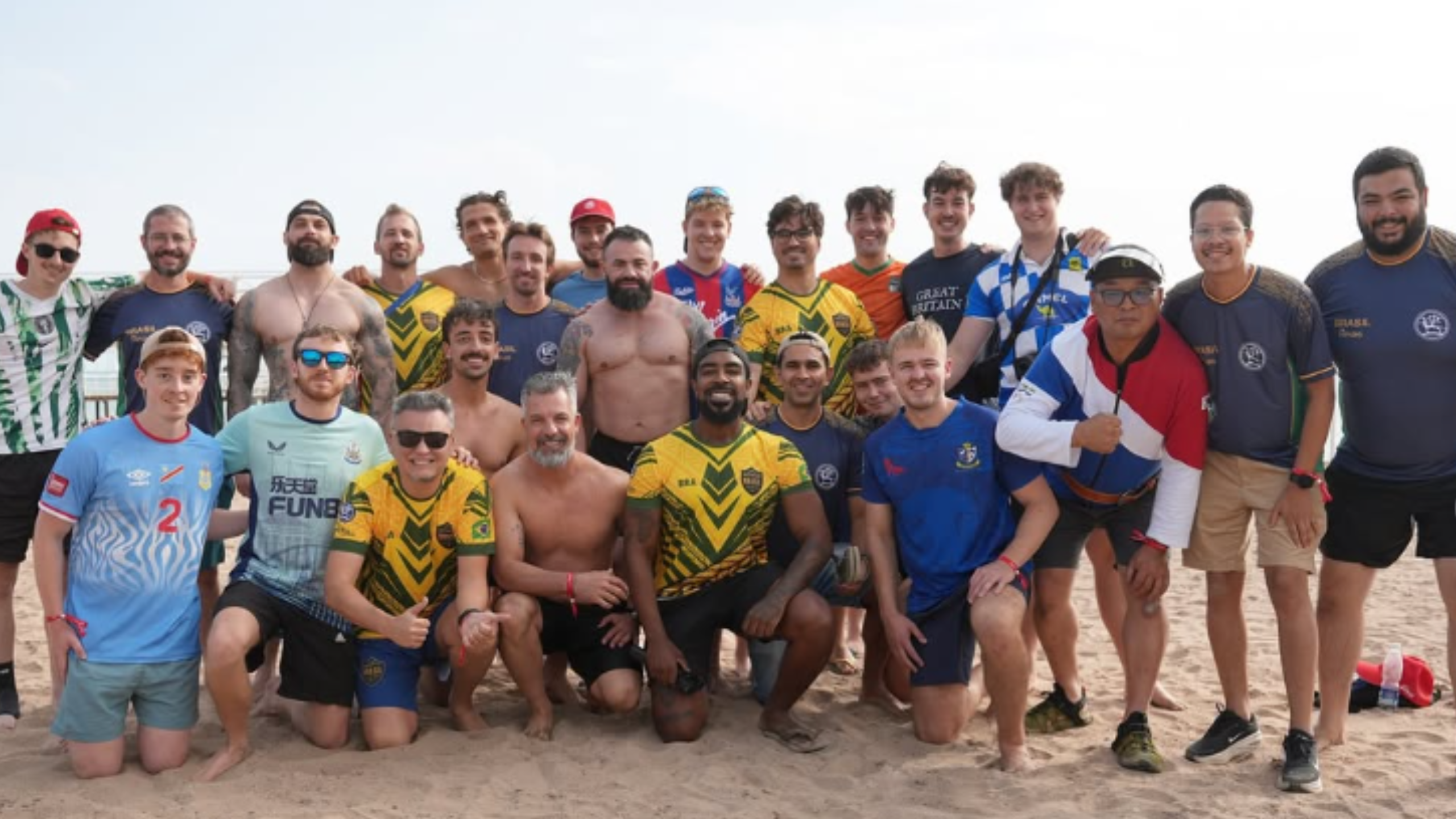
One of the things that Team GB report cherishing is the contact they made with people from the other teams, not to mention the team spirit that pervaded the whole event.
“I think just meeting so many people from so many different, like, countries and cultures, all involved in, like, similar sports, was just great. Just meeting so many people from different backgrounds was absolutely brilliant.
“We got quite friendly with the Koreans and the Brazilians. But not only them, but I also met a lot of Russians and of course Kazakhs as well. Everyone was extremely friendly. I just felt like it was such a unique, very privileged experience.
“Some teams even practised together as friends before competing against each other.”
The tug-of-war went to Kazakhstan, but spectators noted the difference in size between them and some of the opponents, who were a lot bigger. The Kazakh team won by using the right technique, and Matt commented that with this in mind, they had made contact with the official British tug-of-war team in the run-up to the event, the actual world champions. The idea was to see if they would be interested in getting involved in some way.
Although the main UK team didn’t take the trip to Issyk Kul, to an event they may well have won, who knows, as WNG increases its reach globally, could it be something they fancy in the future?
These games have dozens of sports, but not all of them are physical, and many intellectual games prove just as competitive. A few words can be left here to Sarah Hankins, whose contribution is included precisely as received.
There is a particular kind of surprise in discovering that the most cosmopolitan room at a festival of Central Asian tradition is the one filled with people sitting still, moving stones between small pits in the ground.
In our room sat Mangala, a Turkish game I’d learned as a child; Oware, a West African game, its rules apparently unaltered for seven thousand years (which is a sobering thought to have while losing at it); and Toguz Korgool, or Toguz Kumalaq, depending on whether you ask a Kyrgyz or a Kazakh.
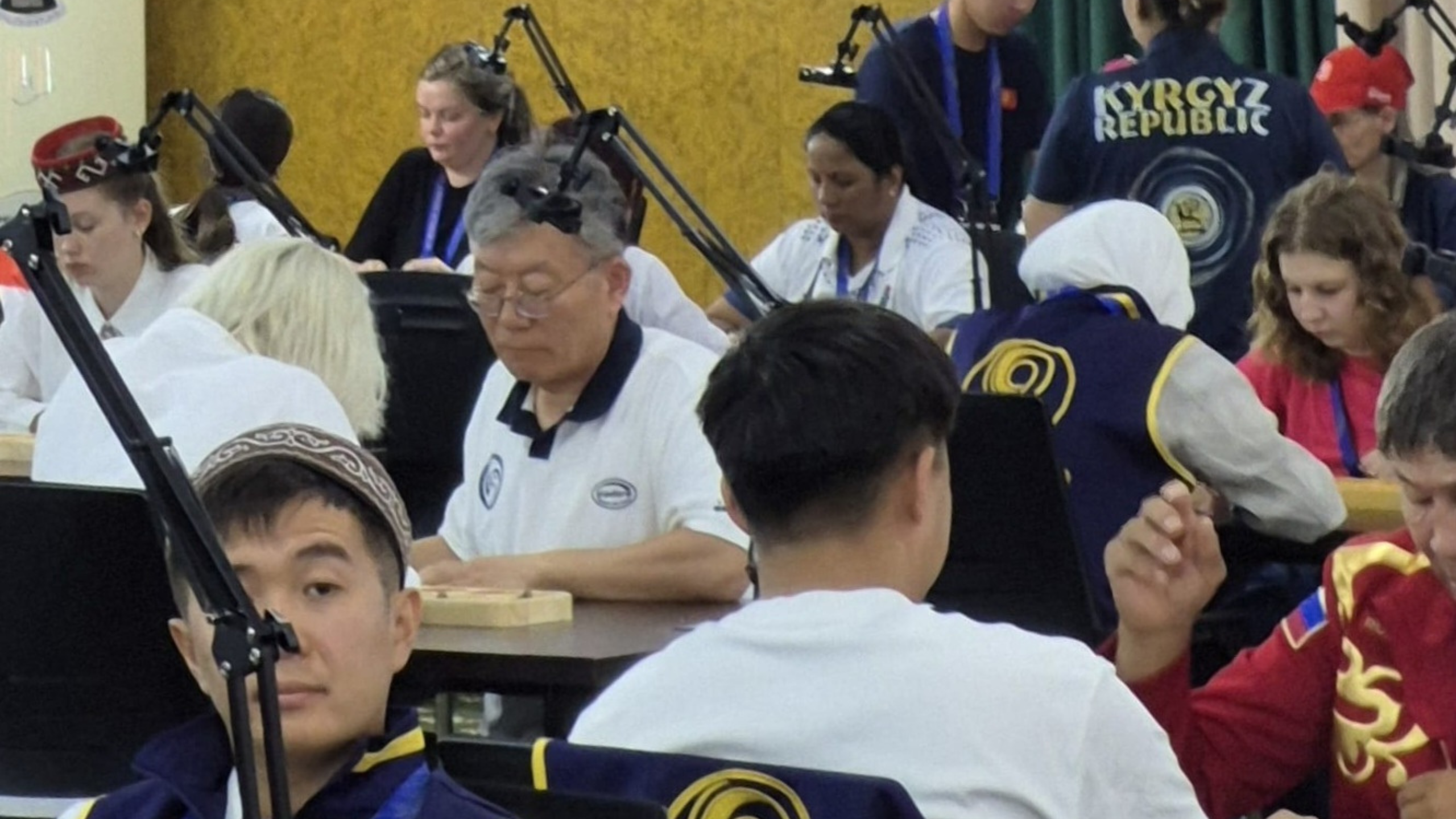
Unlike the physical sports and outside of each game’s top-ranking players, the diversity of players created a levelling effect. An Irish competitor, having learned Toguz Korgool the evening before (having originally entered Mangala), went on to win five out of seven games – that sort of thing simply doesn’t happen in wrestling. Likewise, I picked up Oware especially for the competition and trained with GB’s excellent Oware coach – learning a healthy collection of plays and then committing to pattern recognition could be enough to get you past your first competitors if they’re prone to making mistakes.
Real excellence did still come from skill and practice, and the far corner of the room was reserved for only the top global players. By luck of the draw, I sat here early on and played against a Kazakh woman. We spoke before the game, and she explained she had coached several of the players in the room as well as a few of their coaches. She had played for around 15 years and beat me at Mangala with ease.
It was also interesting how coaches drifted between tables offering advice as freely to rivals as to their own players, as though winning were a secondary concern to the game being played well – which is, I think, a rather good description of what intellectual sport is for. After all, you can only be the best if you beat the best at their best.
Another stand-out performer for Team GB, and possibly the closest to a medal, was Mae Pollard, who won two matches in the mas-wrestling event, in one defeating a more experienced and far heavier opponent, all cheered on by a very vocal British team, thought to have been the biggest team to arrive from any Western nation. Possibly.
Christina hit two bullseyes on a single mounted archery run, something which would have led her to gold if she’d kept it up. Ella, another British mas-wrestler, came up against somebody 30 kilos heavier than her and lost, but walked off so excited, beaming with the kind of smile you’d expect from an actual champion.
As the Brits piled onto their coach on departing the event, the buzz was to match that of any competing nation, as if they had won every event, rather than just taken part.
As to future WNGs, the enthusiasm for the games is greater than ever, and there will be many potential medal winners who take to their new disciplines very seriously now. Some actual British sumo wrestlers are already keen on taking part in the future.
Many of Team GB were already friends and had got involved after listening to the excitement shared by those who’d been before. For those who came along for the first time, the shared spirit and passion have probably made them friends for life.