
The famous Highland Games, held every year, are widely seen as one of the great gatherings devoted to traditional outdoor pursuits, with over 20,000 in attendance at one of the various venues in Scotland, with even more turning up to watch the equivalent contests in North America.
Approximately the same in terms of participants, yet dwarfing the Celtic event in audience size, the World Nomad Games have been a biennial event since 2014, when the Kyrgyz philanthropist Askhat Akibayev had the idea of creating a sporting event to share the rich heritage of his own country.
He soon realised that the games would have more universal appeal if the nomadic traditions of various other countries were involved, to which end participants from across Central Asian countries and beyond were invited to the inaugural games, held in the Issyk Kul town of Cholpon Ata, by now 12 years ago.
Akibayev himself said: “We don’t want the games to be just about Kyrgyzstan, but to serve as an opportunity for other nomadic cultures and small communities to showcase their ethnic traditions and sports.”
The World Nomad Games from 2014 to The Present Day
Over 70 nations have sent athletes to the World Nomad Games since their inception, and while Kyrgyzstan leads the all-time medal table by some distance, it is subsequently populated by a host of countries; some, such as Kazakhstan and Russia, no surprises to anybody, while others, including perhaps not those that casual onlookers would expect, Norway and Serbia also having won medals over the years. Hungary has also picked up five golds along the way, proving that the event is far from an exclusive Central Asian club.
Of the five competitions held to date, the first three were in Kyrgyzstan. Then, the Covid-delayed 2022 event went on tour to Iznik, Turkey, before the 2024 Games then took place in Astana, Kazakhstan.
This year’s event will return to Kyrgyzstan and to various locations in the north of the country, mainly Cholpon Ata, once more. The opening ceremony is scheduled for September in the capital, Bishkek.
Far from just a series of competitive sports, the event is a broad celebration of the nomadic traditions of the region and incorporates programmes of culture and science, too, with guests able to experience living culture, be it dance, cuisine, rituals, music, or traditions.
The 2024 WNG was a significant affair, held in the capital of Kazakhstan, and from 8-13 September, the thousands of guests, journalists, and delegates were able to witness not only the sports programme, but also the ethno-town ‘Universe of Nomads’ with its 100+ events: culture, concerts, exhibitions, food areas, and crafts.
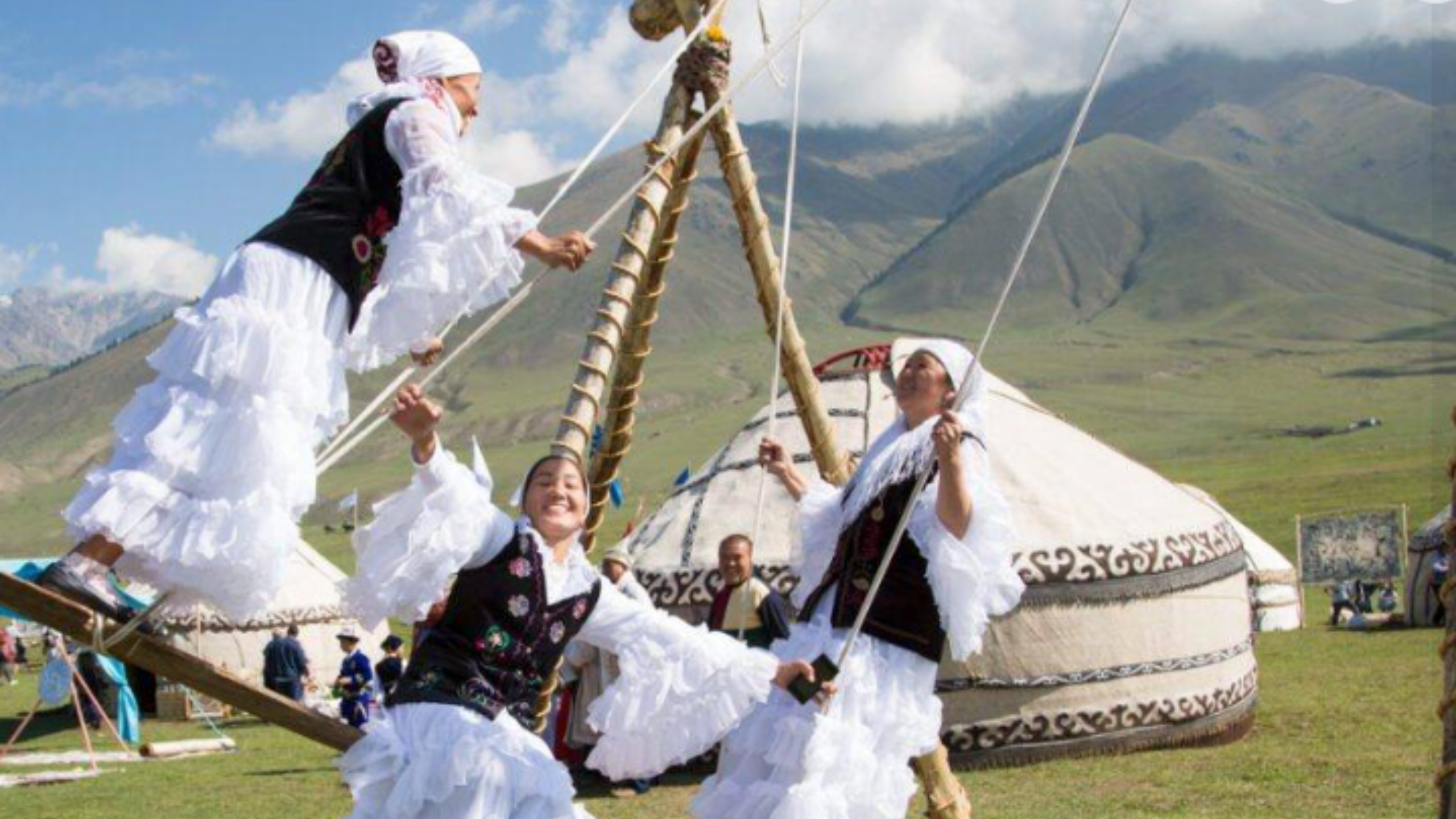
2014 is by no means where this all began, for the true history of WNG has its roots in ancient times, recounted by the epic of literature, Manas, which details similar sporting battles, horse racing, wrestling, and diplomacy.
The Epic of Manas is a classic work whose value to the World Nomad Games cannot be underestimated, not least as the choice of September for their staging represents the end of a period of migration, the days when the nomads settled and marked their new cycle with festivities and games themselves.
What Sports to Expect in the World Nomad Games
Since the first such event, up to 37 different disciplines have been included in any one games, the main and better-known being as follows:
Alysh: A style of wrestling not dissimilar to judo, in which the combatants are required to hold their opponent’s belt at all times, scoring points from 1-6 by throwing, and, as with judo, scores reflecting the way the opponent lands. First one to 6 wins.
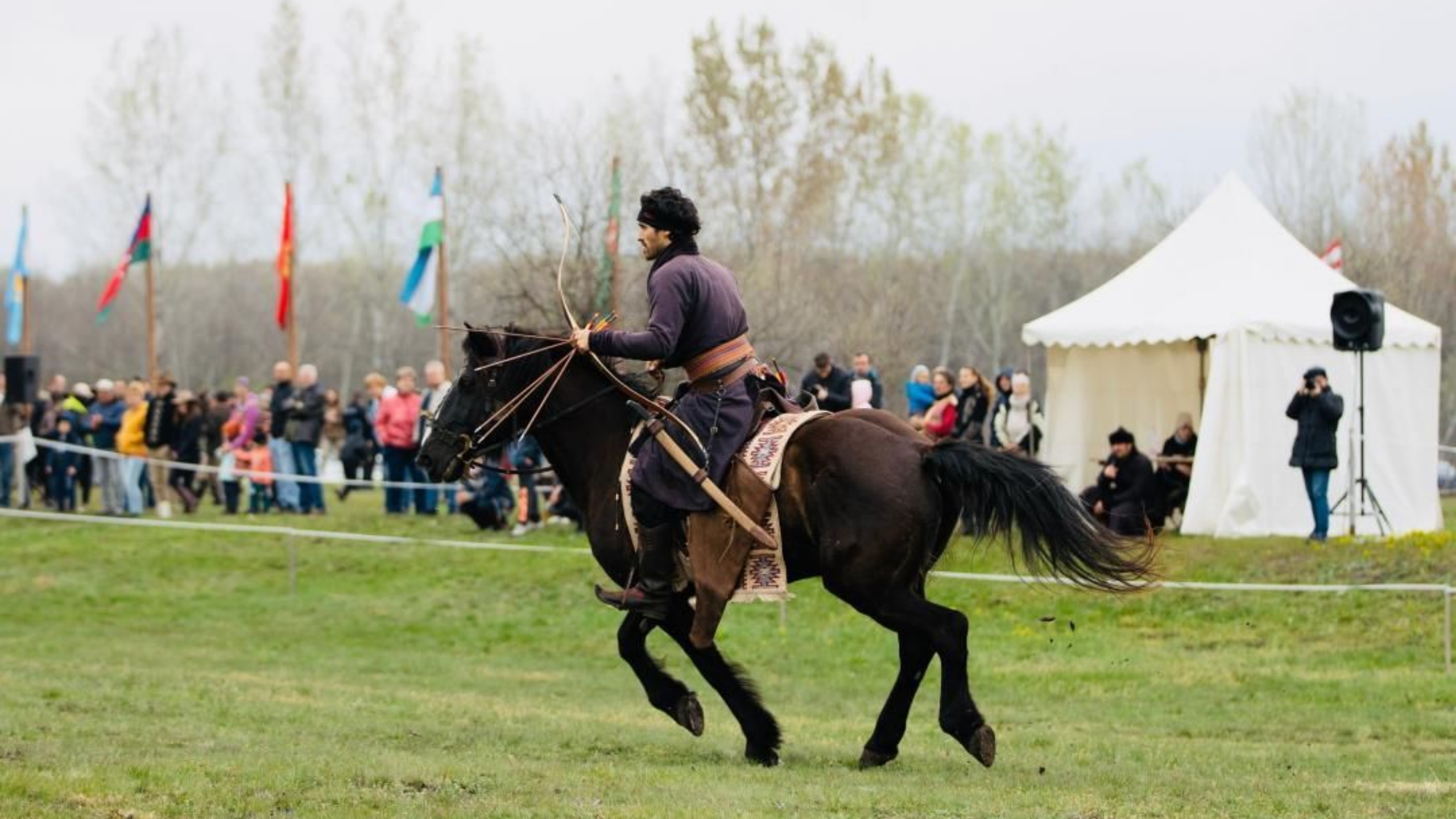
Salburun: A broad description of various disciplines of hunting involving falcons, eagles, or dogs. It also includes the ever-so-tricky mounted archery.
Shagai: Among other variants, shagai is a unique form of boules, nomadic style, played by throwing the ankle bones of horses, sheep, goats, or camels. Often also believed to be the earliest version of dice, too.
Horse racing: Perhaps self-explanatory, but don’t expect to see Frankie Dettori; these riders are tough.
Er enish: These riders are even tougher. Er enish is a form of wrestling on horseback which requires strong horses, as well as strong character.
Kourach: Another form of freestyle wrestling, body slams galore, performed safely, of course.
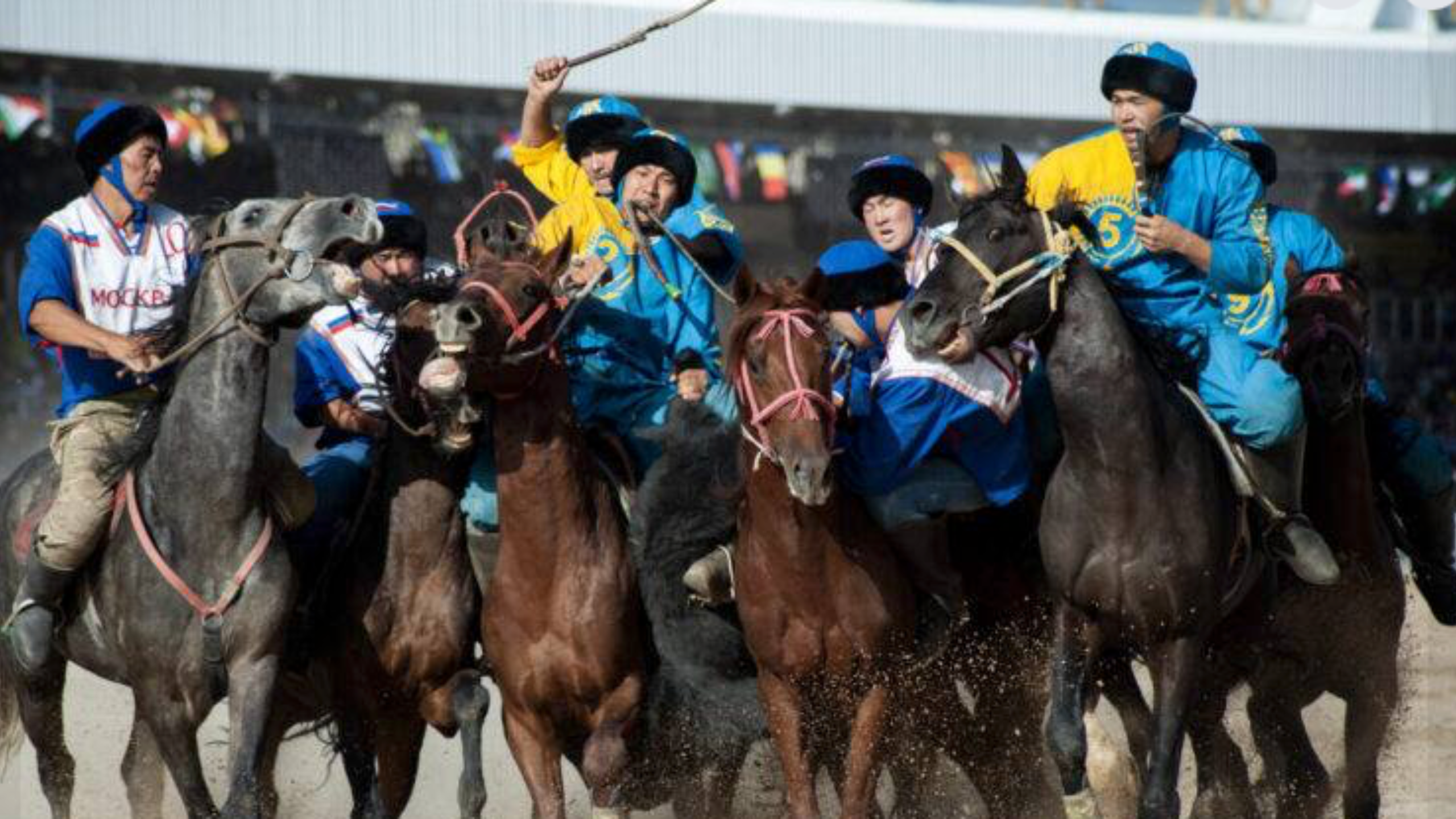
Kok-boru: Also known as bukashi or kokpar, this is a game not a million miles from polo, only there is no ball, rather a goat carcass (or a more humane alternative in some cases), which players attempt to deposit in a designated place to score points, all with a team of fearsome opponents trying to prevent it.
Mangala: A traditional Turkic board game, doubtless safer than many of the above, but no easier.
The World Nomad Games are far more than just entertainment, with UNESCO recognising the value they bring to the preservation of culture, and the UN, which sees them as an essential way to preserve and enhance inter-cultural communication. Over 500 media outlets are involved with the broadcast of WNG, and thousands attend each time, from over a hundred countries.
To be among them, bear with us, and keep your eye on the link here: