
The Association of International Students (AIS), a group of students working together to enhance their study experience in Almaty, has already proven itself to be proactive, with a recent major event showcasing its commitment.
10 April saw the inaugural Microbiological Summit take place at the Asfendiarov University, the first of its kind and the brainchild of the AIS, whose members increasingly report satisfaction with their Kazakhstan experience, and are keen to get more involved.
The organisers took time out from preparation for their exams to explain how the summit was set up, what the benefits were, as well as the plans for next year.
“Last year, our organisation was focusing on research work and academic things. So we had the idea to do some research work with microbiology, too,” explained Sahil Sharma, President of the AIS.
Submitting their proposal to the faculty was straightforward enough, and a few weeks later, they were given the necessary permission to start organising, a lengthy process with many involved.
As this was a new experience for the organising committee, it made sense to keep things manageable, so they decided to extend invitations to just three other local universities, with more expected for the 2027 sequel. They were also dealing with inevitable limitations in terms of space and resources, plus doubts expressed by some who perhaps hadn’t grasped the idea of the day clearly.
The efforts of the AIS meant that all hindrances were promptly removed, and an all-star cast was invited, including Dr Ildar Fakhradiyev Rafisovich, Vice-Rector of the Scientific Block at KazNMU.
Joining him were Dr Alfiya Shamsutdinova Gumarovna, Head of the Department of Science at KazNMU; Dr Bakhyt Ramazanova Amanullovna, Head Of The Department of Microbiology, Virology; Kaznmu, and Prof. Nurzhamal Dzhardemaliyeva, Dean of the International Faculty at KazNMU.
According to Sahil Sharma:
We did this partly to make our CV much stronger, and we want to give the opportunity to the students to work in these fields also.
“One aim of our summit was to give benefits to the international students, to give extra confidence, to give an extra opportunity to the students, apart from just books and study.
“And the second thing, the organisation needed to organise something, but not just for fun, we wanted to organise something beneficial for the students.
“But the information was so useful, too. I personally attended the event, and I learned a lot of new things from the reports that the students presented there.”
The day took the form of a competitive series of presentations on the broad topic of Healthcare-Associated Infections, for example, Patient and Healthcare Worker Safety, and Clinical Aspects of Healthcare‑Associated Infections, with a neutral jury (including staff from other institutions) adjudicating at the end of the day.
Heading up to 10 April, each of the 15 panels was required to research a new area of microbiology and present a summary of their findings to all delegates in no more than ten minutes.
The rules were strict, in the words of the organising committee: work must be original, academically sound, and properly referenced. Plagiarism or inconsistency leads to disqualification.
There were also rules about the scope of topics allowed; panels were required to integrate epidemiological, molecular, genetic, antimicrobial resistance, and clinical aspects.
Some of the teams started preparing five months before the Microbiological Summit, as did the organisers of the event, as they had so much to sort before it was given the go-ahead. The main challenge was sifting through the mass of new information to select key findings that could be presented in ten minutes, something which delegates reported taking a long time to do properly.
A professional jury sat to consider all presentations, with the following medical experts called on to make the difficult decision. Koloskova Ekaterina Alexandrovna, Bunyaeva Darya Vladimirovna, Mustafina Kamilya Kamalovna, Abilbayeva Arailym Assylkhanova, Kuralay Orazymbet, and Beisegulova Gulzhan Nurkapyzovna.
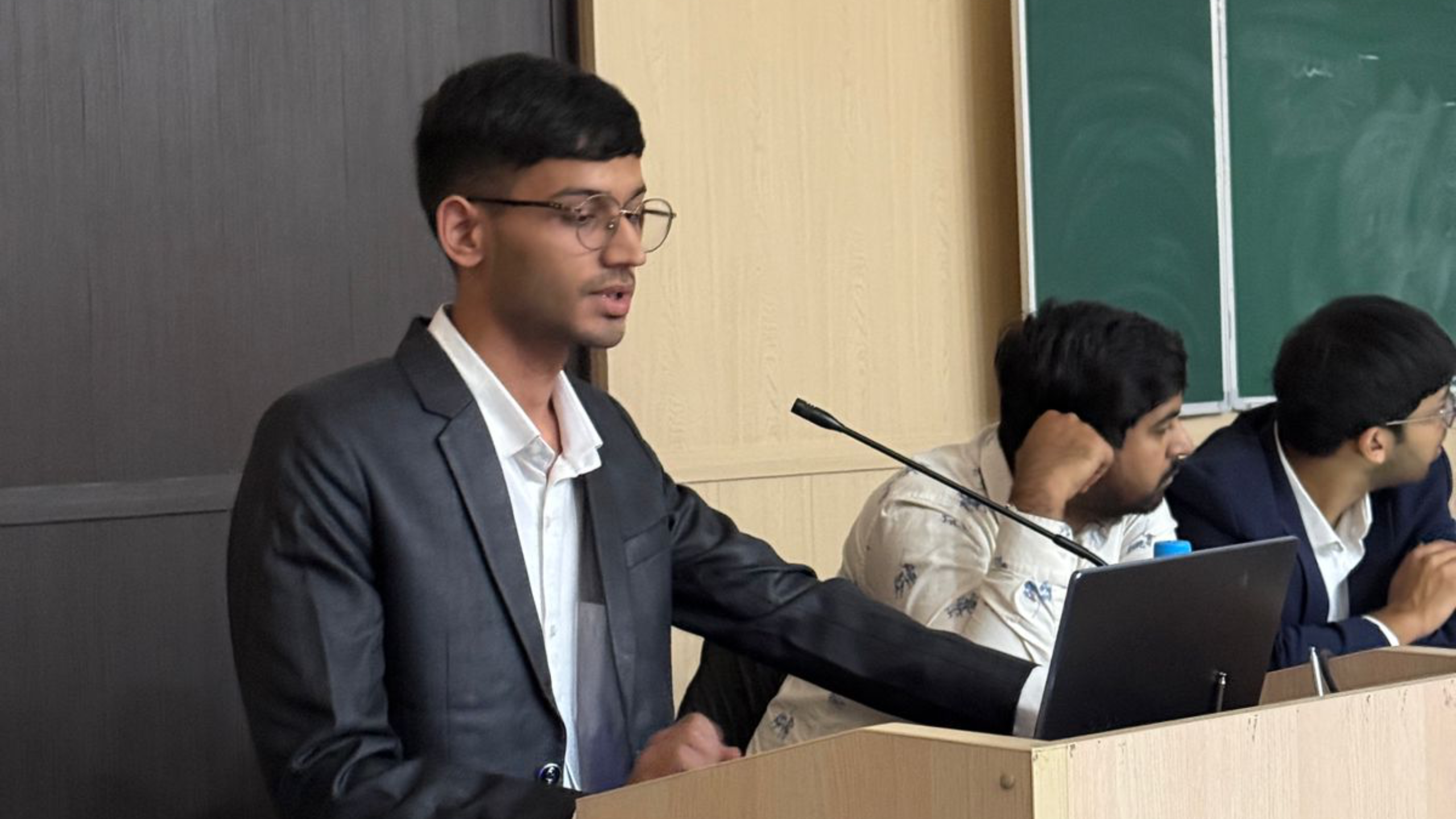
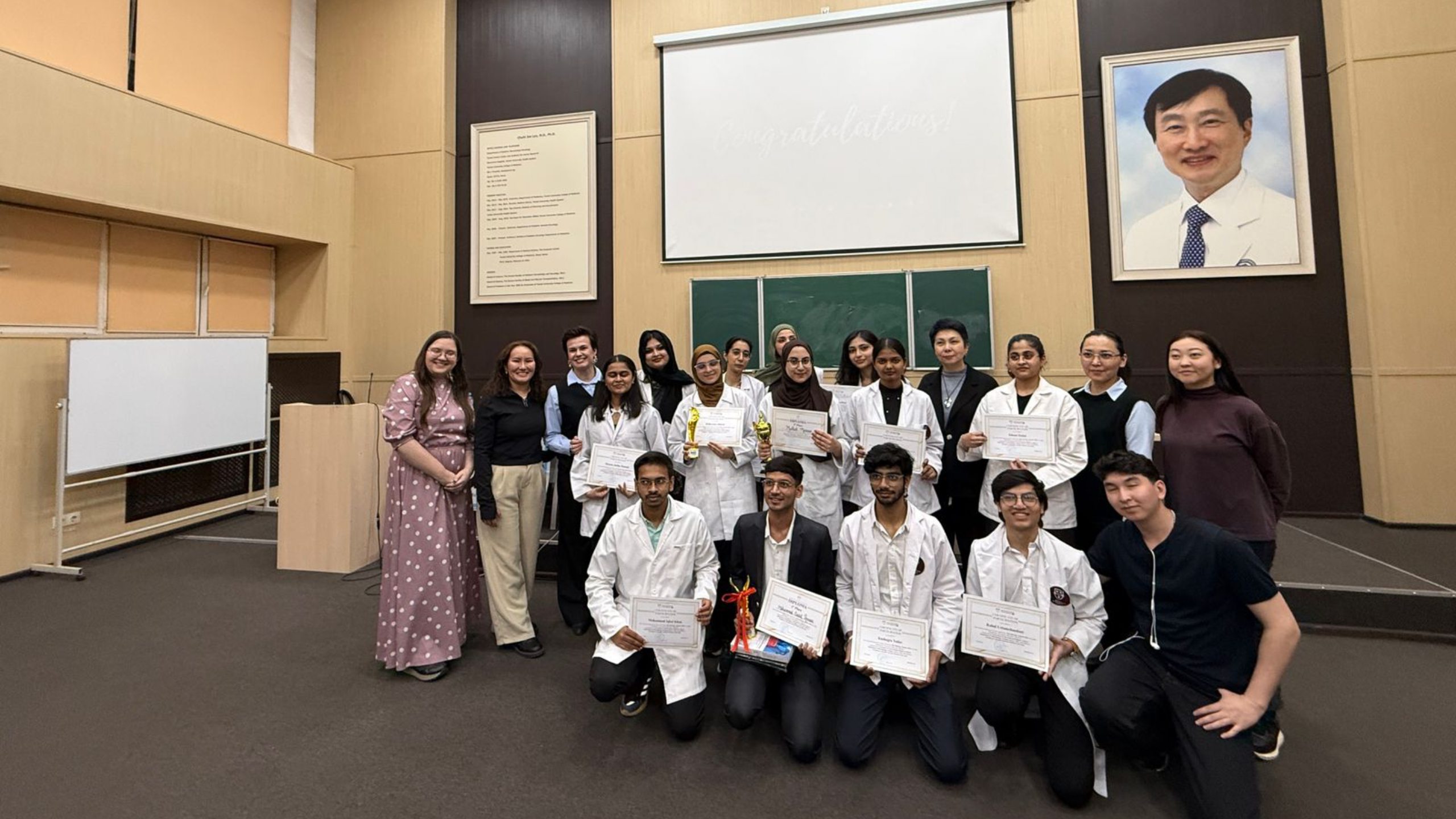
In the end, they reached their verdict, and Mohammad Saad Ansari, a 5th-year student from KazNMU, was crowned the winner, but the day was seen as a success by all. The summit planned for 2027 is set to dwarf the 2026 version, with greater numbers of entrants expected, not only from the local area but from other universities in Almaty and beyond.
Initiatives such as this benefit everybody taking part, either by giving confidence or experience, or improving their knowledge and enhancing their prospects, all four considered to be the main reasons for AIS planning to make this an annual event, at least.