
46 is still far too young for anybody to cite as evidence that you are never too old, but it does fall in that decade of life when many people start slowing down (and accepting it) rather than upping the pace and getting things done while you still can.
It’s been said that anybody aged 50 now who is not in better shape than when they were 20 isn’t paying attention, as we know so much more today about how we work, plus how to live and train more optimally.
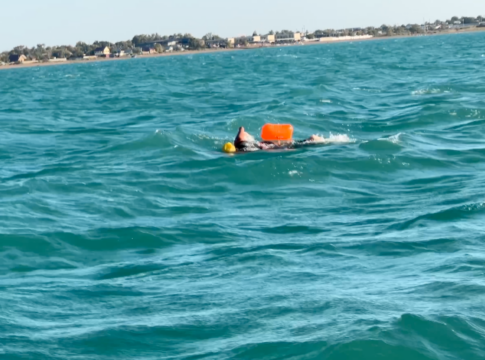
That said, when a lawyer and mother of two hits the headlines for becoming one of the first women to complete a mammoth ultra swim in Lake Balkhash, the heart-warming element of the story is nicely rounded off when we learn that she was indeed 46 when achieving the feat that’s proven out of reach for many a younger and ‘fitter’ swimmer.
Mangystau-born Zhannat Katarbayeva is indeed each of lawyer, mother, and swimmer, the latter the most recent addition to her life of achievement, as she only took up the sport seriously six years ago with the coach who was also training her two daughters.
“Anyway, I took my children swimming, and then I decided to have a go. So I bought a membership and swam in my free time, especially since the doctor told me it would do me good. And then the coach who trained my children somehow saw in me a swimmer at that amateur level, so I had ten lessons with him.”
The proverbial ten sessions. The extended sporting taster. A nice round number, after which, let’s face it, most people don’t make it to 11 as life may remind us we have more pressing things to be occupying ourselves with. (Either that or they’re in their 40s and somehow don’t think they can do it any more.)
With Zhannat, the magic ten proved to be a springboard from which she plunged into both the deep end of the local pool and into the even deeper waters of a lake not too far from where she lives.
“Somebody suggested I swim across Lake Borovoe, which is 4.5 kilometres. I immediately agreed, even though open water would be a new experience for me.
“Well, I swam across, it was really daunting doing this for the first time, but I loved it, too.”
The next logical step was suggested by her first coach who had relocated to Almaty, not too far from which is a body of water called Kapchagai. This is more of a challenge than Borovoe, although of the two main swims, one of them is 5 km. Zhannat chose to take the 10-km route.
Preparation for this was long and involved, and also required considered input from an experienced coach, but the investment paid off and, for a while, may have been the icing on the open-water swimming cake and the end of a short, albeit impressive swimming career.
That is, until somebody said the words lake & Balkhash.
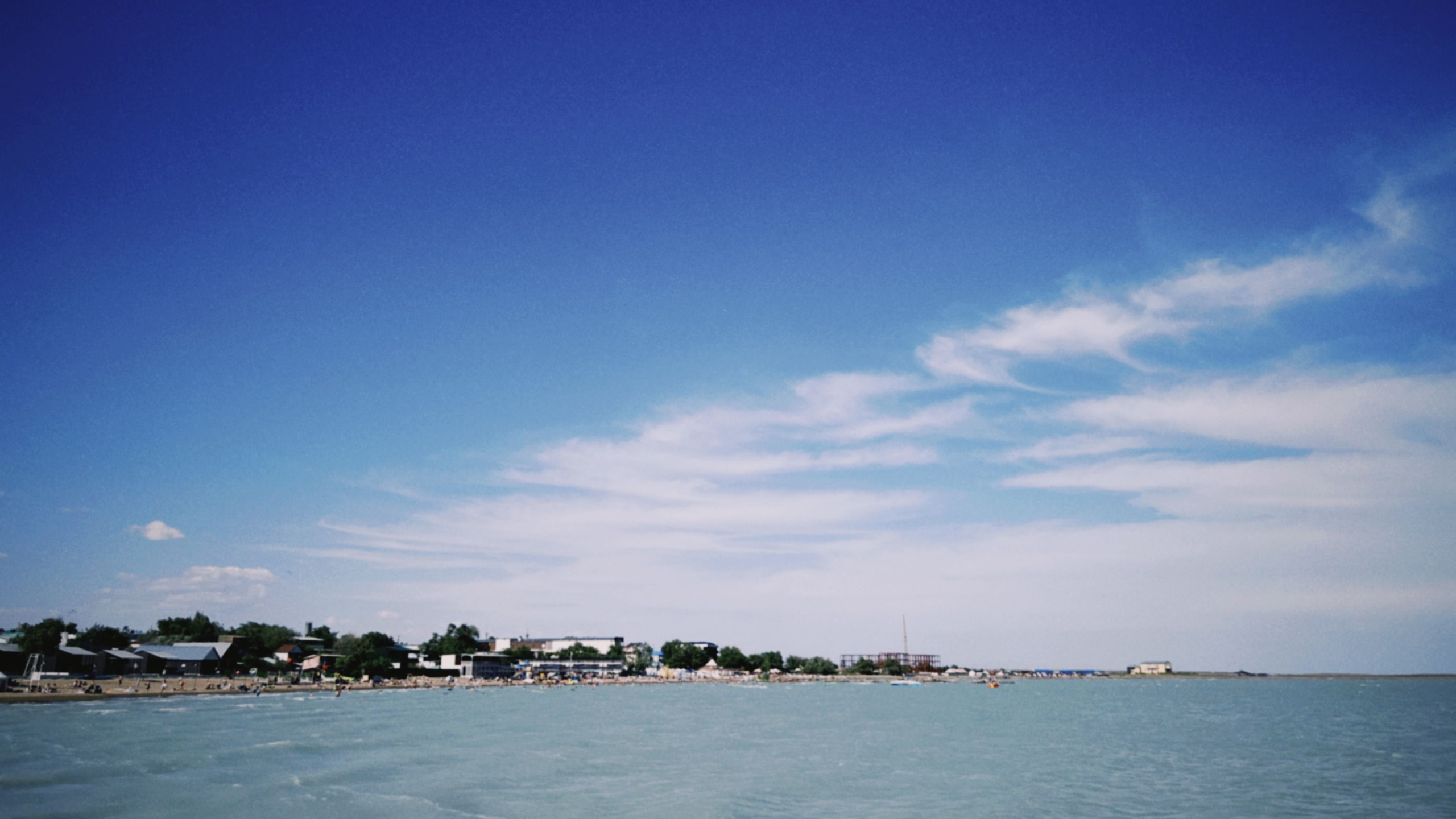
To give this some context, Lake Balkhash is the 15th largest lake in the world. It lies entirely within Kazakhstan and is fed largely by snowmelt from mountains in China’s Xinjiang region. The western part of the lake is freshwater, while the eastern portion is brackish and saline. It is also the mouth of the River Ili, with the delta region there covering an area of some 8,000 square kilometres.
Ever motivating for long-distance swimmers from the region, Zhannat’s coach only needed to say a few words to convince her to cover the 23.6 kilometres needed to enter the record books.
“We have to do this!”
Training was serious. Although Zhannat is very experienced, despite this only coming in six years in the sport, Balkhash isn’t to be taken lightly.
“There is a full calendar for us swimmers. We start training around September and do so until June, and then open water swims begin. We do them in June and July, and then we go on holiday in August. So, in September, well, we started training in earnest, and around December, I think, we confirmed that this swim would be happening.”
Balancing work, family, and serious prep for something as demanding as this precludes at least some sleep, and training for Zhannat generally started at six o’clock in the morning, meaning of course that she was out of bed in advance of that. This was a sacrifice made six days a week, and as many a serious sportsperson will tell you, the one day of rest is just as important anyway.
The swim itself has been reported as a 23.6-km swim across the lake, valid to an extent, but Zhannat is keen to clarify that it wasn’t just an A-to-B thing, it was a triangular course which totalled 23.6 km, all done on 26 August 2026. Chance for a little more sightseeing, maybe?
“It wasn’t across Balkhash, but like this, in a triangle, we swam to one bank, to the middle, and then to the other bank. Well, I mean, yes, we swam to the other side, but it wasn’t just one straight line. It took me 11 hours and 10 minutes.”
This was a team effort. Of course, Zhannat didn’t just drive to the shore and dive in, it involved a massive logistical operation without which, arguably, the feat wouldn’t have been possible.
She explains how it all worked:
“Basically, we had 13 people considering it and then 12 of them signed up. Three people dropped out, so nine people finished the swim: three women and six men.
“When we started, there were boats a little further from the shore. We each swam to our own boat, and on the boat there was a driver and a guide who fed me, a girl from my club. And every 40 minutes she fed me using a net. We had a 200-gram bottle, and we mixed gel, salts, and an isotonic drink in it.
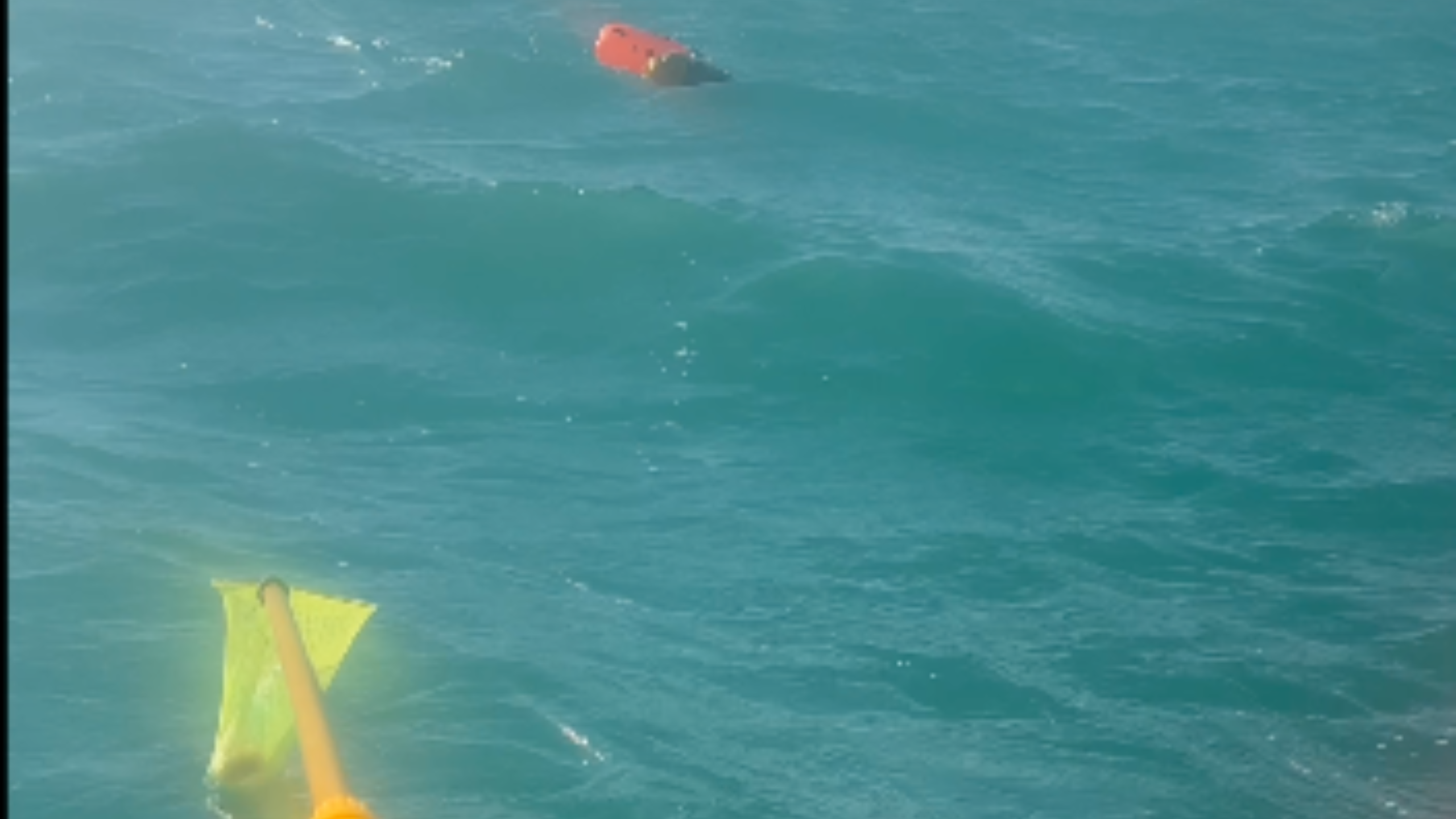
“So, she’d feed me, serve it in a net, I’d take it, drink it.
“It’s impossible to rest much; there’s a time limit, we have to make it, and there are constant waves, and when I stopped, I was afraid I’d be carried back and forth, meaning I had to make as few stops as possible and somehow increase my pace because the water would push you back if you eased up at all.”
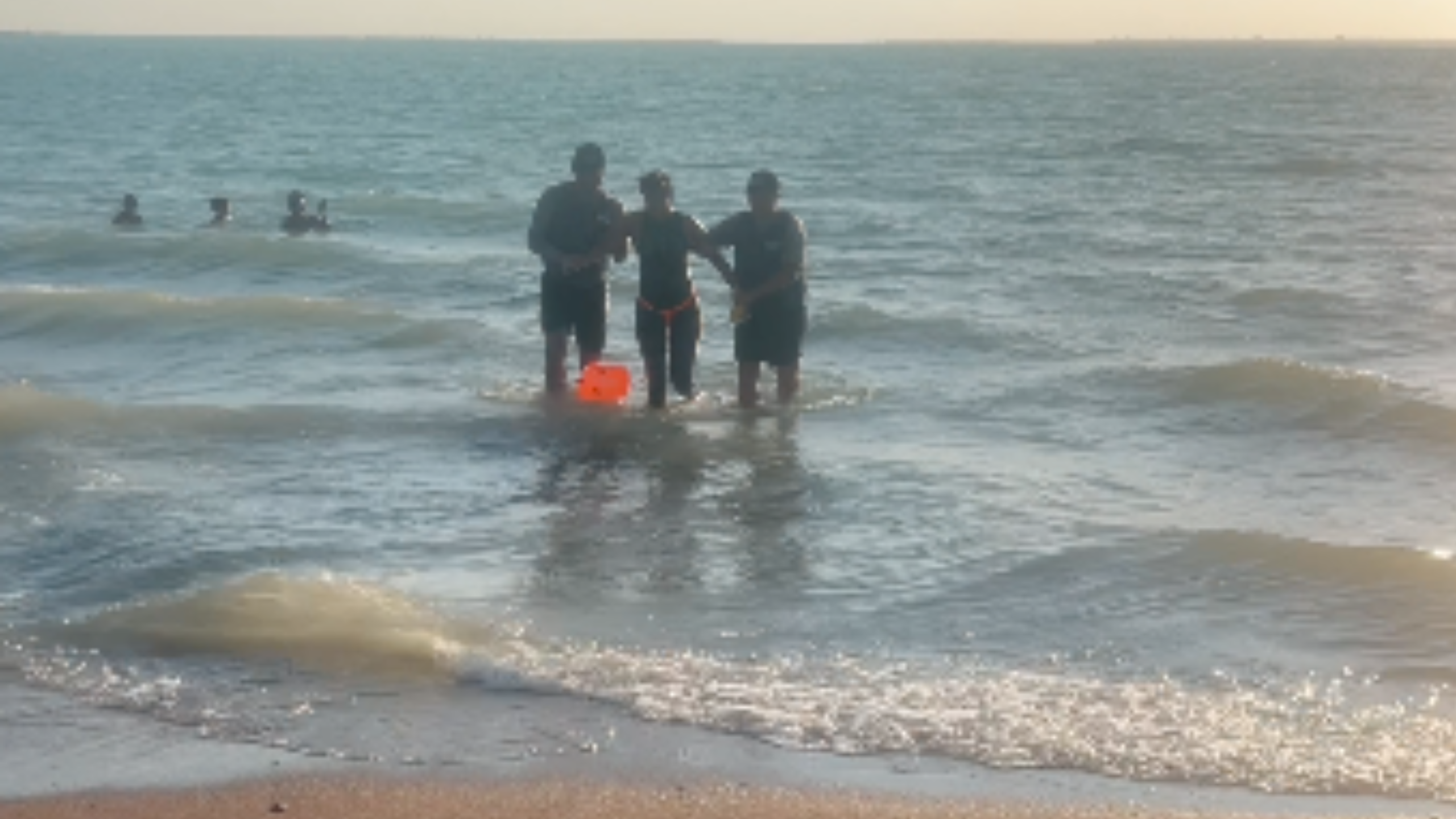
The swim didn’t get any easier, no surprises there, but the elation of nearing the finish proved elusive, and the final half a kilometre was emotionally draining as the approaching shore seemed to get further away the closer she got. Getting to the end is as much a mental battle as a physical one.
“Around the 15th kilometre is where this mental battle begins. In reality, I had enough physical strength; just in my head there was some kind of struggle, and my blood sugar was obviously dropping by that point, too.
“But this is part of the whole point. Every time after every swim, I get out and realise how all our limitations are in our heads, and if you set a goal and work towards it, you’ll find the time and the opportunity, and you’ll achieve that goal.”
Discussion locally about this achievement has been misinformed, and although people talking about what Zhannat did appreciate the feat enormously, it has been said that she became the first woman to do this swim.
“Actually, I’m not the first woman. At Balkhash, I was the first Kazakh woman to do it, but after I swam, I got a lot of messages from women; I honestly didn’t even expect such a reaction, but I’ll take it!
“It became a motivator for them, especially for women with families, with children. It was important for them that it turns out you can start at 40, even at 50. So, a lot of them wrote to me, saying that you motivated us, that we started swimming. To be honest, I’m glad I did it, as it motivated so many people to swim and see what they can find.”
Inspiration knows no bounds, we might say. I might add here that my own grandmother took up running at 60 and ran marathons until her 80s, setting many world records along the way. In one marathon, she took over 20 minutes off the previous world best time.
Zhannat explains that the culture of sport here, notably swimming, isn’t so rich among those over 40, although there are certainly exceptions around.
“It’s not really a cultural thing to swim after 40. Swimming is only done if there’s a specific health reason, or if someone needs to lose weight.
“When I participate in my swims in Kazakhstan, I am in category 40, and there’s a maximum of 10 people, and that includes women. Last year, I went to Orta in Italy, and the over-40s were the main group there. So, yes, there are older swimmers.”
Having ticked the 23.6-km box, is Zhannat planning to swim even further in the future?
Well, she hasn’t signed up for anything yet, but there are some iconic open-water swims that might tempt her, for example the English Channel, the 20-Bridges Swim in New York, or maybe even Loch Ness (no, not recommended).
In any case, the mark of a true champion is not just what you achieve, but what you inspire other people to achieve. So even if 23.6 kilometres is still the pinnacle of Zhannat’s career when she finally decides to stick to dry land, she will still be retiring with a legacy to be proud of.