
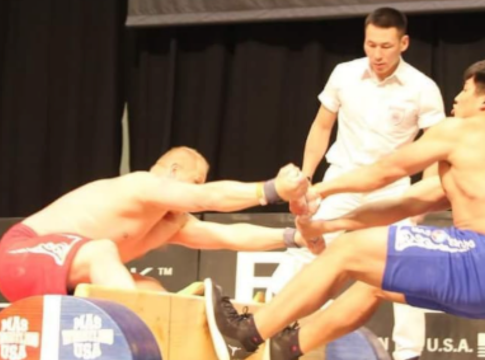
The recent World Nomad Games, the most successful since their inception in 2014, were seen by many people all over the world and not only proved the lasting interest in traditional sports and games, but also aroused interest in these disciplines among people who may never even have heard of them.
Back in the UK after the adventure of a lifetime, Team GB openly express a desire to introduce mas-wrestling to their country, and doubtless other countries have the same plan, with this and other sports.
Given that the nomadic traditions that became WNG have their origin mostly in Central Asia, a rich heritage in these activities is already to be found in the region.
Mas-wrestling is no exception, and saqtimes.kz met up with the Vice President of the Kazakhstan federation, who is also the coach of the national team, and many of the coaches working around the country.
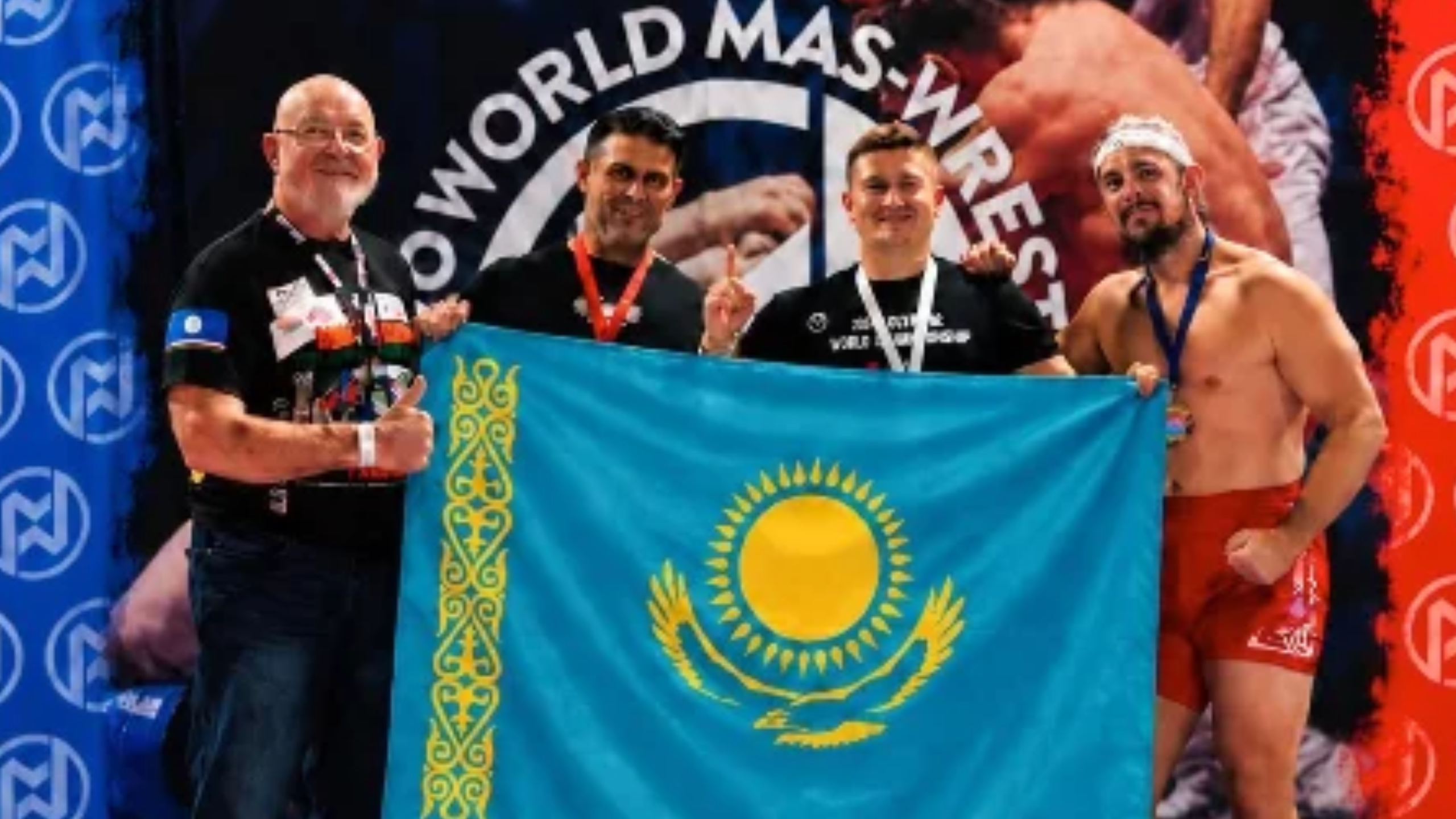
Pavel Fitisov is from Almaty and has been involved in the sport for some two decades, 15 years of which have seen him in charge of the operations of the national governing body of the sport. He prepares some of the top performers for big competitions and runs a complete training centre in his city, Centre 360, tucked away in a peaceful area near the Al-Farabi ring road.
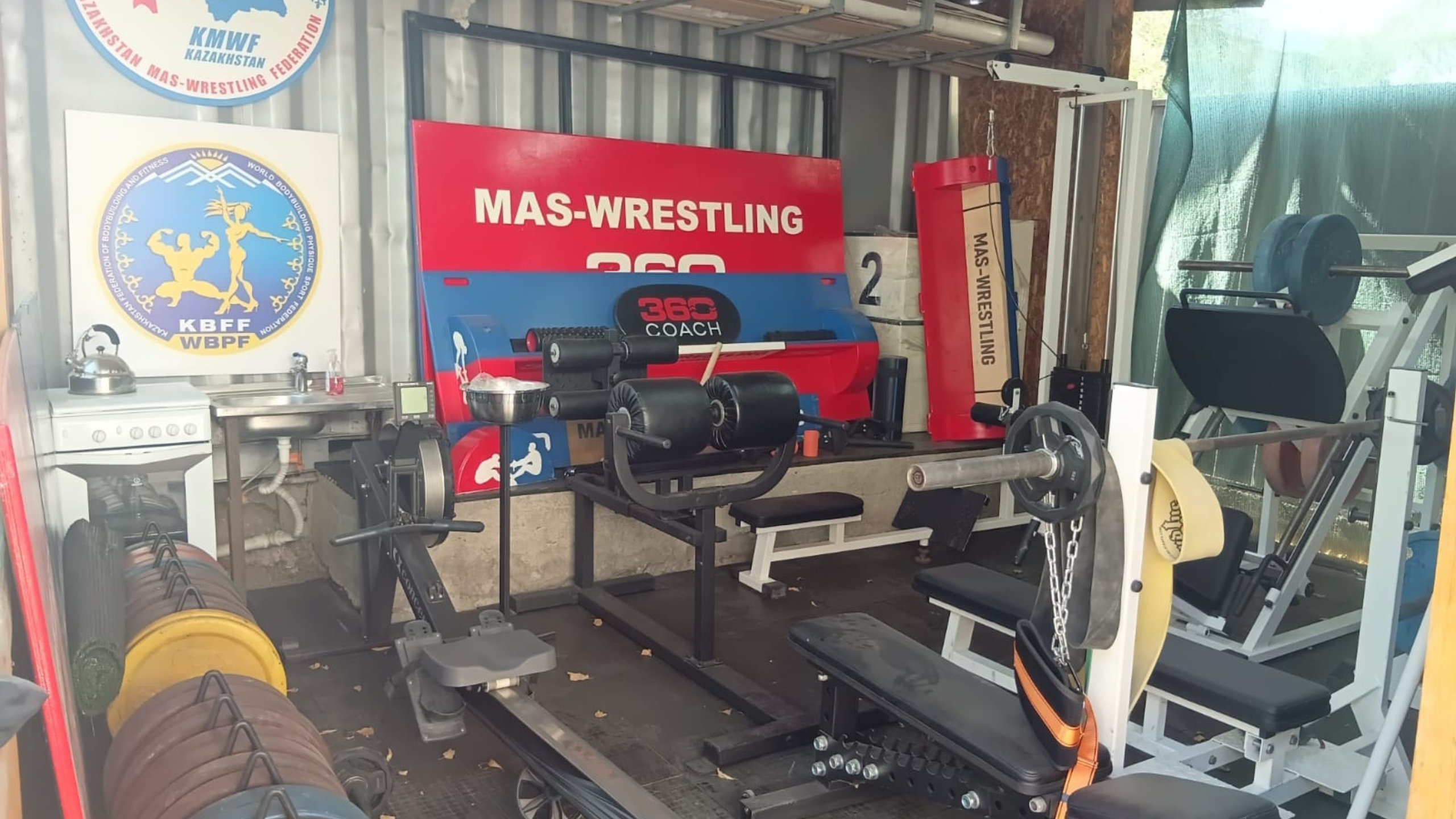
Although he was disappointed with the outcome of the Nomad Games this time round, he has had a lot of success over the years, training many champions in tournaments ranging from local ones to national ones and the World Championship itself. He also informed us that the Mr Olympia bodybuilding tournament in Las Vegas features mas-wrestling, and he is going to be there for it.
“The sport is growing worldwide on every continent. I’m on the judging committee.
“Together with our president, Talap Imataliev, we are part of the international presidium. That is, the federation’s leadership. Mas-wrestling is growing step by step. There are now over 65 countries developing the sport.”
A commonly held belief about mas is that it originated in Yakutia, a region of Siberia, and while this is partly true, the earliest form was only the roots of modern-day mas-wrestling, and the contemporary version is, in truth, not exactly the same. Other regions of the world played a form of stick-pull, including Eskimo communities and sailors. Pavel explained:
“Anything related to tug-of-war, stick pulling, has always existed among nomadic peoples. Among the Chinese, among the Kazakhs, among the Yakuts. Mas-dardege was a Yakut sport, but this wasn’t made international by their own wrestlers. That came later.”
Pavel was born in Almaty and has always lived here, raising three daughters with his wife, Victoria. Mas-wrestling, including his gym, training, coaching, and running the federation, has long been his full-time job, including also the work he does with athletes with disabilities, Paralympians, as they may be called.
“And I work with families, helping parents become coaches for their children. And so my focus is working with athletes and training coaches, working with special needs, with special families, and I also hold events for coaches and their wives.”
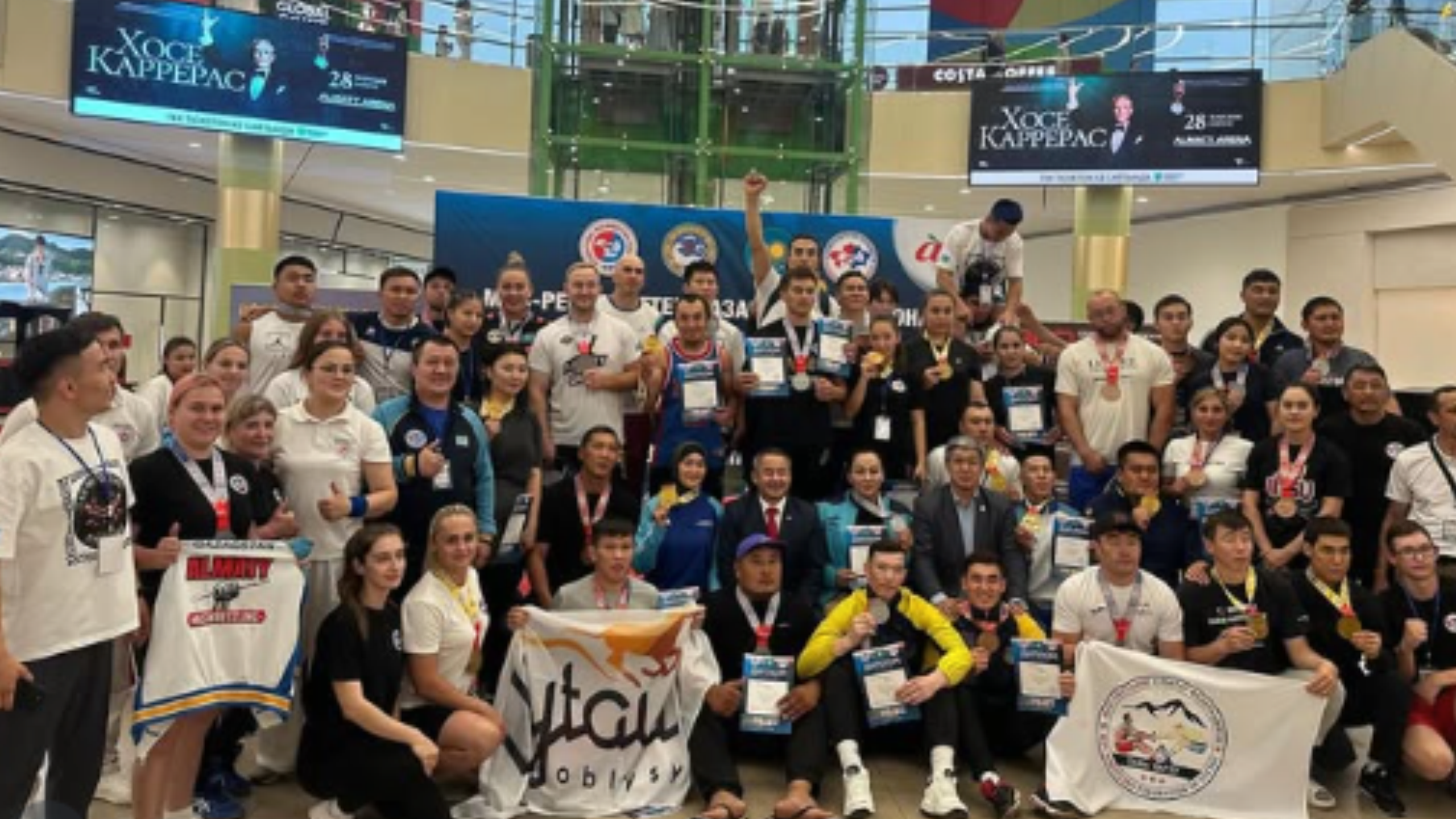
The Kazakh word for mas-wrestling is tayak tartu, and as tartu means to pull, it is a good summary of the overall aim of the game, but according to Pavel there is just so much more to it.
“Many athletes come from powerlifting or from other sports. But I’ll say this: these are often unreliable people, because they’re here today, and tomorrow they’re in something else.
“But the athletes I trained, who became world-beaters, I took them from scratch. These guys didn’t know how to do anything at all.
“They had neither the strength nor the technique. And over the course of 2-3 years, I improved them. And these athletes then went on to become top 3 in the world in competitions over the next five years. They started from zero and developed a mas-wrestling mindset. Both their strength and their body were trained for mas-wrestling.
“What do you need anyway? There’s strength, of course, but what about mentality and what else? If you have strong arms but a weak back, you’ll lose. If you have a strong back, strong arms, but weak legs, you’ll also lose. If you have a strong body but your mind isn’t working, you’ll lose.
“That’s what’s so interesting about mas-wrestling: it’s a full-body fight.”
Pavel doesn’t compete because he is so busy running the sport. One of his main aims is to establish global standards of refereeing that become a fixed part of the sport in every tournament. He believes that this is in the interests of all, not to mention the sport itself, as it works towards being awarded Olympic status, a process which will obviously take time.
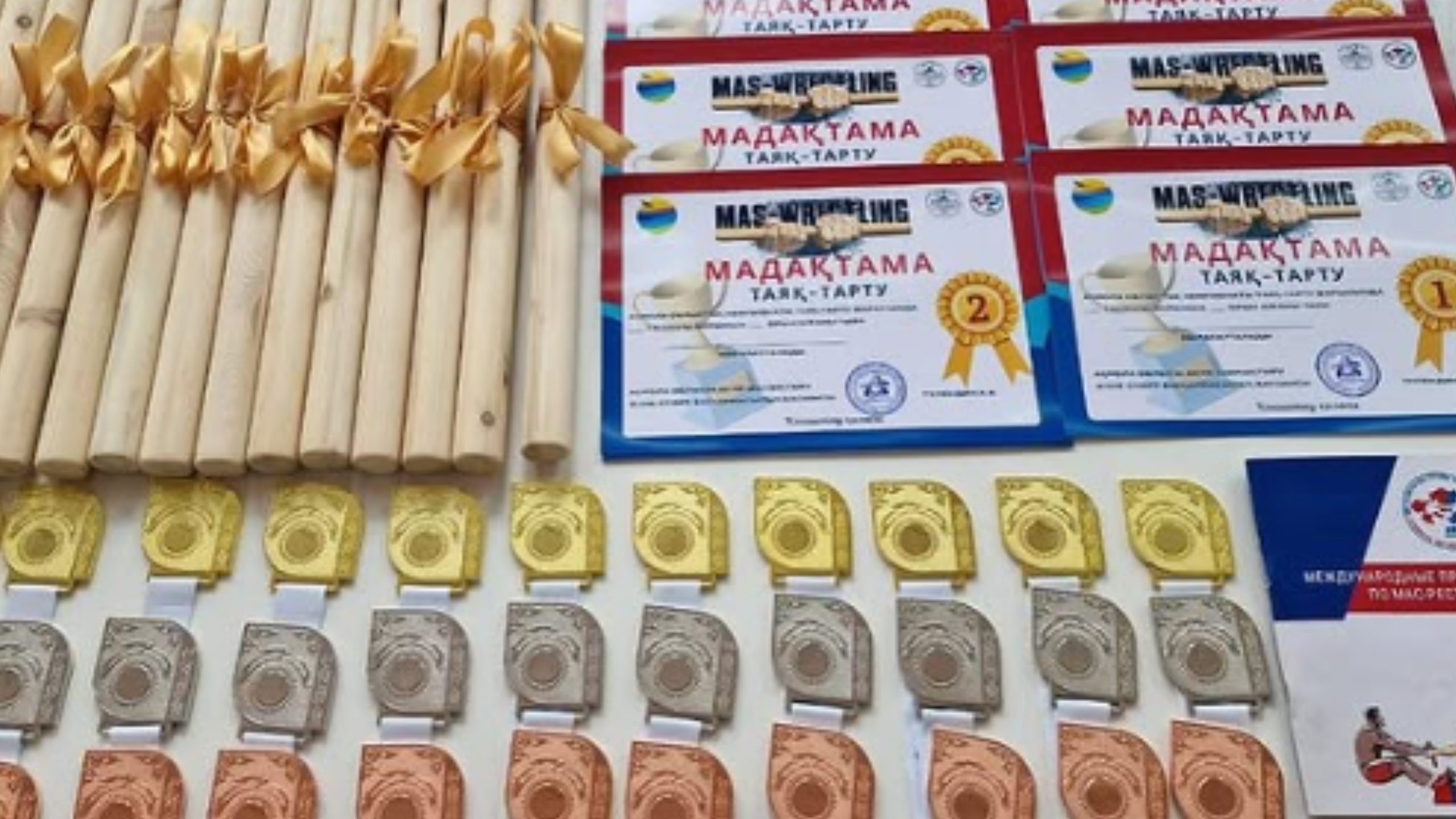
But refereeing standards are so integral to this, and Pavel, as an international referee, would like to avoid events taking place with officials who don’t do their job to the same standards. The international community has worked for years to ensure that refereeing is of the highest quality, but it is plain that there are some who are yet to be brought on board with this.
This is in part because of the lack of information made available, with many people using YouTube as a resource; therefore, not without some gain, but clearly not the optimum way to learn about it.
Within Kazakhstan, under his co-leadership, it is not the main issue; rather, funding is, and Pavel explains that more could be done to develop the sport if they had bigger budgets. The sport is growing in the regions but has potential as yet untapped, and for all the rush of interest in mas-wrestling, the capacity of the federation to coach people and offer them competition isn’t able to meet all the demands in full, yet. Especially across the regions.
Finding sponsors will help with this, and the increased exposure mas-wrestling is getting will also help attract them, in turn leading to a healthier outlook for the sport, not only locally but also internationally. They will be able to stage more tournaments, pay coaches, cover the costs of sending athletes to compete abroad, and promote the work of the federation.
They may also be able to expand the categories of those involved in competition; perhaps adding seniors to motivate the older guys, much like myself, who might want to give it a go but wouldn’t hold out much hope of beating a talented 25-year-old (most of the time).
“For sure there are plenty of older people who do it. The oldest participant we know about was 82. From Hogan in America.”
Perhaps that’s a touching story, in a way, but the future lies with the young, and it’s encouraging to see younger mas-wrestlers coming through, a situation which makes Pavel optimistic, but cautiously, as he reminds us that there is a lot of work left to do in this rediscovered and exciting sport.
One quick example of a mas-wrestling bout.