
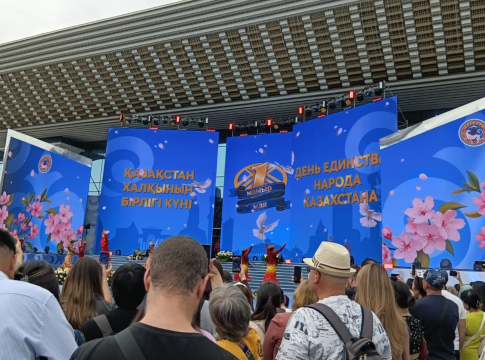
Not so many more than 15 years ago, I was teaching an English lesson to a group of 9-10-year-olds in the Samal area of Almaty, and couldn’t fail to be touched by a moment, which, for me, sums up one of the most striking and beautiful things about Kazakhstan.
As the children were only at a low level, we were still getting to grips with quite basic vocabulary, and that lesson was about the topic, country and nationality.
People from France are … French
People from China are … Chinese
Granted, in our modern world, this is a generalisation in any country, but it is a way that young learners directly acquire new single words before they are ready to produce longer utterances, so, quite forgivable as a one-off low-level classroom activity.
When we got to Kazakhstan, I rather naively started the same sentence:
People from Kazakhstan are …
A dozen kids sat in stunned silence, totally unable to answer, until one girl said (in Russian):
“But in Kazakhstan, there are so many different ethnicities.”
Their eyes all lit up; they were all so obviously proud of the fact, and for a second, I forgot that I was teaching English and lost my train of thought.
I felt, as I have many times in my two decades here, that this country serves as a refreshing example of how people of massively varied ethnic groups can live together peacefully without more than the occasional murmur of intolerance that would be bound to arise in even the most complete paradise.
Inter-ethnic and inter-religious harmony is considered to be a national Kazakhstani priority, not something packaged in a woke box and forcefully rammed down people’s throats 24/7, but in that the country is enlightened enough to realise that the rich tapestry of its heritage is composed of threads of literally hundreds of colours, just like a masterpiece of Renaissance art, incomplete without every single brush stroke.
1 May is a national holiday and a significant festival which sees city and town squares around the country set aside for concerts with members of potentially over 130 ethnic groups participating, either actively or just passing through.
Unity Day welcomes thousands of people who either come for the music, the street food, or just the craic, as the Irish would say, and even as a stand-alone experience, the event is worth visiting just to be where it’s all at.
The immersive 1 May experience, however, is a lot more than watching dancing and seeing bright clothing, although, as I said, these would make for a nice afternoon out in themselves, as the spectacle is still something that organisers put a lot of effort into.
To fully understand what Unity Day is really about, time spent talking to the families and friendship groups who organise the stands that encircle the square is the best way; what makes it not only heart-warming but also borderline tear-inducing, as you get to learn how almost everybody thinks that Kazakhstan is a comfortable place to just be whoever you are.
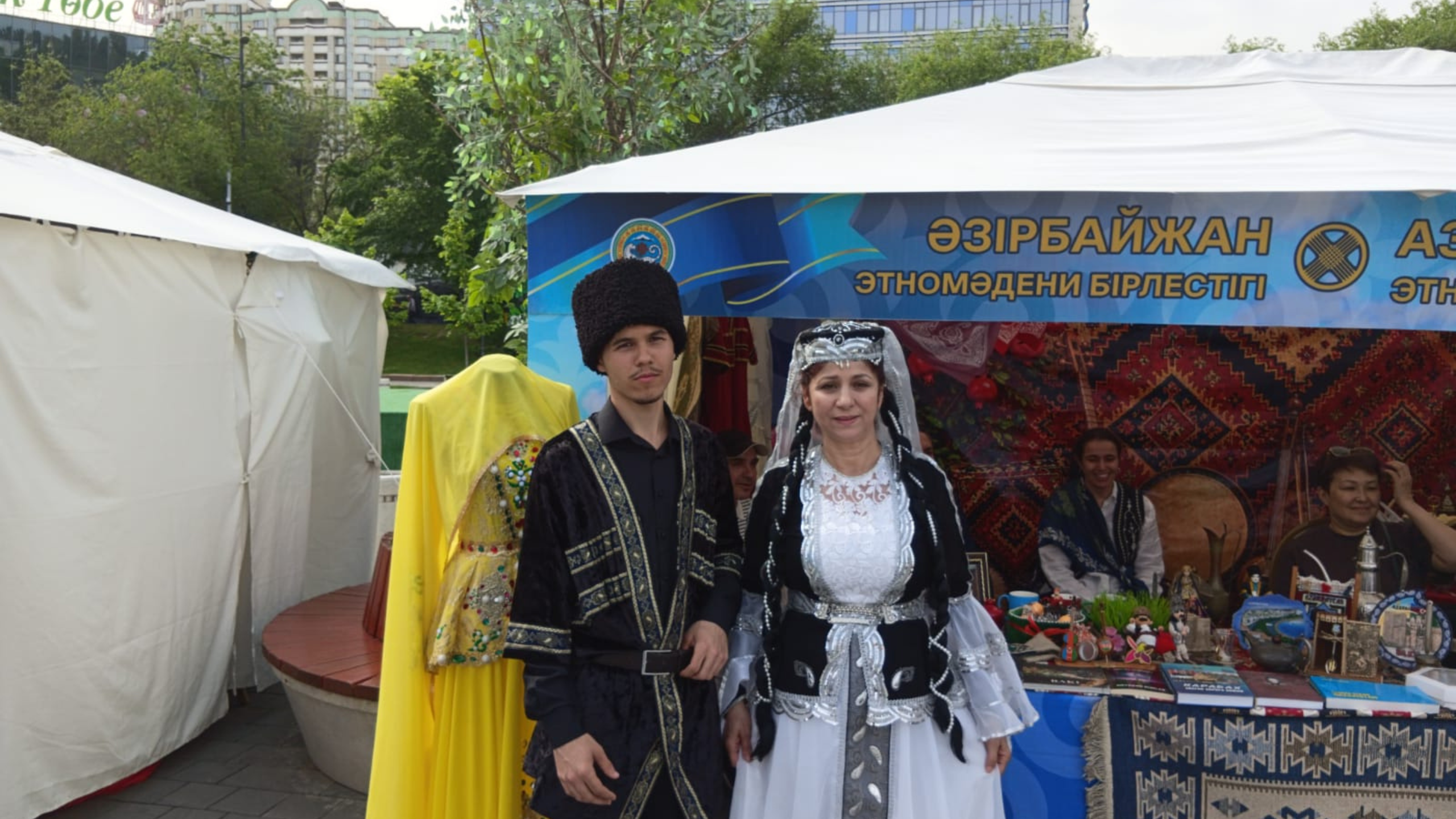
I arrived early in Abai Square, one of the focal points of the southern city of Almaty, hoping to get a few words in before the mad rush of crowds, and people were still tidying their displays: photos, musical instruments, hats, and paintings among the items on show.
Most people were in traditional costume, similarities evident, but each distinct from those of their neighbours. Some exhibitors were holding instruments (a nice touch – although I didn’t ask if they could play), once again not massively different from those a few paces away, but adorned with subtle differences that make them exemplary of the very cultures they represent, a reminder that we are all one, but all unique within it.
Armenians casually chatting to Azerbaijanis as if lifelong friends (as they very probably are anyway), Dungans and Koreans shaking hands, Tatars hugging Kurds, Russians in very impressive traditional costumes posing for photos with American visitors; all, in essence, the way it should be done.
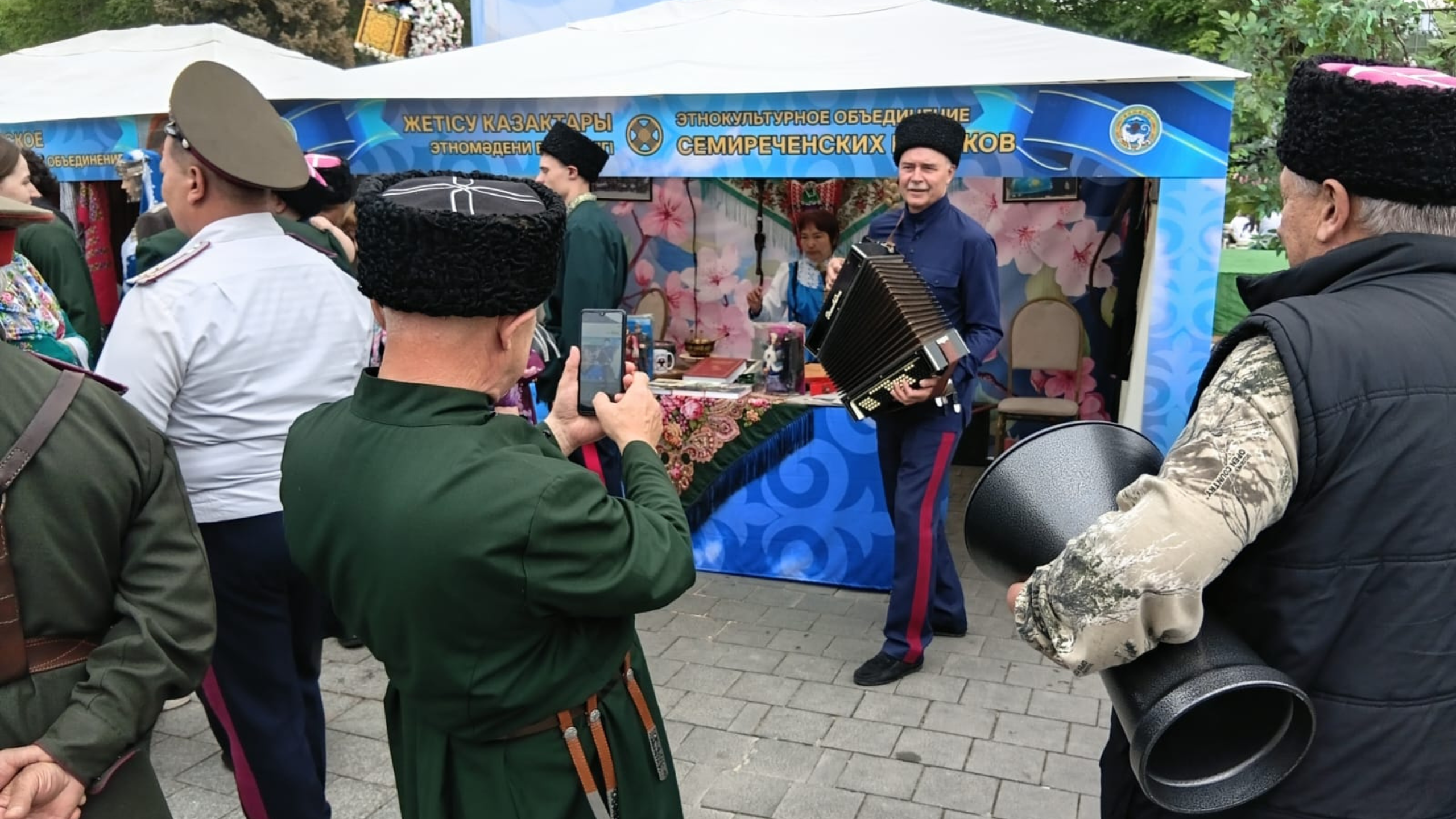
Everybody I spoke to had their own mother tongue and spoke Russian as if it were their native language. This, not only because in many cases it is, but because it is the lingua franca here and immensely important to communication across these ethnic groups, who are invariably Korean Kazakhstani, Kurdish Kazakhstani, or German Kazakhstani in the case of Galina, who was born in the northern city of Semey and moved to Almaty to study.
“We come here every year, and we are proud to share our culture,” she told me, standing beside a neat display of books, many of which in German.
Following 1991, some of the German community had, and took, the opportunity to relocate to Germany itself, but of those who remained, several thousand live here with no intention of following their compatriots west.
Shargiya is an ethnic Azerbaijani, born and raised in this country. She similarly feels a part of her own community but spoke just as warmly about the wider Kazakhstan. She has raised children here who agree that they are free to be Azerbaijani in every way they want, while citizens of the republic that they see as their true home.
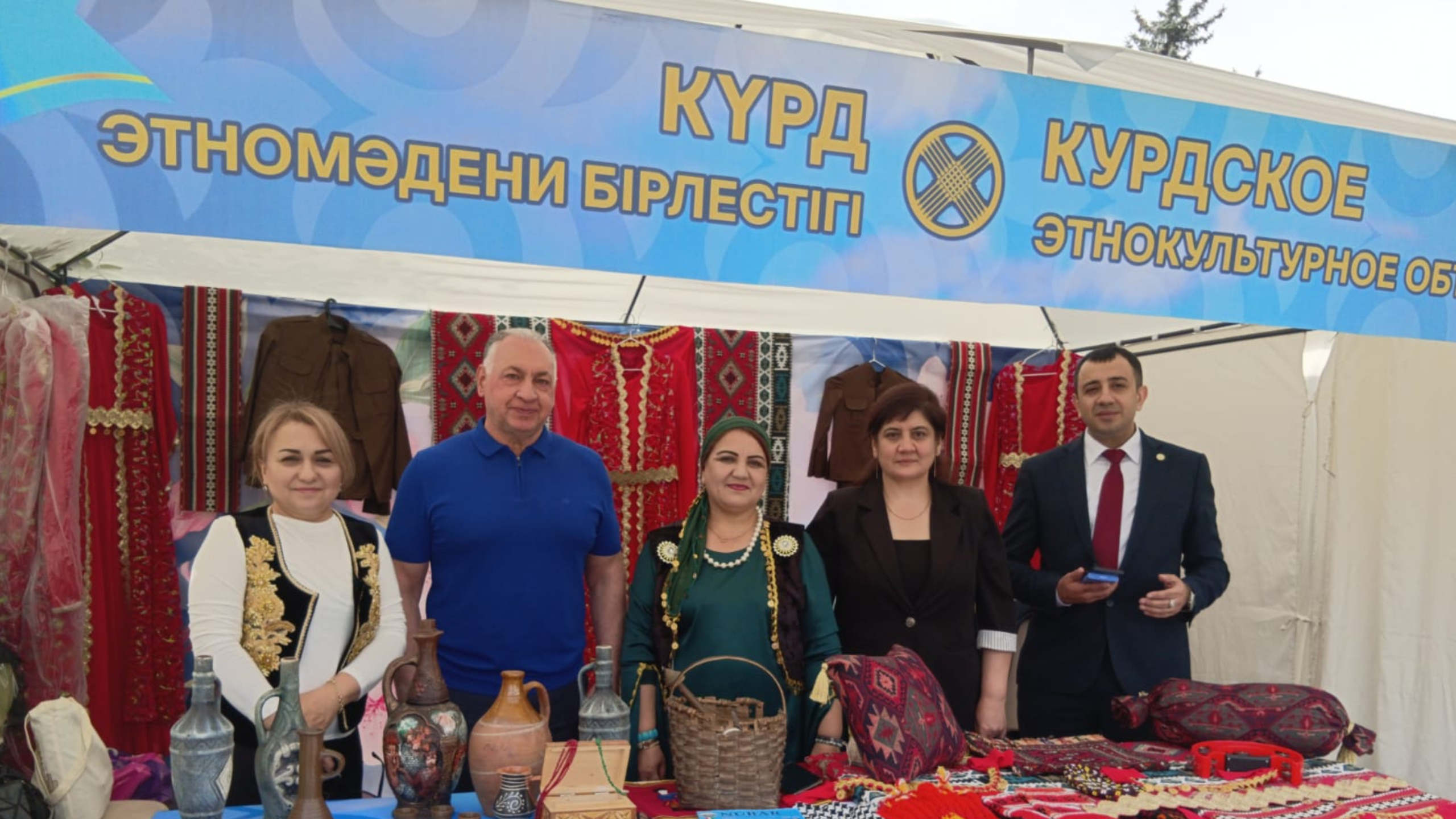
Arzu, a Kurdish woman, told me that not only was she born here, but her parents too, after they had been displaced from Georgia many decades ago. Spying a chance to practise my Georgian, I chanced a few phrases, but her linguistic repertoire is limited to Kurdish, Russian and some Kazakh, respectable, and, of course, all she needs, much as with the others who are almost all at least bilingual but speak Russian as if they’d been raised in Moscow.
Unity Day has been celebrated annually since 1996, shortly after the first President, Nursultan Nazarbayev, signed it into law, and as it is a public holiday, schools and most businesses close for the day. 2020 was different, for obvious reasons, when the event took place online.
Not all of the 130+ ethnic groups in Kazakhstan were formally represented on Abai Square today, arguably because there isn’t enough space to give everybody a stand. The representatives displaying today included several nationalities, some of which many westerners won’t even have heard of; in no particular order, Armenians, Belarussians, Chechens, Kyrgyz, Tatars, Uzbeks, Dagestanis, Dungans, Uighurs…

Choosing my favourite costume would go against the spirit of the event, as it is not about what’s better, but it was clear that they’d all made the effort and looked the part, not like they’d just thrown some old hat on.
Such a day helps appreciate how such an incredibly diverse country can exist in such troubled times elsewhere, and the importance of the day is widely recognised.
According to President Kassym-Jomart Tokayev, the “unity, friendship and solidarity of the representatives of all ethnic groups” is of fundamental importance to this country, and, in essence, goes a lot deeper than a morning stroll chatting to some amazing people.
Fact is, here in Kazakhstan, we don’t make the fastest cars in the world, we don’t make the best smartphones, and nor do we have the best football team (despite improving massively in recent years).
So, Apple most probably don’t send technicians over to pick up ideas about improving their models. Same thing with Man City; their coaches probably have it under control without a week shadowing the Kairat Almaty trainers.
If officials in whatever other country want to understand better how cultural cohesion can work, I mean, really work, not just artificially crammed into every TV advert without even meaning anything, though, they might do a lot worse than come here.
Not virtue signalling – just virtue.